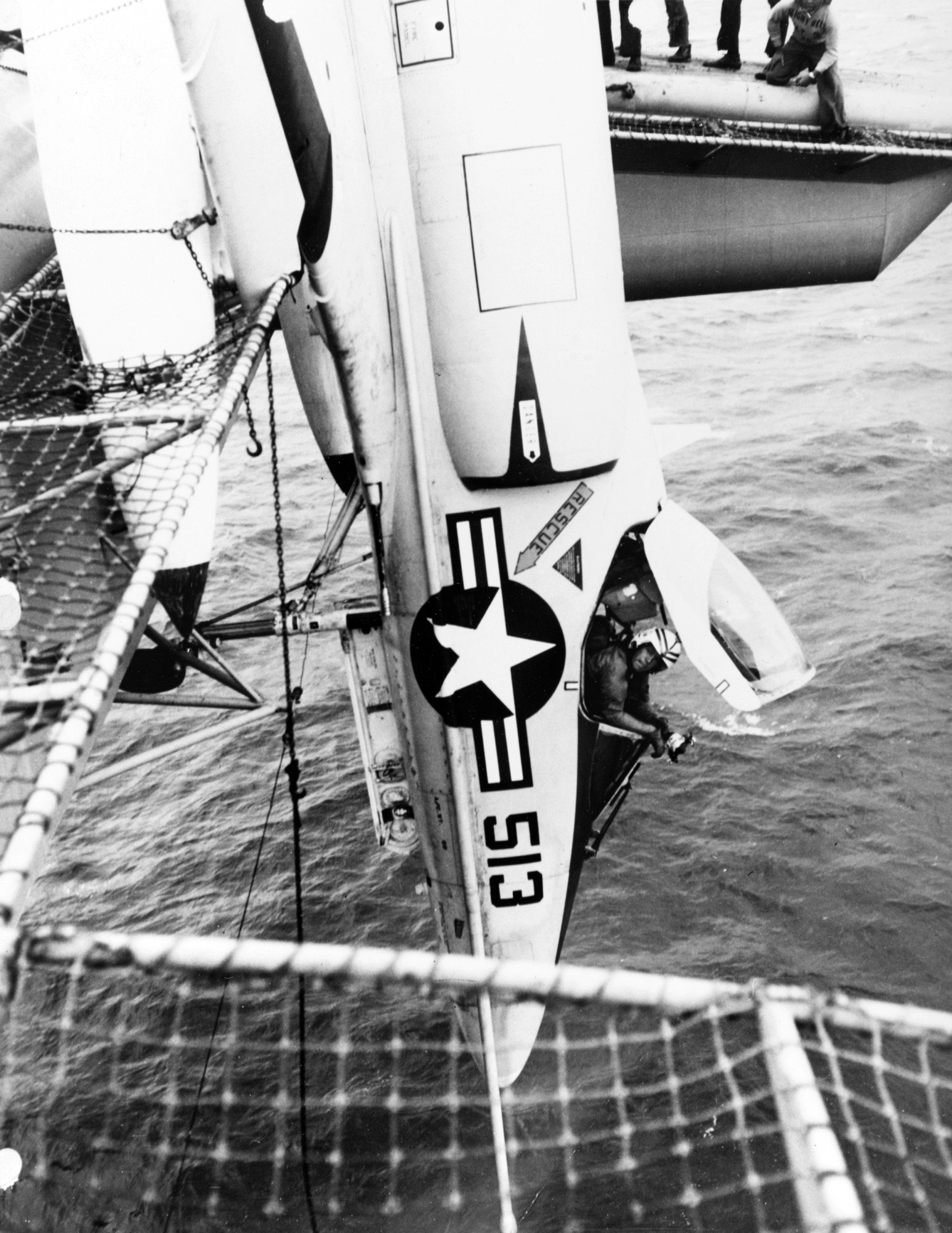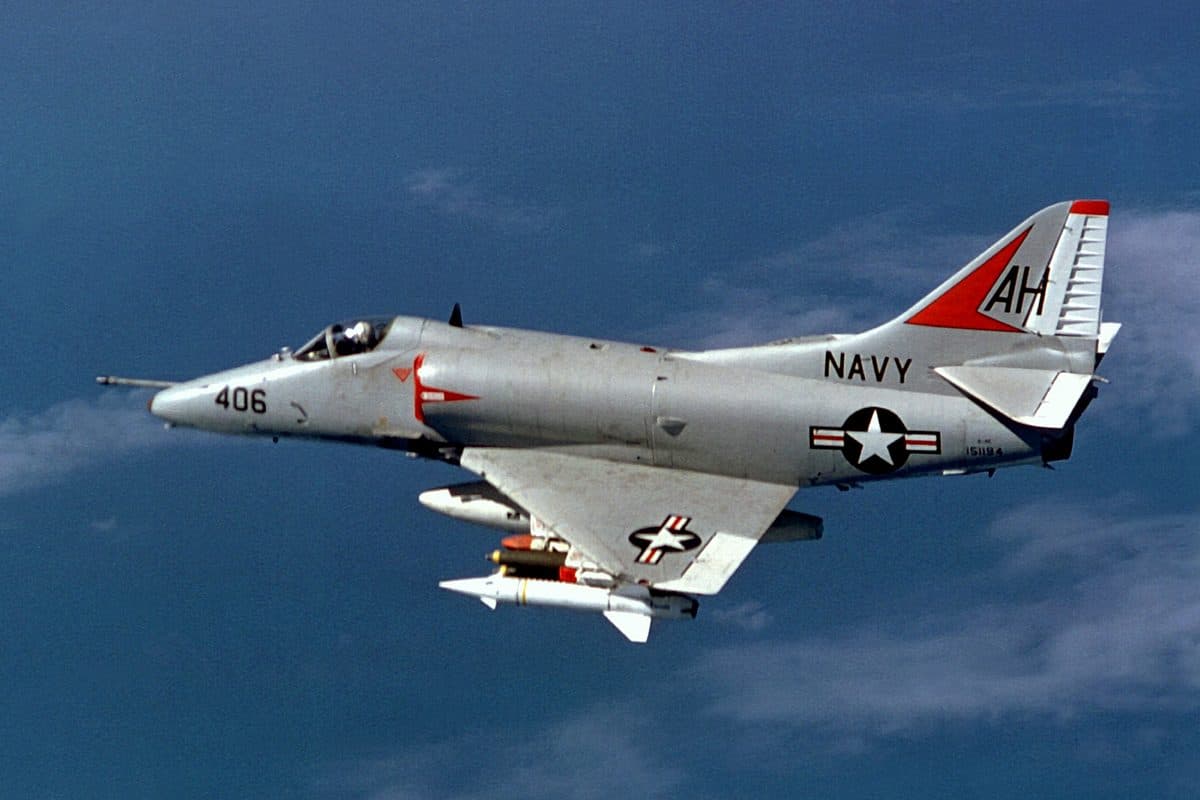

In the early 1950s, the U.S. Navy issued a requirement for a carrier-based jet attack aircraft with a maximum takeoff weight of 30,000 pounds. Douglas Aircraft engineer Ed Heinemann looked at the requirement and decided the Navy was wrong. He submitted a design that weighed just 15,000 pounds fully loaded, half the specified maximum. The Navy was skeptical. Heinemann was adamant. The result was the A-4 Skyhawk, an aircraft so small, light, and capable that it earned the nickname "Heinemann's Hot Rod" and remained in frontline service for nearly 50 years.
The Philosophy of Simplicity
Heinemann's approach was radical for the era. While other designers were making aircraft larger, heavier, and more complex, Heinemann went the opposite direction. He stripped out everything that was not essential. The Skyhawk's delta wing was small enough, just 27.5 feet spanning, that it did not need to fold for carrier storage. This eliminated the folding mechanism and its associated weight, complexity, and maintenance burden. Every pound saved in structure was a pound available for fuel or weapons.
The airframe was built with simplicity as a core requirement. The Skyhawk used a single engine (the Wright J65 initially, later the Pratt & Whitney J52), had a straightforward conventional control system with no hydraulic boost initially, and was designed so that most maintenance could be performed without specialized equipment. A carrier air group could keep Skyhawks flying with fewer spare parts and fewer maintenance hours than larger, more complex aircraft.
The result was an aircraft that was cheap to buy, cheap to maintain, and available in large numbers. The Navy and Marine Corps bought 2,960 Skyhawks over a production run spanning from 1954 to 1979, one of the longest production runs for any combat aircraft. At its peak, the A-4 equipped virtually every light attack squadron in the Navy and Marines.