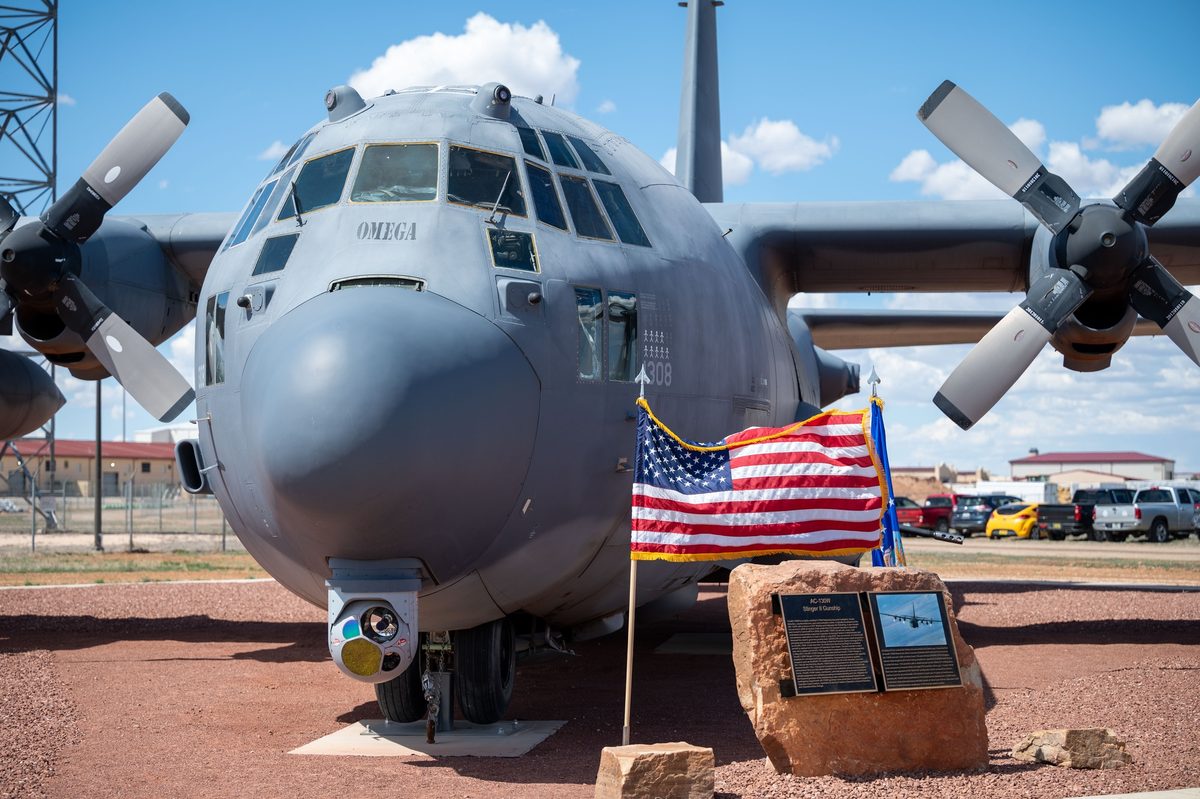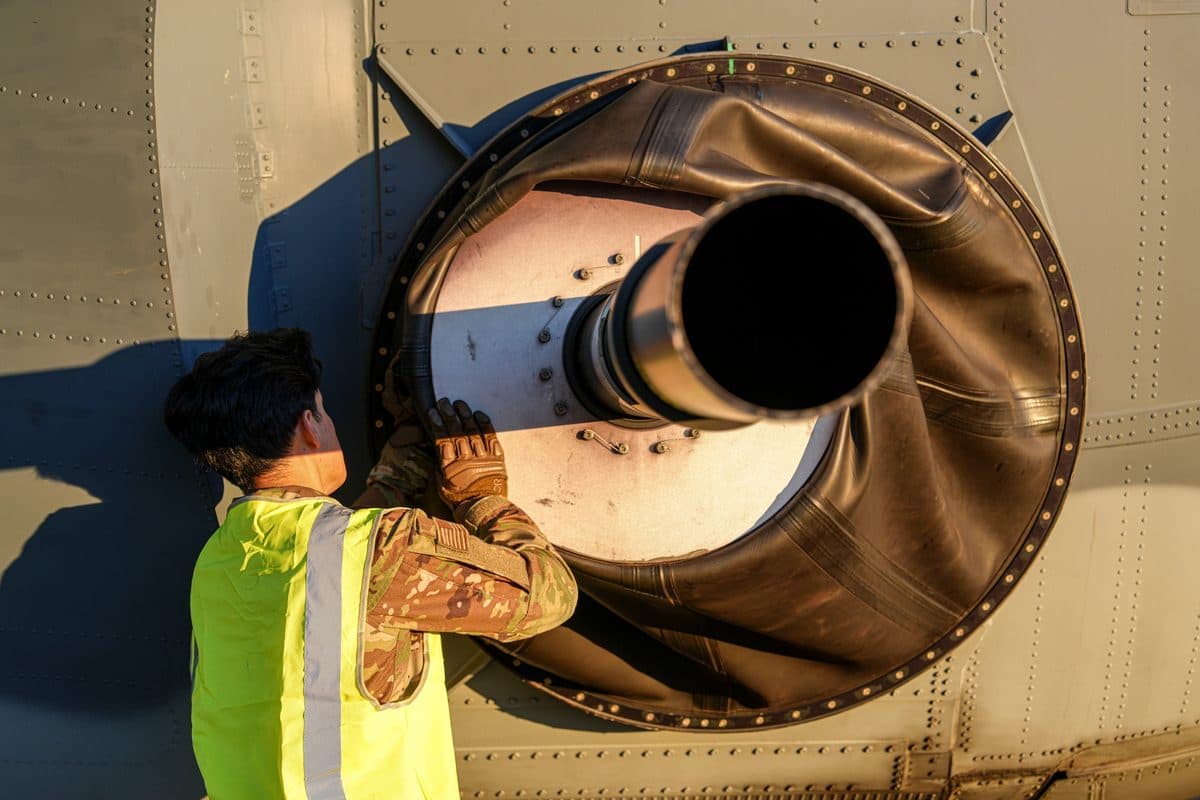

There is a howitzer inside this airplane. A 105mm cannon, the same weapon that sits behind sandbags at forward operating bases, is bolted to the floor of a four-engine turboprop, firing through an open port in the fuselage while the aircraft flies in a continuous left-hand bank at 12,000 feet. And it hits what it aims at. Every time. The AC-130 gunship is the strangest, most effective close air support platform ever built, and the fire control system that makes it work is one of the most underappreciated pieces of engineering in modern warfare.
A Cargo Plane With a Howitzer
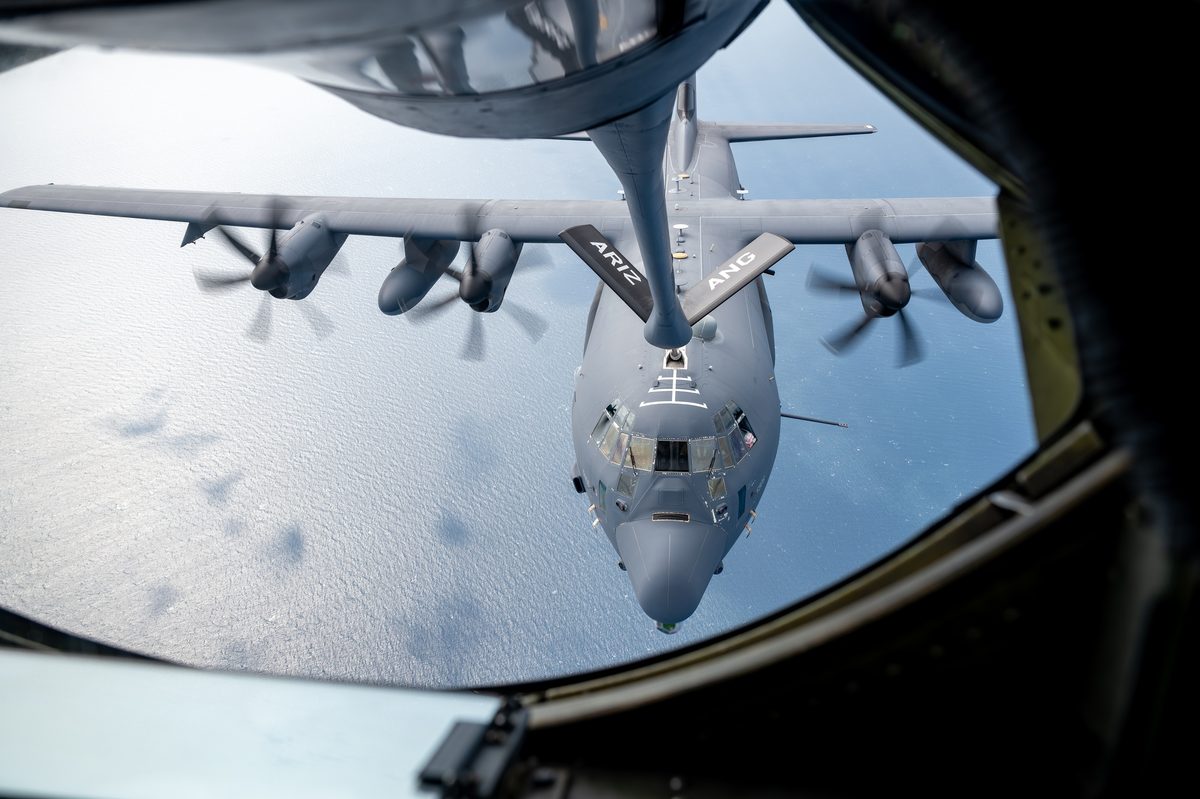
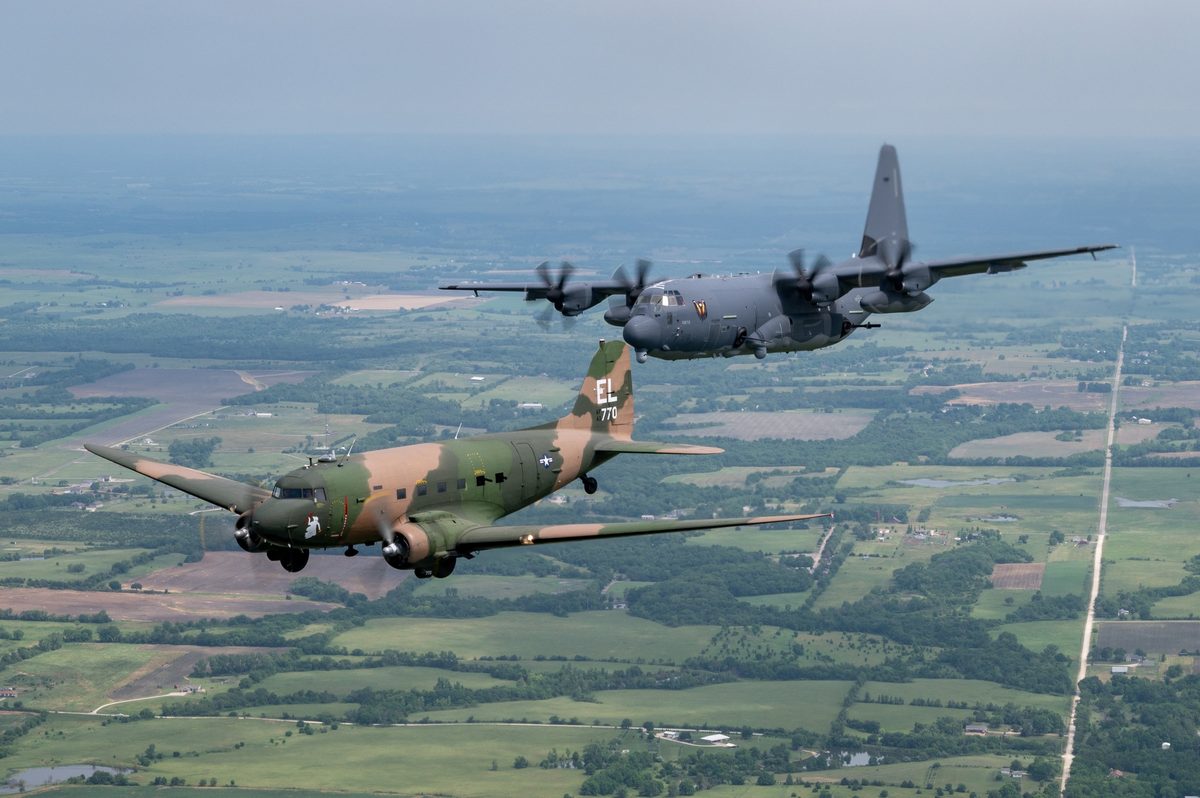
The AC-130J Ghostrider is built on the C-130J Super Hercules airframe, the same platform that hauls pallets of ammunition, drops paratroopers, and lands on dirt strips in remote locations. From the outside, it looks almost identical to a standard Hercules. Four Rolls-Royce AE 2100D3 turboprops. A high wing. A rear cargo ramp. The kind of airplane you see at every military airfield in the world and never look at twice.
The difference is on the left side. The AC-130J carries a 105mm M102 howitzer, a 30mm GAU-23/A Bushmaster chain gun, AGM-114 Hellfire missiles, GBU-39 Small Diameter Bombs, and AGM-176 Griffin missiles. The 105mm cannon fires the same rounds used by ground artillery, high-explosive shells weighing 33 pounds each, at a rate of 6-10 rounds per minute. The 30mm Bushmaster fires 200 rounds per minute. Together, they give a single aircraft the sustained firepower of an entire artillery battery, delivered from altitude with precision that ground artillery cannot match.
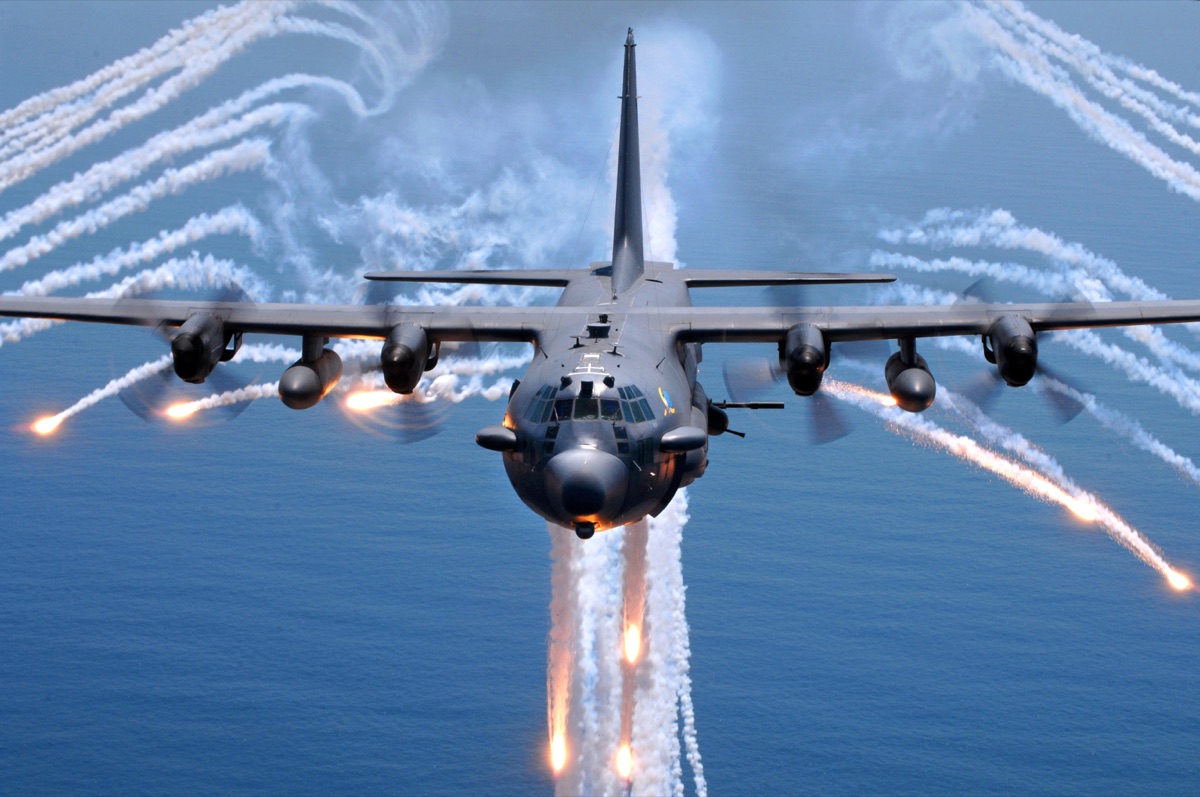
The Pylon Turn: Why the Gunship Flies in Circles
Every AC-130 engagement follows the same geometry. The aircraft enters a left-hand banking turn around the target, maintaining a constant radius and altitude. This maneuver, called a pylon turn, keeps all weapons pointed at the same spot on the ground while the aircraft orbits overhead. It looks simple. It is not.