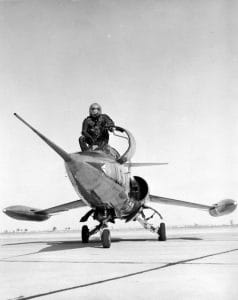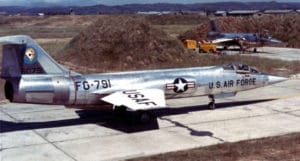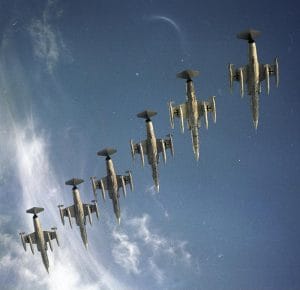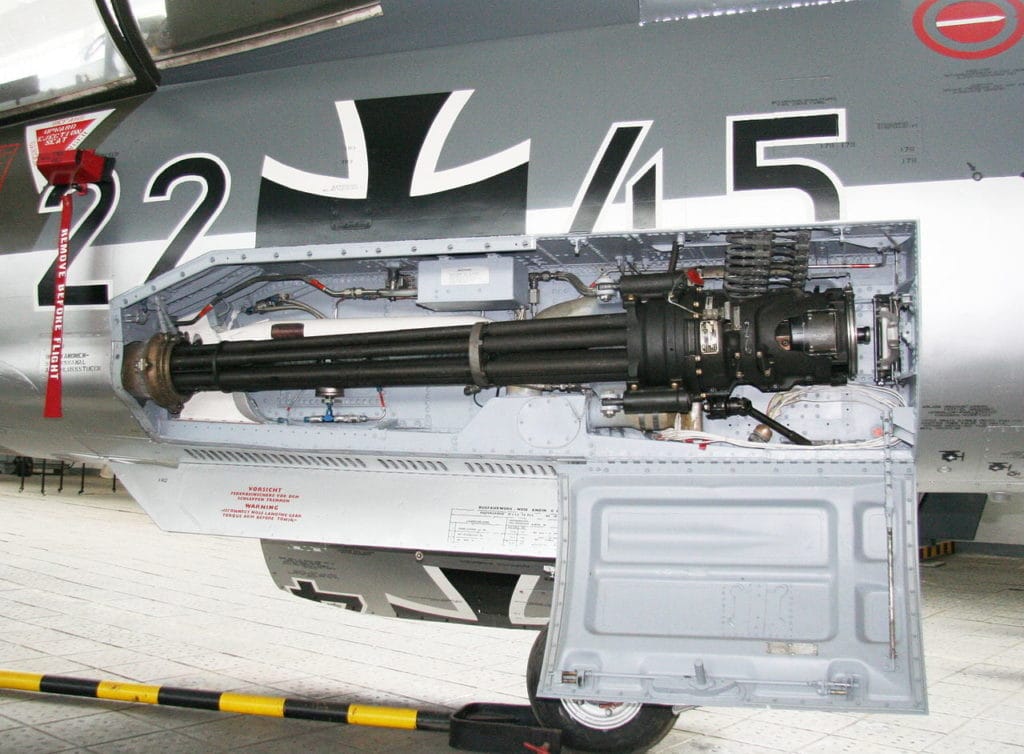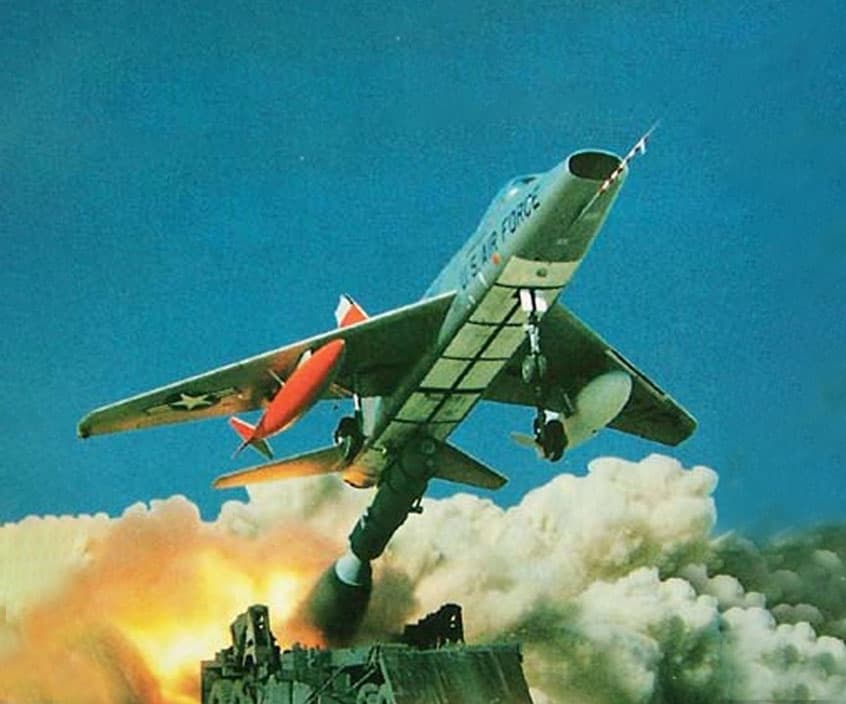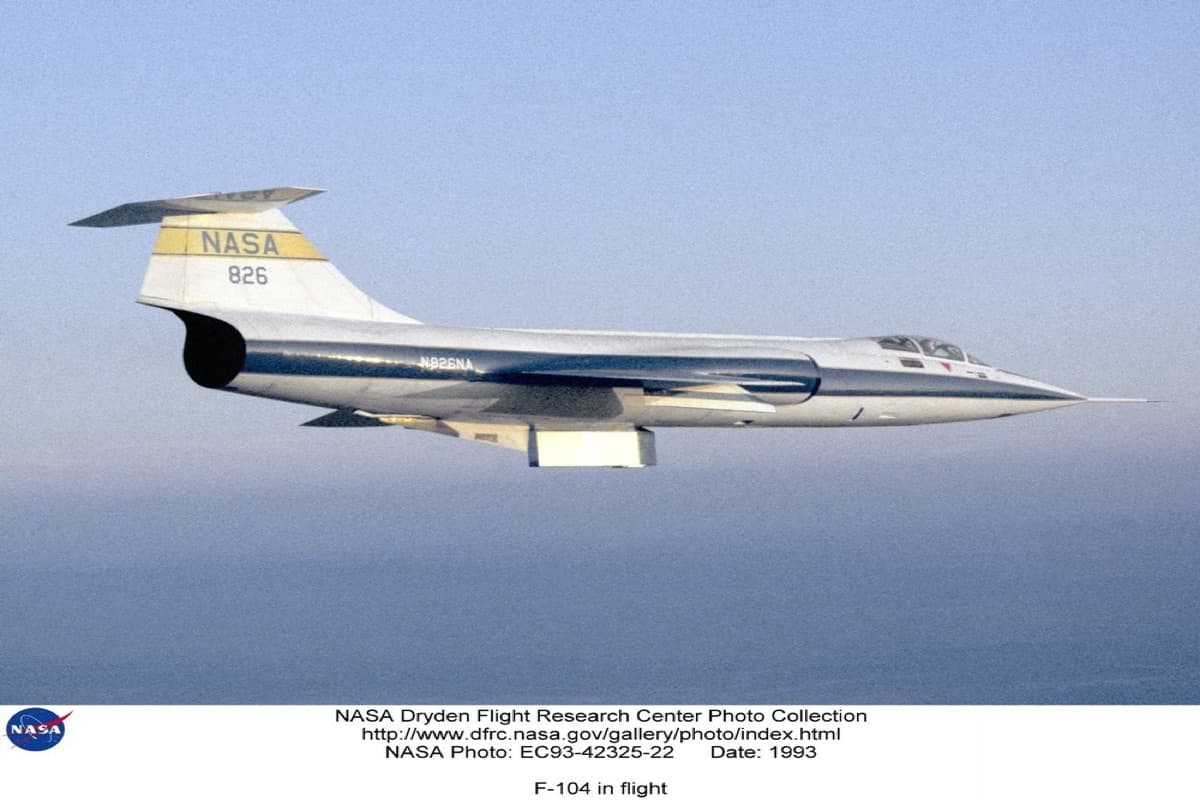

Lockheed’s F-104 Starfighter is perhaps the best example of what happens when the drawing board goes to the flight deck with absolutely no checks and balances along the way. Sleek, aerodynamic, and capable of Mach 2, the F-104 appeared to answer all the needs of the United States Air Force when seeking a 1950s air superiority fighter. In practice, however, it proved to be little more than a fast moving “lawn dart”.
Performance:
The Starfighter had no radar systems and depended upon clear, near-perfect weather conditions to be combat effective. It arrived in time to fight in the Korean War, where it achieved about a 1:1 ratio against Soviet pilots. Public relations attempted to correct this multiple times by saying the Starfighter achieved a 15:1 ratio against MiG-15s and 19s, but absolutely nothing corroborated this.
Reliability Issues:
Since its release in 1954, the F-104 Starfighter promised to be the pivotal answer to an increasingly fast, jet-powered fleet of fighter aircraft. It was meant to be an air superiority aircraft. And it was purchased in staggering bulk by the United States Air Force. At its height, almost 300 Starfighters were in the fleet. Unfortunately, it was also known for disastrous accidents, an atrocious air-to-air and air-to-ground record, and had an incredible difficulty landing. Of the original 300 Starfighter, 49 crashed due to accidents and 18 pilots lost their lives as a result. And sadly, this was only the beginning.