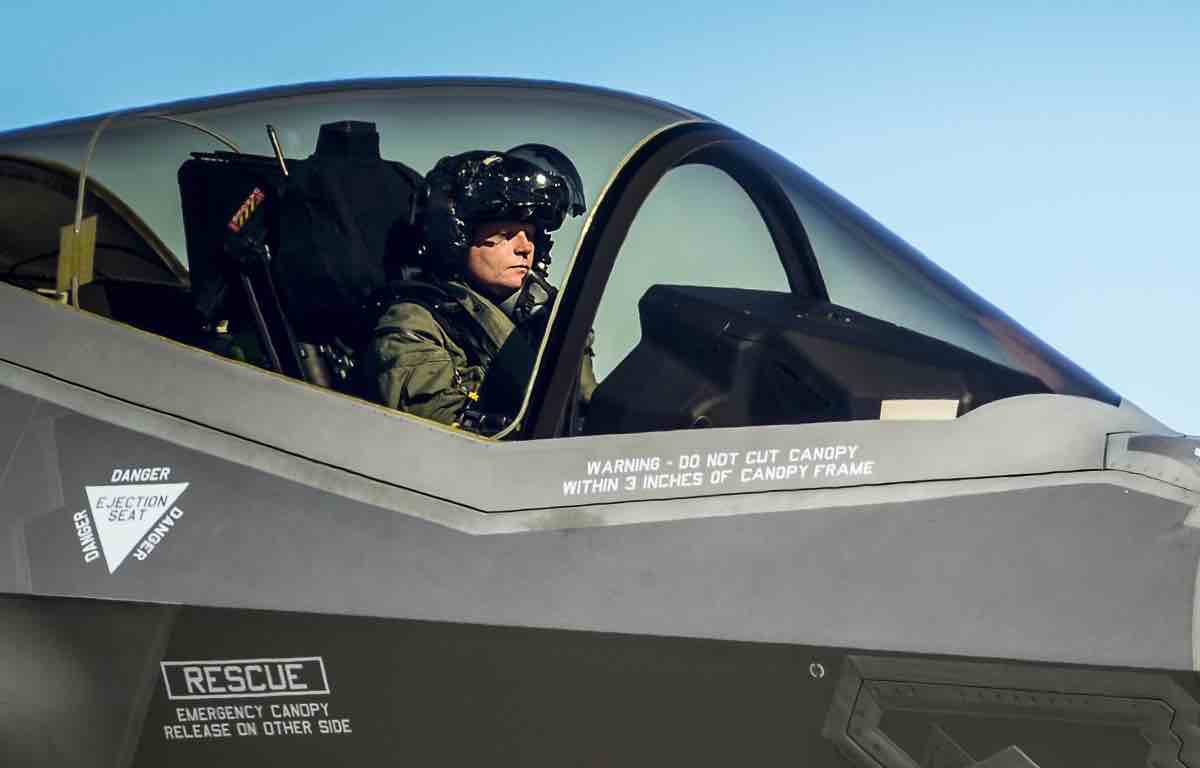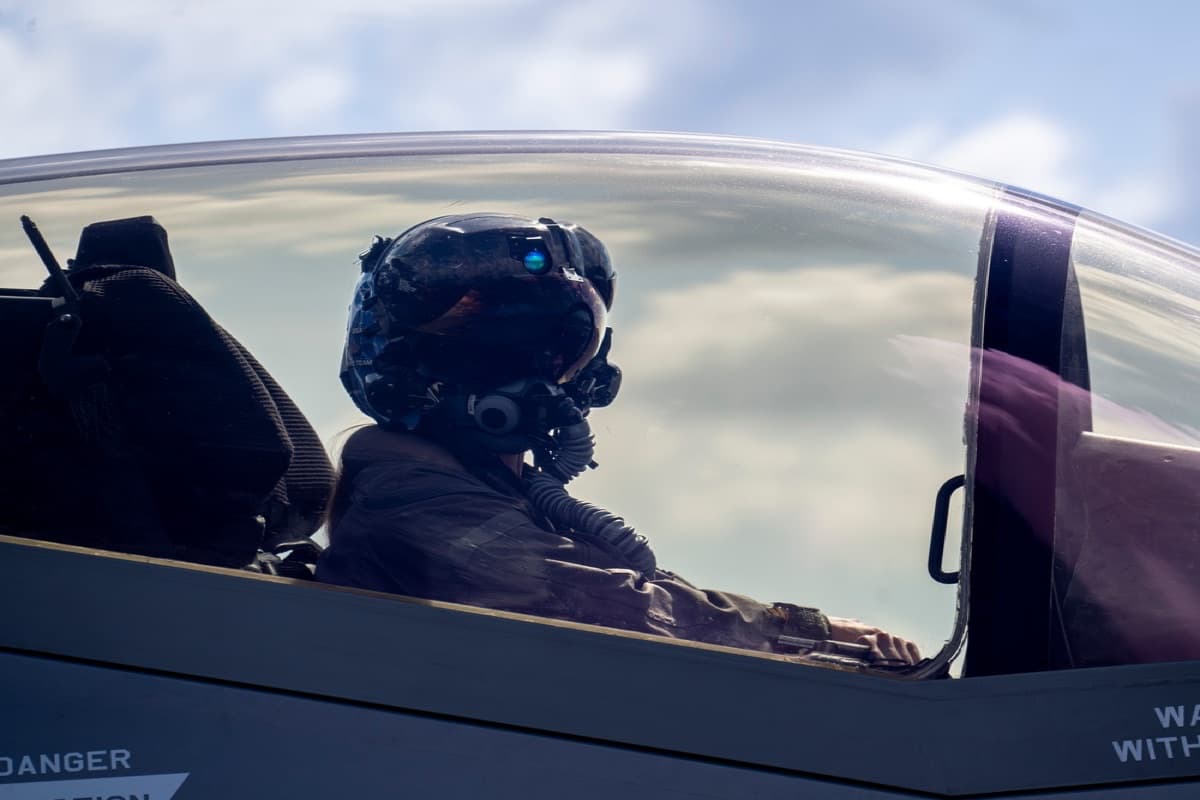

Any pilot will tell you that you can’t look through the airframe to see what’s beneath you, or behind you, or even sometimes beside you. Honestly, it probably doesn’t even take a pilot to tell you that much. However, those days are over. The F-35 Lightning II, the most technologically-advanced fighter aircraft of all time, brings unheard of capabilities into every facet of the plane. Its software system alone contains over 8 million lines of code, equivalent to about 150,000 pages of text. The software controls the latest advancements in weapons systems, sensor fusion, electronic attack, radar functionality, communications, navigation and last but most certainly not least – the F-35 Helmet Mounted Display.
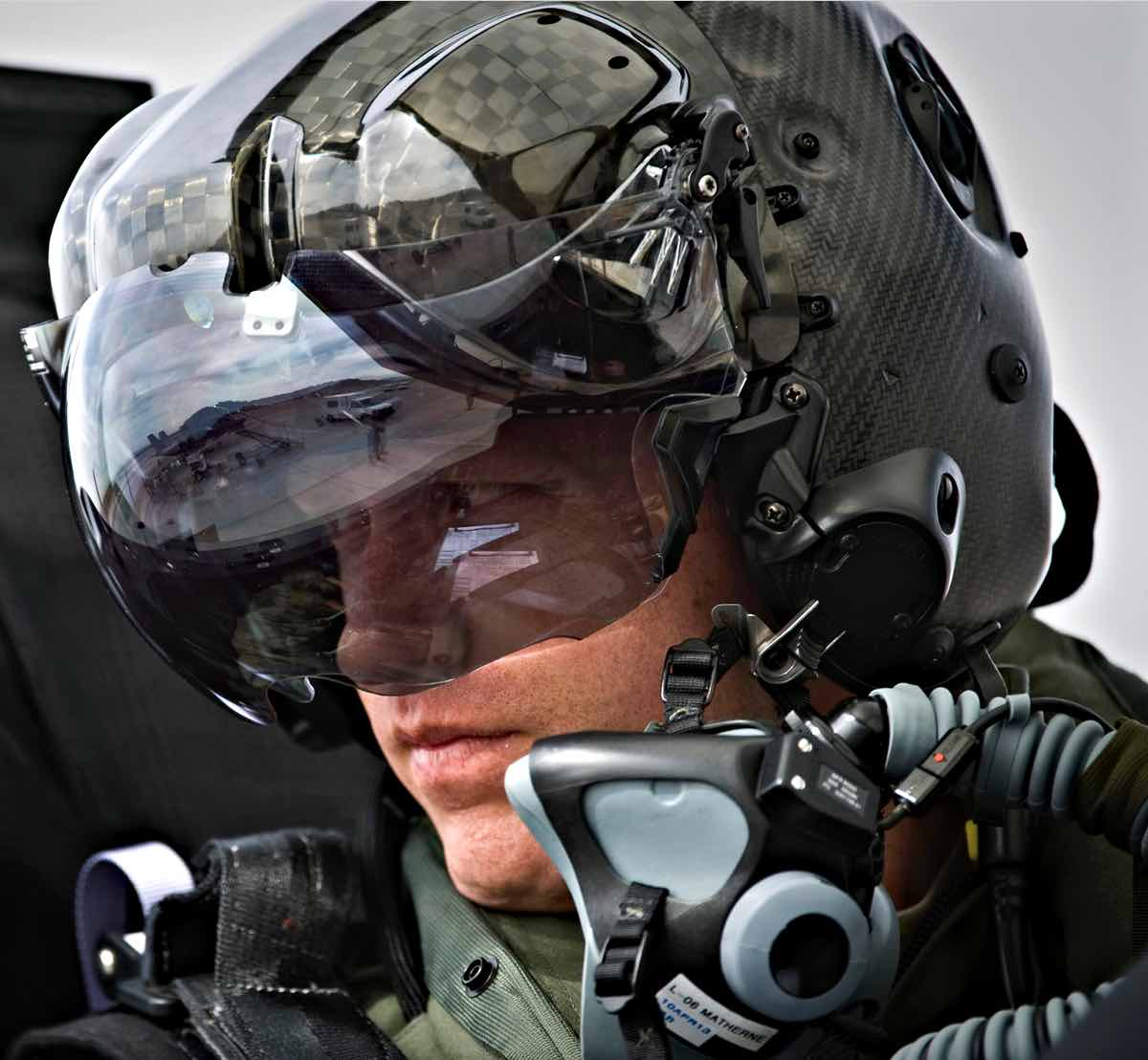
The F-35 Helmet Mounted Display changes everything we knew about the relationship between the pilot and the plane. Gone are the days of maneuvering the aircraft in order to see the target. Now, the F-35 helmet takes video streams from all around the aircraft, fuses them into one coherent display inside the helmet to give the pilot 360-degree situational awareness. The pilot can look down and see a video of what’s below them, beneath the cockpit. Incredible.
How does this work?
F-35 Helmet Features
The Distributed Aperture System (DAS) in the F-35 streams real-time images into the helmet from six infrared-cameras distributed around the aircraft, allowing pilots to “see through” the cockpit or airframe. Additionally, the helmet provides pilots night vision through the use of an integrated camera. In order to complete their mission, all the information the pilot needs - airspeed, heading, altitude, targeting information and warnings -projeccts onto the helmet’s visor. A traditional Heads-up Display displayed this information prior to integarting the data into the visor. This approach increases responsiveness and noticeably reduces the pilot’s workload.