Daniel Mercer writes about military history with a focus on the 20th century, including World War II, the Cold War, and Vietnam. His work looks at how decisions made decades ago still influence doctrine, planning, and assumptions today.
In August 2015, two treasure hunters announced they had found a Nazi train buried near the Polish
city of Wałbrzych (pronounced VAW-bzhikh). The train, they claimed, was loaded with gold, weapons,
and perhaps even stolen artwork, hidden in an underground tunnel as the Third Reich collapsed in
early 1945. The story made headlines around the world. Treasure hunters descended on the region.
Polish authorities scrambled to manage the chaos.
The discovery, it turned out, was never confirmed. No train was ever recovered. But the legend
didn't die; it grew. Subsequent searches in 2016, 2018, and even as recently as 2025 have kept
the story alive. Each new claim generates fresh media attention, drawing more searchers to the
Owl Mountains of Lower Silesia.
What makes this story so persistent? The answer lies in the intersection of documented historical
fact, wartime chaos, and the enduring human fascination with buried treasure. The following 15
facts separate what historians know from what treasure hunters hope.
What's Fact vs What's Legend
Verified Historical Facts
• Nazis systematically looted gold across Europe
• Project Riese tunnels exist in the Owl Mountains
• Thousands died building these tunnels as forced laborers
• Reichsbank gold was found at Merkers mine (1945)
• Nazis evacuated assets by train as the war ended
Unverified Claims (The Legend)
• A treasure-laden train is buried near Wałbrzych
• The train contains gold, art, or weapons
• Ground-penetrating radar detected a buried train
• A deathbed confession revealed the train's location
• The train entered a tunnel and never emerged
1. The Legend Centers on a Real Place with a Dark History
The alleged Nazi gold train is said to be hidden near Wałbrzych, a city in southwestern Poland
that was part of German Silesia until 1945. During the war, the region was known as Waldenburg
and served as an important industrial zone for the Nazi war machine.
The area's significance comes from Project Riese ("Giant" in German), a massive construction
effort launched in 1943. Using forced labor from concentration camps - primarily Gross-Rosen
and its subcamps - the Nazis excavated more than nine kilometers of tunnels into the Owl Mountains.
The exact purpose of these tunnels has never been definitively established, though historians
believe they were intended for underground weapons production or as a potential headquarters.
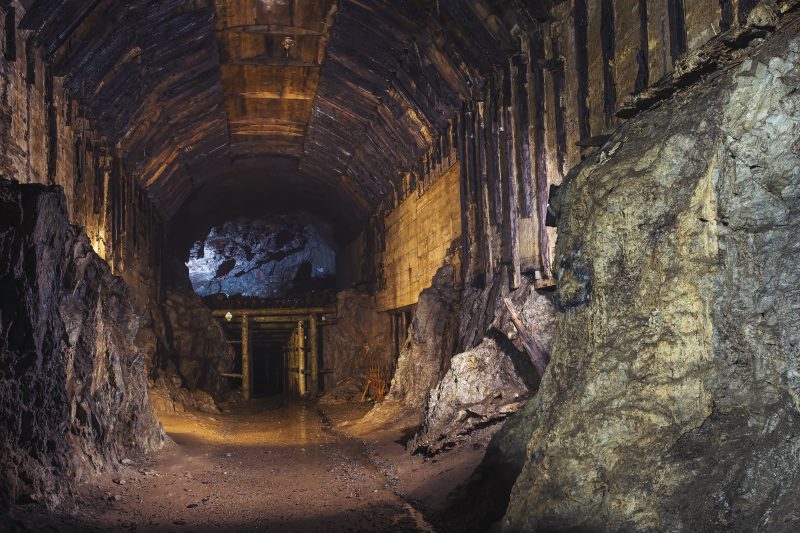
The Underground City of Osówka - a preserved section of the Project Riese tunnel network in the Owl Mountains. Photo: Dolny Śląsk Travel
The Project Riese tunnels are real. Thousands of laborers died during their construction.
Several are now tourist attractions. This documented infrastructure provides the foundation
for the gold train legend - if tunnels exist, the reasoning goes, perhaps hidden trains do too.
2. Nazi Looting Operations Were Systematic and Documented
Whatever the truth about the Wałbrzych train, Nazi Germany's theft of gold, art, and valuables
across occupied Europe is extensively documented. The regime operated a coordinated network of
looting agencies, including the Einsatzstab Reichsleiter Rosenberg (ERR) for art and cultural
property and various SS and military units for gold and currency.
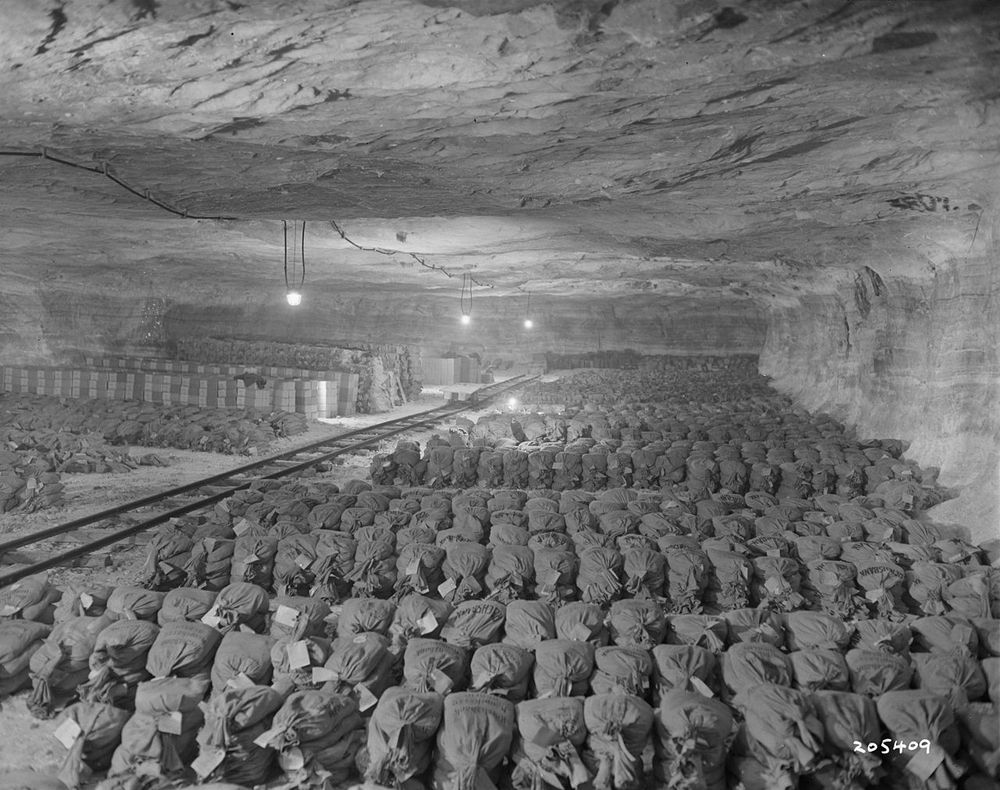
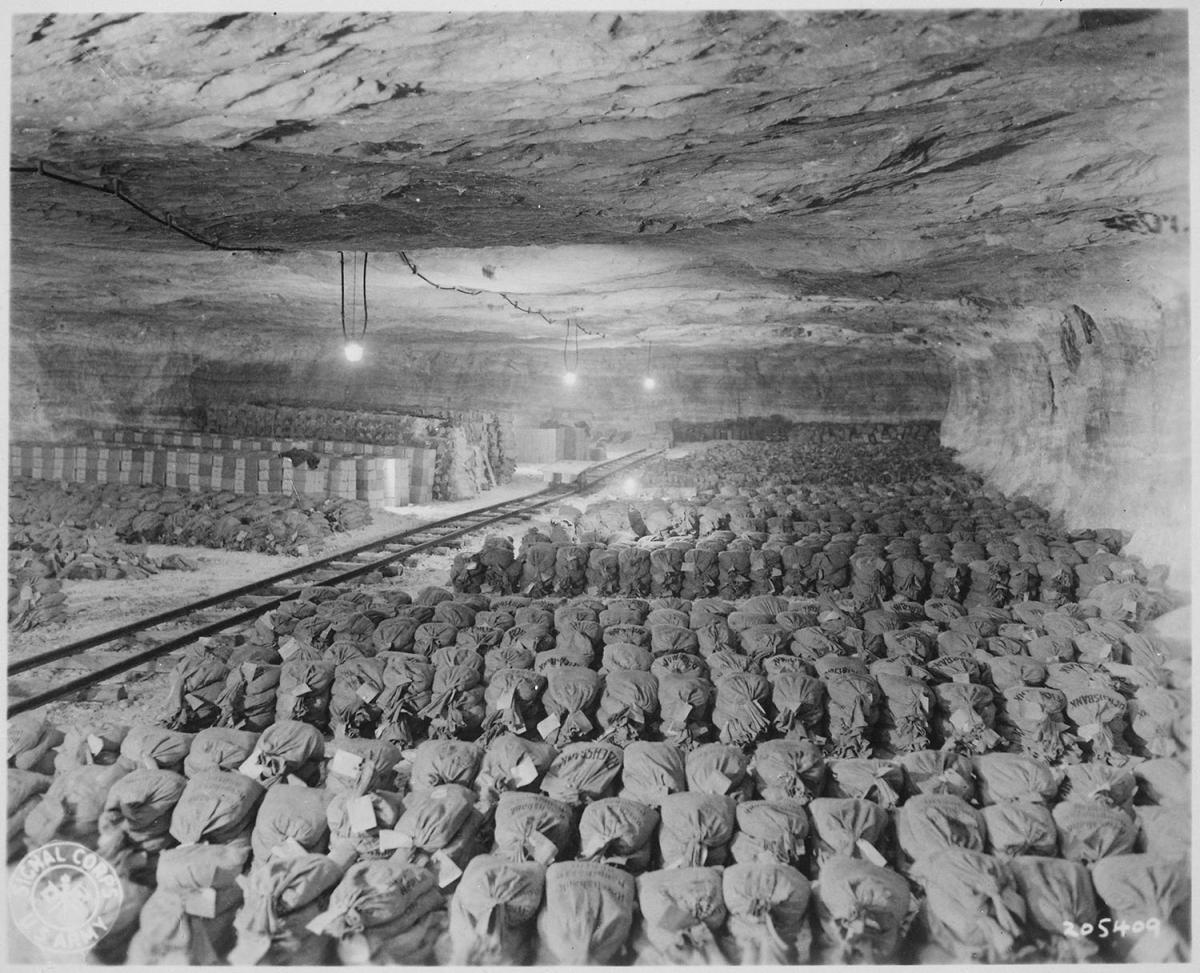
Reichsbank gold and currency discovered by U.S. forces at Merkers Mine, April 1945. Photo: U.S. National Archives
The Reichsbank, Germany's central bank, processed gold stolen from occupied nations and from
Holocaust victims. By war's end, the Nazis had seized an estimated $580 million in monetary
gold from European central banks alone - equivalent to roughly $10 billion today. This figure
does not include personal valuables taken from concentration camp victims, which historians
believe totaled hundreds of millions more.
Much of this stolen wealth was recovered by Allied forces in 1945, but significant quantities
remained unaccounted for. This gap between what was taken and what was found fuels legends
like the Nazi gold train.
3. The Most Famous Nazi Gold Discovery Was at Merkers Mine
On April 4, 1945, U.S. Army units stumbled upon one of history's greatest treasure troves.
Acting on a tip from displaced persons, soldiers from the 90th Infantry Division entered the
Kaiseroda salt mine near Merkers, Germany. What they found was astonishing: the entire gold
reserve of the Reichsbank, plus looted art, currency, and valuables from across Europe.
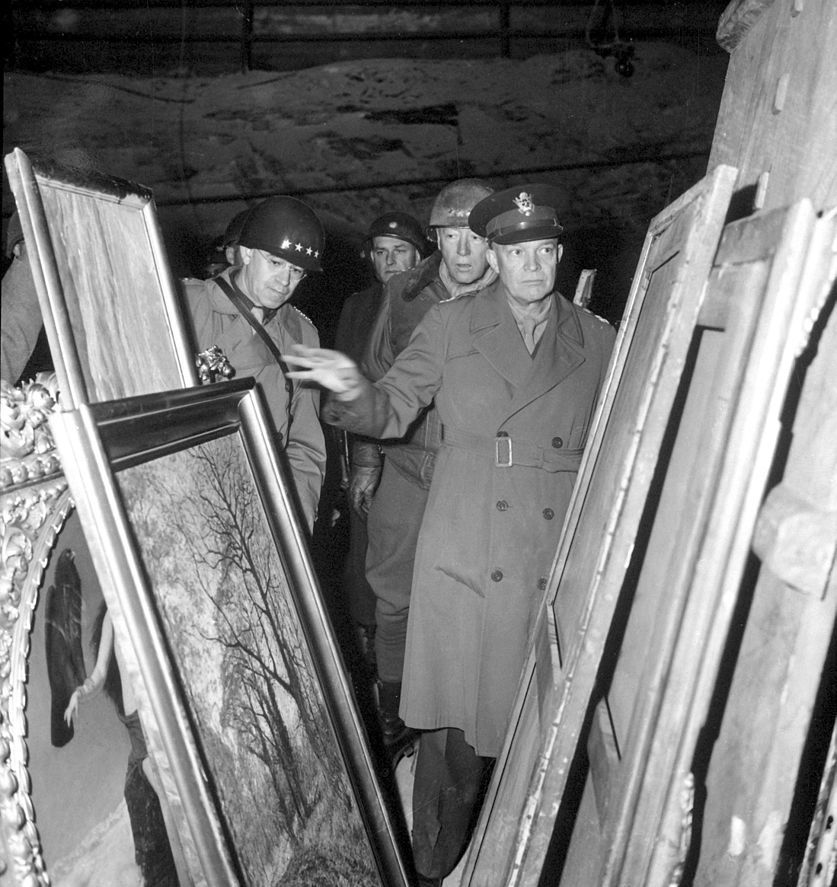
General Eisenhower inspects stolen artwork recovered from Merkers Mine, April 1945. Photo: U.S. National Archives
The Merkers discovery included approximately 8,307 gold bars weighing over 100 tons, plus
bags of gold coins, foreign currency, and over 400 tons of artwork. General Dwight D. Eisenhower
personally inspected the mine on April 12, 1945 - the same day President Franklin Roosevelt died.
The Merkers find demonstrated that the Nazis did move their reserves as the war ended.
This documented evacuation gives the gold train legend historical plausibility - if the
Reichsbank evacuated gold to Merkers, could other trains have carried treasure elsewhere?
4. Trains Were the Primary Evacuation Method
As Allied and Soviet forces advanced in early 1945, the Nazi regime launched desperate efforts
to relocate assets, documents, and equipment away from the fighting. Railways were the backbone
of these evacuations. Germany's extensive rail network allowed rapid movement of heavy cargo
that trucks could not handle.
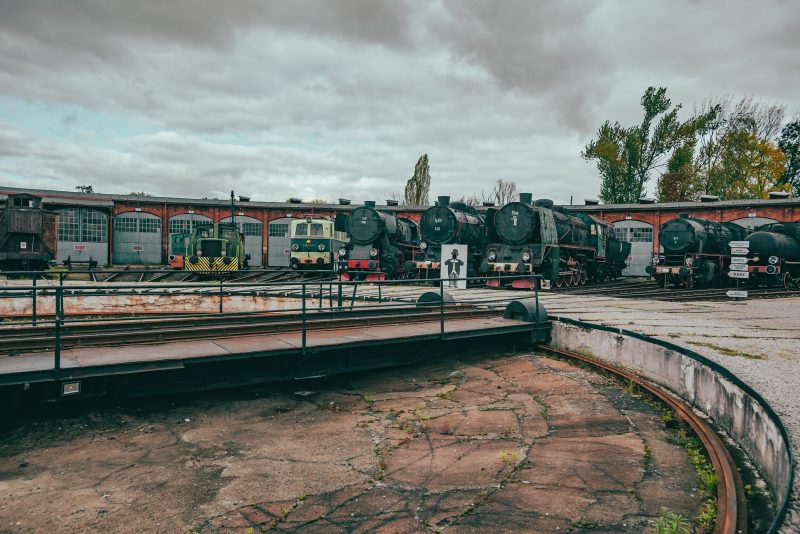
Historic steam locomotives at the Railroad Museum in Jaworzyna Śląska, Lower Silesia - the type used for wartime evacuations. Photo: Dolny Śląsk Travel
Documented evacuation trains carried everything from art collections to industrial machinery
to concentration camp records. Some trains made it to their destinations; others were
captured, abandoned, or destroyed. In the chaos of Germany's collapse, not every shipment
was accounted for - creating space for legends about trains that simply vanished.
5. Lower Silesia Was a Refuge for Nazi Officials
The region around Wałbrzych had strategic importance beyond its tunnels. As Berlin came under
siege and the Reich crumbled, Nazi officials and military commanders increasingly looked to
areas like Lower Silesia as potential refuges or last-ditch redoubts.
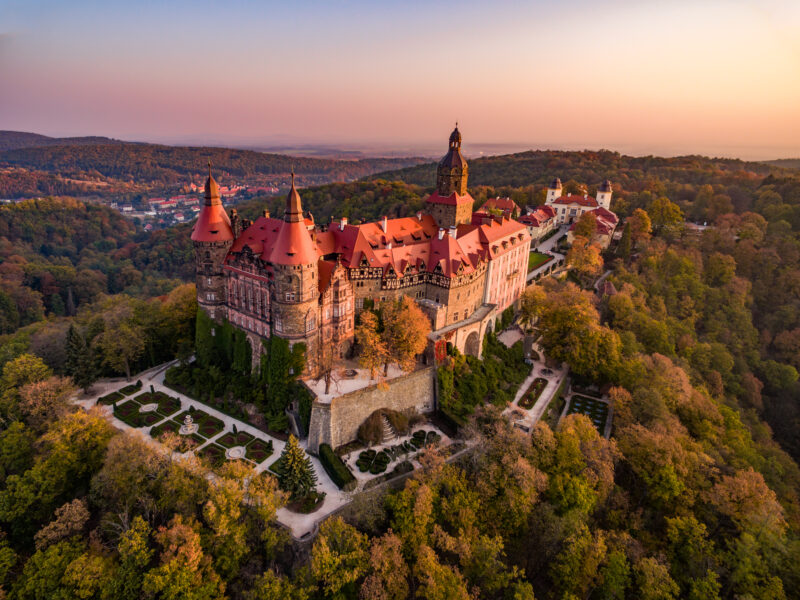
The massive Książ Castle (German: Schloss Fürstenstein), located just outside Wałbrzych, was
seized by the Nazis in 1944. The SS evicted the castle's owners and began converting it for
unknown purposes, constructing tunnels beneath the structure connected to the broader Project
Riese complex. Some historians speculate it was intended as a headquarters for Hitler or
other senior officials.
Książ Castle (Zamek Książ) near Wałbrzych - the third largest castle in Poland, seized by the Nazis in 1944. Photo: Dolny Śląsk Travel
The presence of high-value infrastructure and senior-level interest in the region adds
context to the gold train legend. If the Nazis considered this area important enough for
a potential headquarters, could they have also sent valuable cargo there?
Timeline: The Nazi Gold Train Legend
1943Project Riese construction begins using concentration camp labor
1944Nazis seize Książ Castle; tunnel construction expands
Apr 1945U.S. forces discover Reichsbank gold at Merkers mine
May 1945Soviet forces capture Lower Silesia; Project Riese abandoned
1945-1989Cold War secrecy; Project Riese sites restricted by communist government
Aug 2015Koper and Richter announce gold train discovery; media frenzy begins
Dec 2015AGH University scientists find "no train, no tunnel" at claimed site
Aug 2016Official excavation finds nothing; natural geological formations only
2018-2025Multiple new claims and searches continue; none confirm a train
6. The 2015 "Discovery" Came from Ground-Penetrating Radar
The modern gold train frenzy began in August 2015 when two men - Piotr Koper (Polish) and
Andreas Richter (German) - announced they had located a buried train using ground-penetrating
radar (GPR). Their scans, they claimed, showed a 100-meter-long object beneath a railway
embankment between Wrocław and Wałbrzych.
The claim electrified media worldwide. The men demanded 10% of any treasure's value as a
finder's fee under Polish law. Polish authorities acknowledged the claim warranted investigation.
The city of Wałbrzych was suddenly famous.
GPR is a legitimate archaeological and engineering tool. It sends radar pulses into the ground
and measures reflections to detect buried objects. However, GPR data requires expert
interpretation, and underground geological features can produce signals that resemble
man-made objects. The radar images released by Koper and Richter were never independently
verified before the initial announcement.
7. Subsequent Scans Found No Evidence of a Train
Following the 2015 announcement, scientists from the AGH University of Science and Technology
in Kraków conducted their own GPR survey of the site. Their December 2015 report concluded
there was "no train, no tunnel" at the indicated location. The anomalies in the original
scans were likely geological features or infrastructure remnants, not a buried train.
The 90th Division discovered over 7,000 bags of Reichsbank gold at Merkers Mine, Germany, April 1945. Photo: U.S. National Archives
The original claimants disputed these findings and proceeded with excavation anyway. In
August 2016, Koper and Richter dug at the site. They found no train, no tunnel, and no
treasure - only natural geological formations.
8. The Legend Predates the 2015 Claim by Decades
Koper and Richter didn't invent the Nazi gold train story - they tapped into a legend that
had circulated in Lower Silesia since the war's end. Local folklore had long held that
treasure-laden trains disappeared into the mountains as the Red Army approached.
One version claims a train entered a tunnel near the 65th kilometer marker of the
Wrocław-Wałbrzych railway and never emerged. Another speaks of a deathbed confession by a
German railway worker. These stories were passed down through generations of residents,
mixing with the documented history of Project Riese to create a compelling narrative.
No documentary evidence has ever confirmed these oral traditions. But in a region where
real tunnels exist and the Nazis demonstrably conducted secret construction, the stories
have proven remarkably durable.
9. Cold War Secrecy Amplified the Mystery
After 1945, Lower Silesia became part of Poland and fell behind the Iron Curtain. The
communist government restricted access to Project Riese sites, partly for security reasons
and partly because the tunnels held potential military value. This secrecy allowed rumors
to flourish without investigation.
Interior of the Osówka tunnel complex - part of the Project Riese network that fueled gold train speculation. Photo: Dolny Śląsk Travel
Soviet forces had swept through the region first in early 1945, and some historians suggest
they may have removed whatever valuables existed before Western scrutiny was possible.
However, no Soviet records confirming such removals have surfaced.
The decades of restricted access meant that when Poland opened up after 1989, the mysteries
of the region were rediscovered by a new generation. Treasure hunters began exploring, and
old stories found new audiences.
10. The "Gold" Might Never Have Been Gold at All
Even if a train were found buried in Lower Silesia, there's no guarantee it would contain
gold. Various versions of the legend have included different alleged cargoes: gold bars,
gold coins, stolen artwork, weapons, documents, or amber from the famous Amber Room.
The conflation of different valuables into a single "treasure train" reflects how legends
evolve. Each retelling adds new elements. A story about an evacuation train carrying
documents becomes, over time, a story about a train loaded with gold.
Historians note that while gold would have been valuable, other evacuated materials -
particularly documents about war crimes - might have been deliberately destroyed rather
than hidden. The assumption that anything buried must be treasure may itself be flawed.
11. Treasure Hunters Have Damaged Historical Sites
The gold train frenzy has had tangible negative consequences. Since 2015, treasure hunters
- both amateur and semi-professional - have descended on the region with metal detectors,
excavation equipment, and little regard for archaeological protocols.
Książ Castle has become a major tourist attraction, drawing visitors interested in the gold train legend. Photo: Dolny Śląsk Travel
Some Project Riese tunnel entrances have been damaged by unauthorized digging. Agricultural
land has been disturbed. Local authorities have struggled to manage the influx while
preserving legitimate historical sites.
Archaeologists and historians have expressed frustration that sensationalized treasure
hunting overshadows the genuine historical significance of the region - including the
documented use of forced labor and the deaths of thousands during Project Riese construction.
12. The Search Continues Despite Repeated Failures
Despite the 2016 excavation finding nothing, searches have continued. In 2018, another
team claimed to have found "train-like" anomalies at a different location. As recently as
2025, Polish authorities granted permission for yet another excavation attempt.
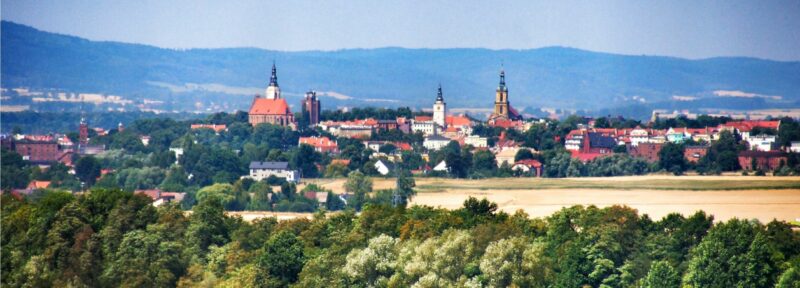
The Owl Mountains (Góry Sowie) region continues to attract treasure hunters and tourists alike. Photo: Dolny Śląsk Travel
Each new search generates media coverage, which generates tourism, which generates economic
activity for the region. Some critics suggest this cycle perpetuates itself regardless of
whether any train exists. Wałbrzych has embraced its association with the legend, and
local businesses benefit from treasure-hunting tourists.
13. Similar Legends Exist Across Europe
The Nazi gold train is not unique. Across Europe, stories persist of buried Nazi treasure,
missing art, and hidden valuables. Lake Toplitz in Austria allegedly contains sunken crates
of gold or counterfeit currency. The Amber Room supposedly lies hidden somewhere between
Königsberg and points west. Nazi gold in Swiss banks remained a diplomatic issue for decades.
These legends share common elements: documented Nazi looting, wartime chaos, incomplete
postwar recovery, and decades of speculation. They persist because they contain kernels
of truth wrapped in layers of wishful thinking.
The pattern suggests that the Nazi gold train is less a unique mystery than a regional
variation of a widespread phenomenon - the hope that somewhere, Nazi treasure waits to
be found.
14. Experts Remain Deeply Skeptical
Mainstream historians and archaeologists have consistently expressed doubt about the
gold train's existence. Their skepticism rests on several points: no documentary evidence
of such a train exists in German, Soviet, Polish, or Allied archives; the specific claims
have been investigated and found wanting; and the legend has all the characteristics of
folklore rather than history.
Historical recreation / artistic depiction of a WWII-era train. No buried train has been found in the Wałbrzych area.
Professor Janusz Skoczylas of Adam Mickiewicz University noted in 2015 that the story
"is a myth." Others have pointed out that the chaos of the war's end makes it extremely
unlikely that a train could have been hidden and concealed without any record surviving.
This doesn't mean a train is impossible - only that there's currently no credible evidence
for one. Absence of evidence isn't proof of absence, but it does suggest caution about
claims that capture media attention.
15. The Real Story May Be More Valuable Than Any Gold
Whether or not a treasure train exists, the Nazi gold train legend serves as a lens through
which to examine documented history. The story draws attention to the systematic looting
conducted by the Nazi regime, the use of forced labor in projects like Project Riese, and
the chaotic final months of World War II.
The tunnels of the Owl Mountains are real. The thousands who died building them were real.
The gold stolen from occupied nations and Holocaust victims was real. These documented
facts deserve attention regardless of whether a buried train is ever found.
For historians, the gold train phenomenon also illustrates how legends form and persist.
The combination of documented atrocities, genuine mysteries, Cold War secrecy, and human
fascination with treasure creates stories that resist debunking. Each failed search simply
moves the mystery to a new location.
The Nazi gold train may never be found - because it may never have existed. But the search
itself has become part of history, drawing new generations to confront the documented
crimes of the past while chasing legends that may be nothing more than smoke and mirrors.
Frequently Asked Questions
Has the Nazi gold train ever been found?
No. Despite numerous claims and searches since 2015, no train carrying Nazi gold has
ever been confirmed in the tunnels near Wałbrzych, Poland. Multiple ground-penetrating
radar surveys and excavations have failed to locate any train.
What is Project Riese?
Project Riese (German for "Giant") was a Nazi construction project in the Owl Mountains
of Lower Silesia. It consisted of underground tunnels and facilities built using forced
labor from concentration camps. The exact purpose remains unknown, though it may have
been intended for arms production or as a headquarters for Nazi leadership.
Where did the Nazi gold train legend come from?
The legend emerged from local folklore in Lower Silesia after WWII. It was amplified in
2015 when two treasure hunters claimed to have located a buried train using ground-penetrating
radar. Despite the claim attracting worldwide attention, subsequent investigations found
no evidence of a train.
Did the Nazis actually evacuate treasure by train?
Yes. The Nazis did evacuate gold, currency, and stolen valuables by train in the final
months of the war. The most famous discovery was the Merkers mine treasure found by U.S.
forces in April 1945, which contained Reichsbank gold reserves and looted art. However,
no such train has been found in the Wałbrzych area.
How much gold did the Nazis steal during WWII?
The Nazi regime seized an estimated $580 million in monetary gold from European central
banks alone - equivalent to roughly $10 billion today. This does not include personal
valuables taken from Holocaust victims, which historians estimate totaled hundreds of
millions more. Much of this was recovered at Merkers and other locations, but some
remains unaccounted for.
Why do people keep searching for the Nazi gold train?
The legend persists because of the documented history of Nazi looting, the existence of
real tunnels in the area (Project Riese), the chaos of the war's end, and the powerful
appeal of buried treasure stories. Each new claim generates media attention, which
perpetuates the cycle. The region also benefits economically from treasure-hunting tourism.