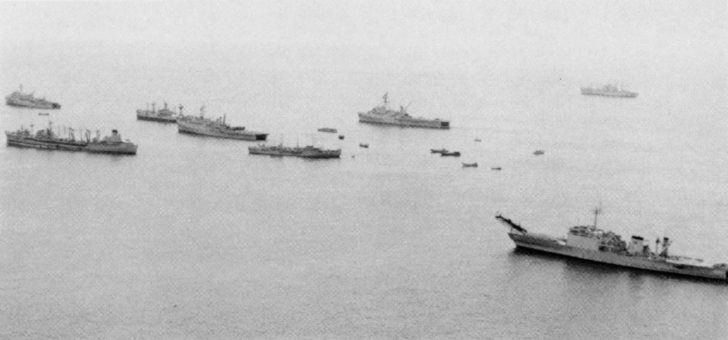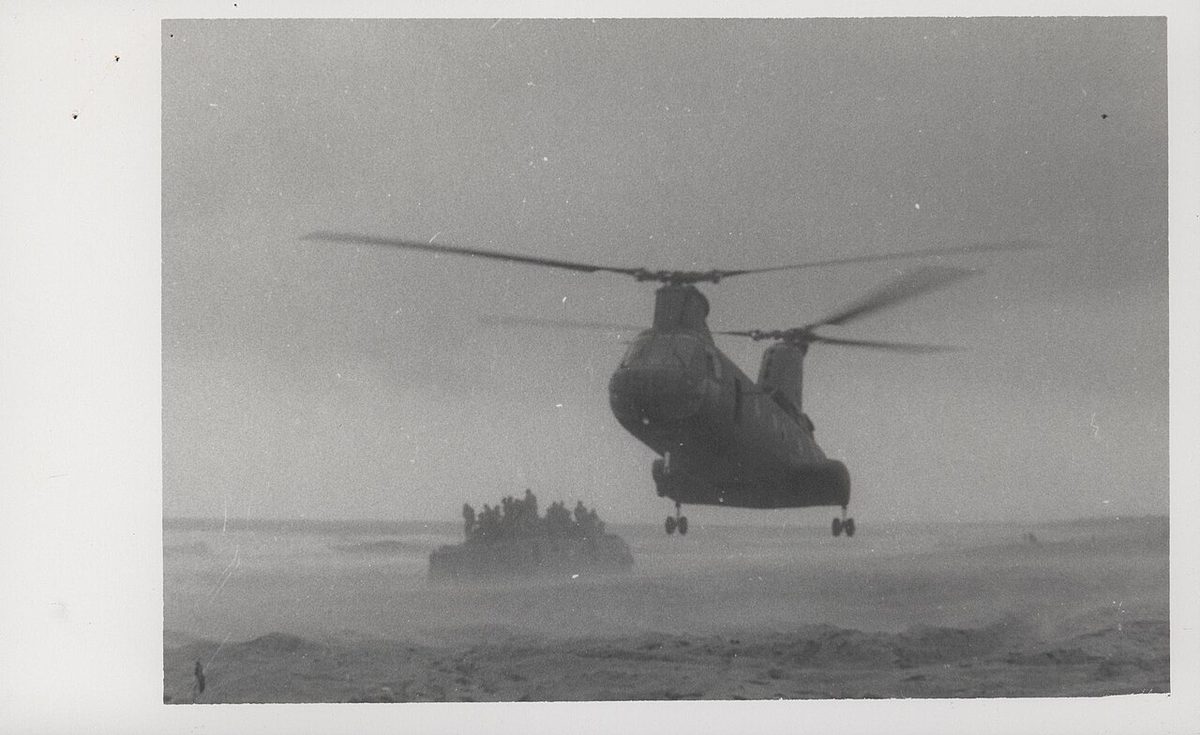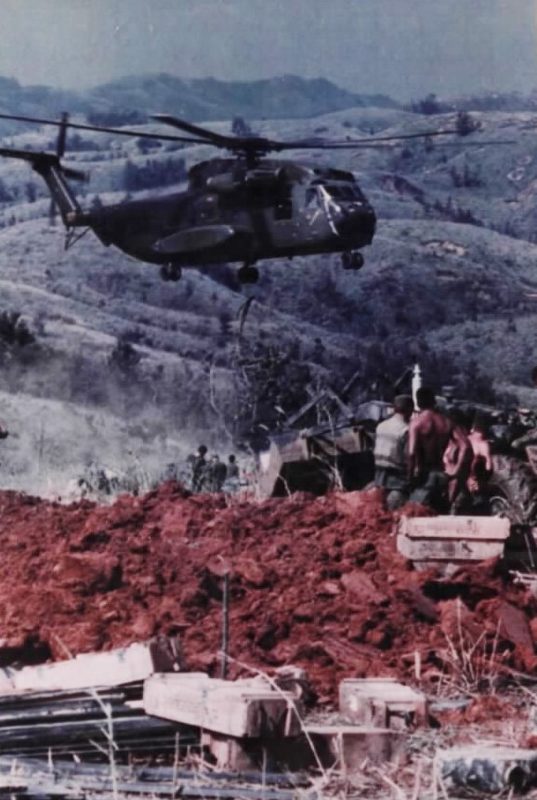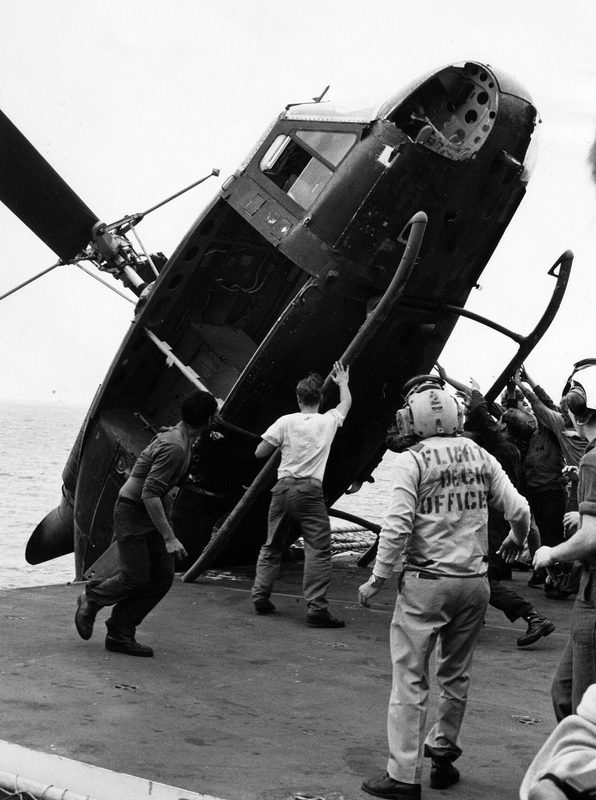

In 19 hours, Marine helicopters flew 682 sorties and lifted more than 7,000 people off rooftops and landing zones in Saigon as North Vietnamese tanks closed in on the South Vietnamese capital. Operation Frequent Wind, launched on April 29, 1975, remains the largest helicopter evacuation in history. It was a logistical miracle carried out against a backdrop of political paralysis, bureaucratic delay, and a commander who refused to accept that the war was lost until the very last possible moment.
The evacuation is remembered through a single photograph: a UH-1 Huey on a rooftop, a line of people climbing a ladder toward it. That image has become shorthand for the fall of Saigon, for American defeat in Vietnam, for the chaos of imperial withdrawal. But nearly everything the public believes about that photograph is wrong. The building wasn't the U.S. Embassy. The helicopter wasn't military. And the people on the ladder weren't the desperate masses left behind. They were CIA employees being evacuated from a safe house.
Understanding what actually happened during those 19 hours requires separating the mythology from the operational reality. Operation Frequent Wind was not a panicked improvisation. It was a meticulously planned military operation that worked precisely as designed. The failure was in the decision to launch it, not in its execution.
The Delay That Nearly Killed Thousands
By early April 1975, the strategic situation in South Vietnam was beyond recovery. North Vietnamese forces had captured the Central Highlands and were advancing south at a pace that stunned American intelligence analysts. Da Nang, the country's second-largest city, fell on March 29. Refugees were streaming toward Saigon. The question was no longer whether South Vietnam would fall, but when.