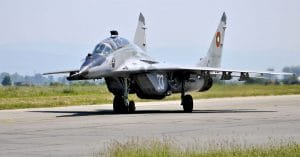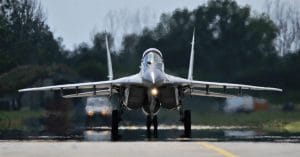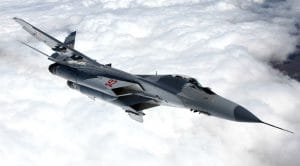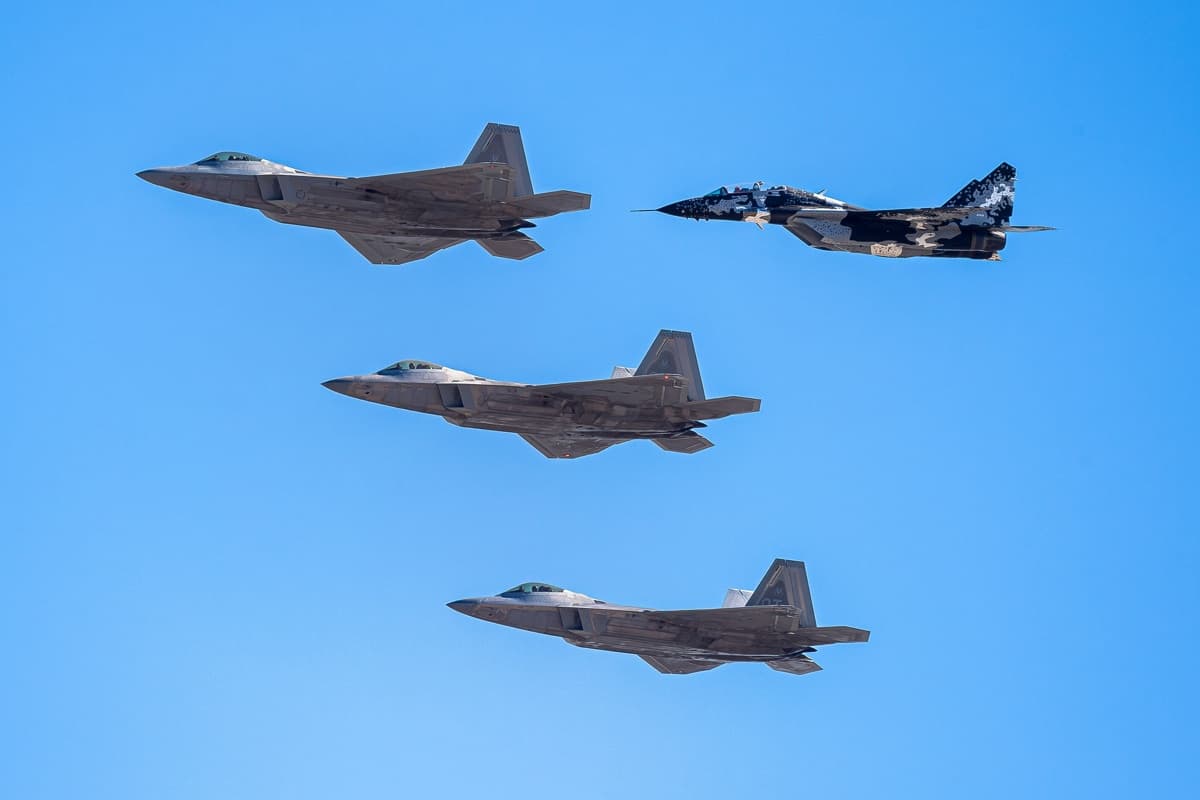

Dubbed the Fulcrum by NATO, the Mikoyan MiG-29 is the culmination of nearly two decades worth of Soviet aeronautic advances. A twin-engine air superiority aircraft, the MiG-29 is considered to be superior to other fourth generation American and European-made fighter jets of their time — namely the F-14 Tomcat, F/A-18 Hornet, and the Dassault Mirage 2000. Capable of deft maneuvers and emboldened by a superior thrust-to-weight ratio, the MiG-29 is the perfect response to Western fighter-bomber aircraft. It first formally entered service in 1982 and has continued to be revised and adapted to meet contemporary threats of present day fighter aircraft.
Proven Air Frame: During the fall of the Soviet Union, the Russian Federation opened up sales to a number of countries including Iraq, Iran, Syria and India. The Fulcrum has seen active combat during the Iraq War by the Iraqi Air Force and during the Iran-Iraq war. This aircraft proved its ability to stand toe-to-toe against major threats in the air and on the ground. The Russian Air Force still uses a heavily upgraded version of the MiG-29. Its design has even influenced the development of a fifth generation multirole fighter, the MiG-35.

Modernization: In 2006, an advanced variant of the Mikoyan MiG-29 shown at an air show featured 3D thrust-vectoring engine nozzles. This is a common feature seen in fifth generation multirole fighters such as the American F-35 Lightning II and the F-22 Raptor. The addition of thrust-vectoring nozzles allows a staggering number of possibilities in air-to-air combat and maneuvering. Coupled with the aircraft’s already superb engineering, it allows the pilot to deftly engage and disengage enemy air targets. This version of the MiG-29, known as the MiG-29M OVT, is advertised to potential customers as the MiG-35.