#8: M4 Sherman: The Tank That Won World War II Through Sheer Numbers
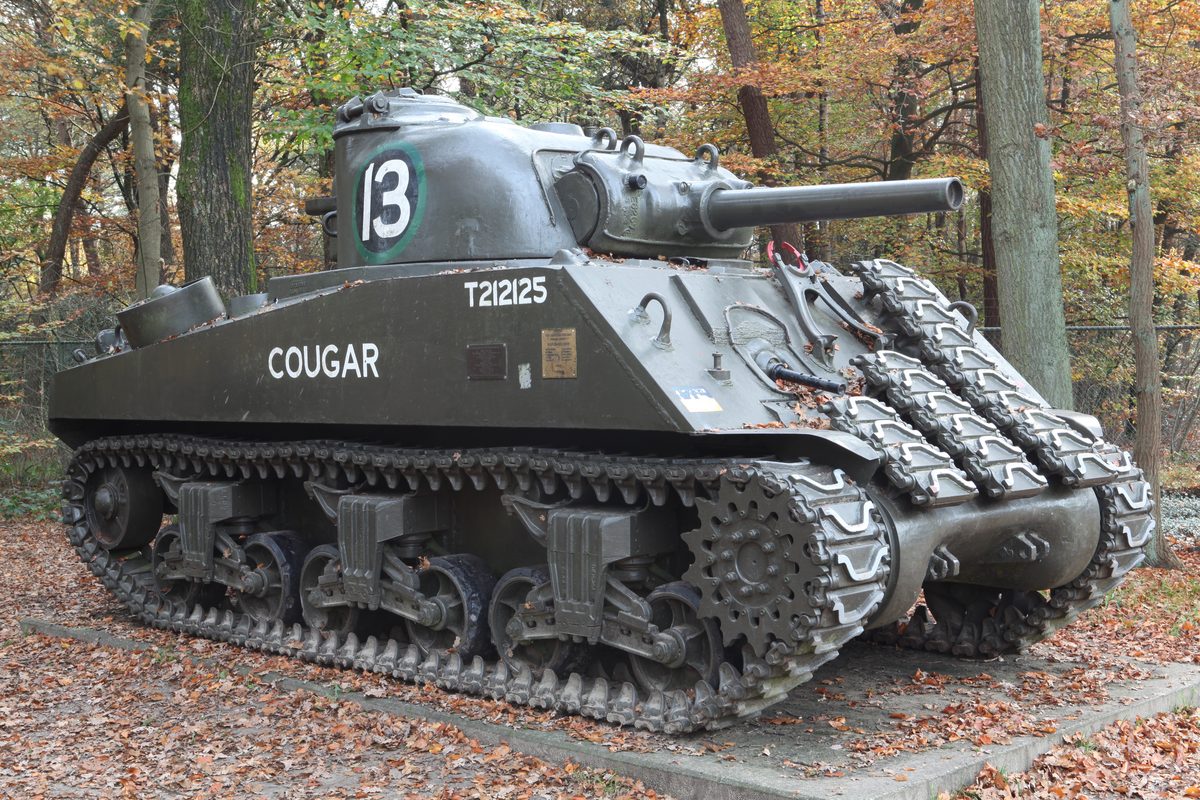
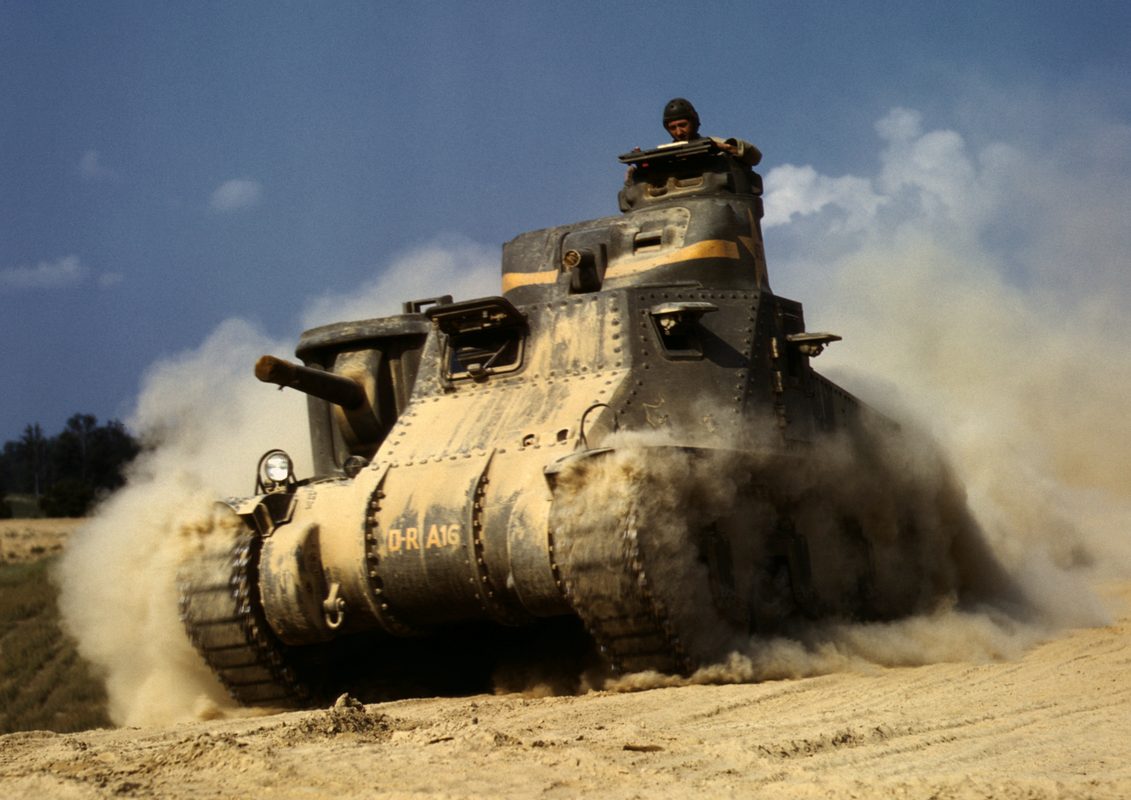
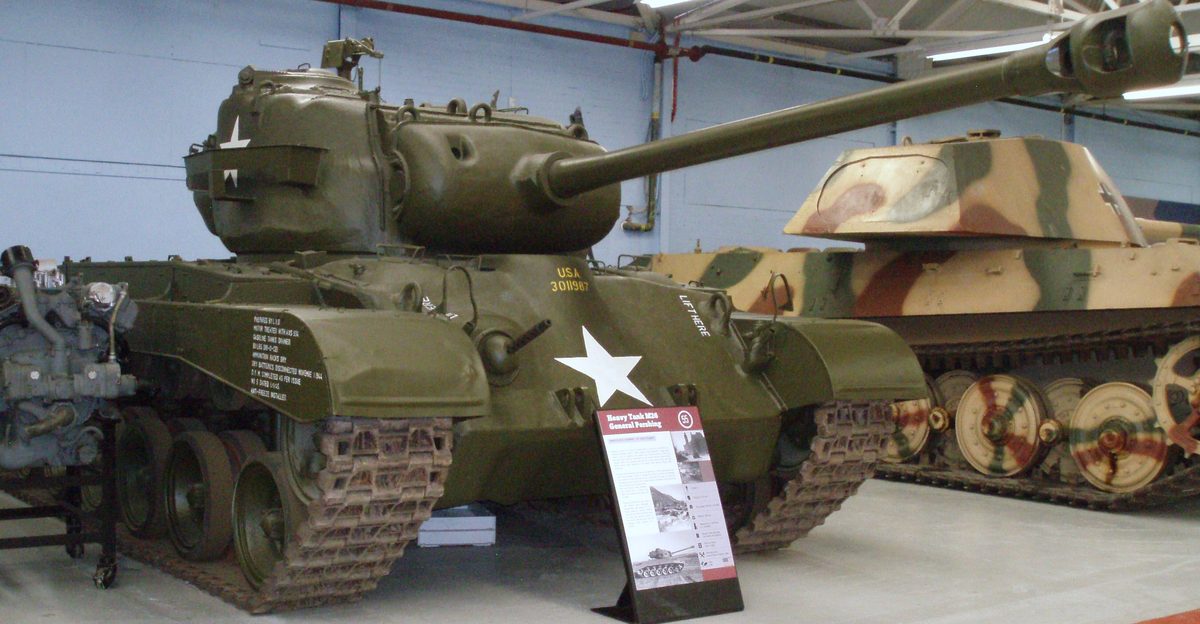
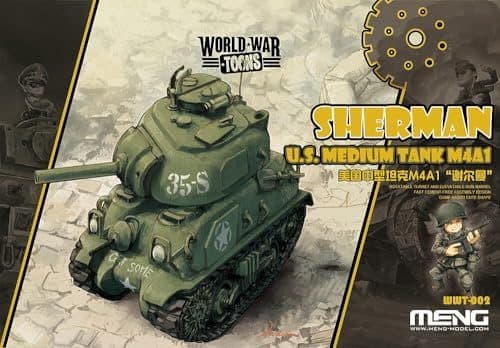
The United States built 49,324 M4 Shermans, more than Germany produced of all tank types combined during the entire war. When American industry hit peak output in 1943, a new Sherman rolled off the assembly line every 6.5 minutes. Germany's total Panther production wouldn't match a single month of Sherman output.
The Sherman wasn't the best tank on any battlefield it fought on, its 75mm gun struggled against Panthers, and its armor couldn't stop an 88mm round. American tankers called it the "Ronson" because it lit up on the first hit. But the M4 won the war through industrial supremacy, mechanical reliability, and adaptability. The 76mm-armed M4A3E8 "Easy Eight" could kill Panthers at combat range. The Sherman DD swam ashore on D-Day. The Sherman Crab flailed mines. The Sherman Jumbo packed 100mm of frontal armor. It fought in Europe, the Pacific, North Africa, Korea, Vietnam, and the 1967 Six-Day War. More nations used the Sherman than any other WWII tank. In armored warfare, the lesson of the Sherman is brutal but true: quantity has a quality all its own, and reliable military equipment that shows up wins wars.
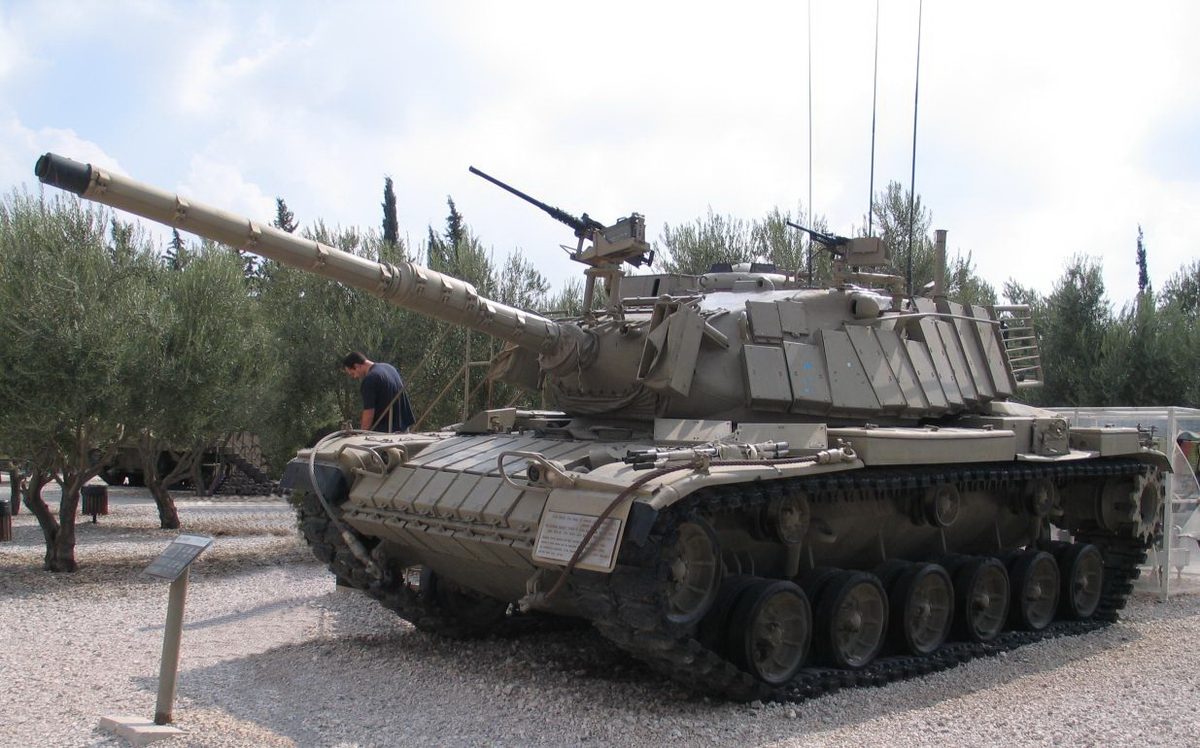
#7: Merkava Mk4: The Tank Built Around One Obsession, Crew Survival
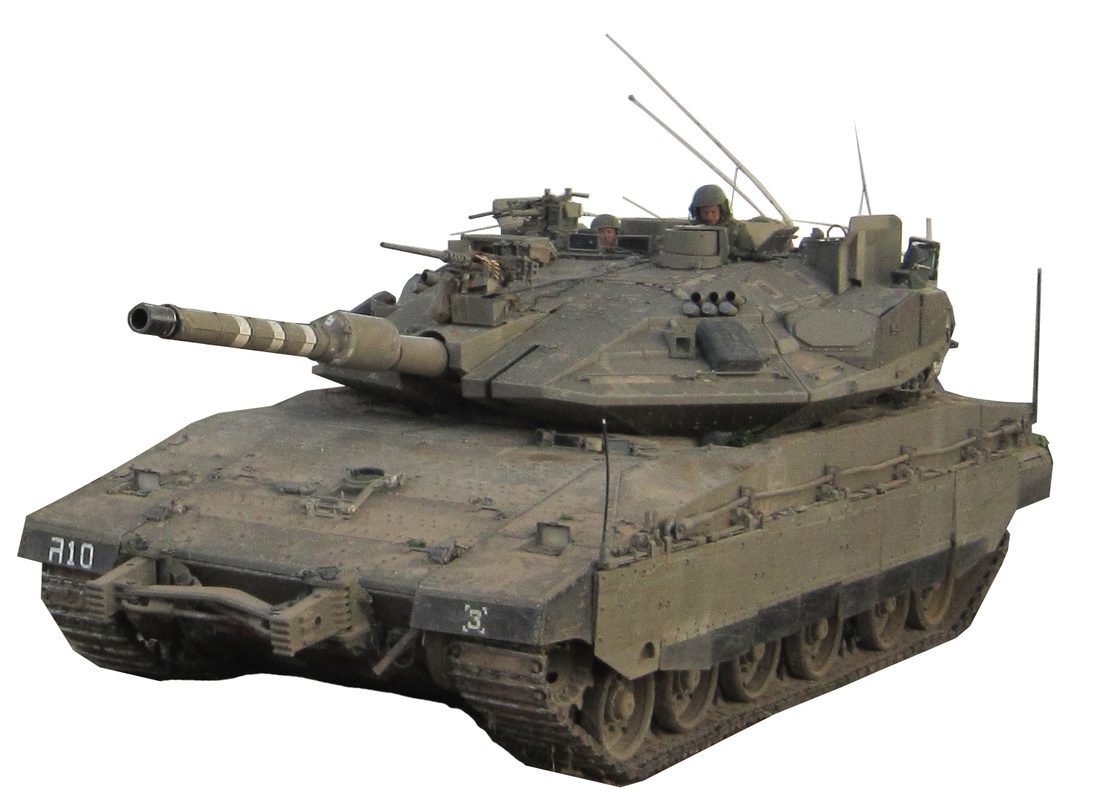
The Merkava Mk4 is the first main battle tank fielded with an operationally proven hard-kill active protection system, the Trophy (Windbreaker), which has intercepted incoming RPGs and ATGMs in live combat since 2011 with a reported success rate exceeding 90%. No Merkava Mk4 equipped with Trophy has been destroyed by an anti-tank missile.
Israel's Merkava ("Chariot") puts the engine in the front. A radical departure that gives the crew an extra layer of protection and opens the rear for a small troop compartment or additional ammunition. The Mk4's 120mm MG253 smoothbore is paired with a digital fire control system that can engage moving targets, low-flying helicopters, and even incoming missiles. Its modular armor can be replaced in the field without factory support. Over 660 Mk4s serve in the IDF, and the tank has been continuously refined through real combat experience in Lebanon and Gaza. The Merkava was designed by General Israel Tal, who lost friends in tanks during the 1948 War of Independence and swore to build a machine that brought its crews home alive. Every design decision (front engine, rear escape hatch, Trophy APS) serves that singular philosophy. In defense technology, no tank better embodies the principle that people matter more than machines.
#6: Tiger I: The Fearsome Legend That Terrorized Allied Tankers
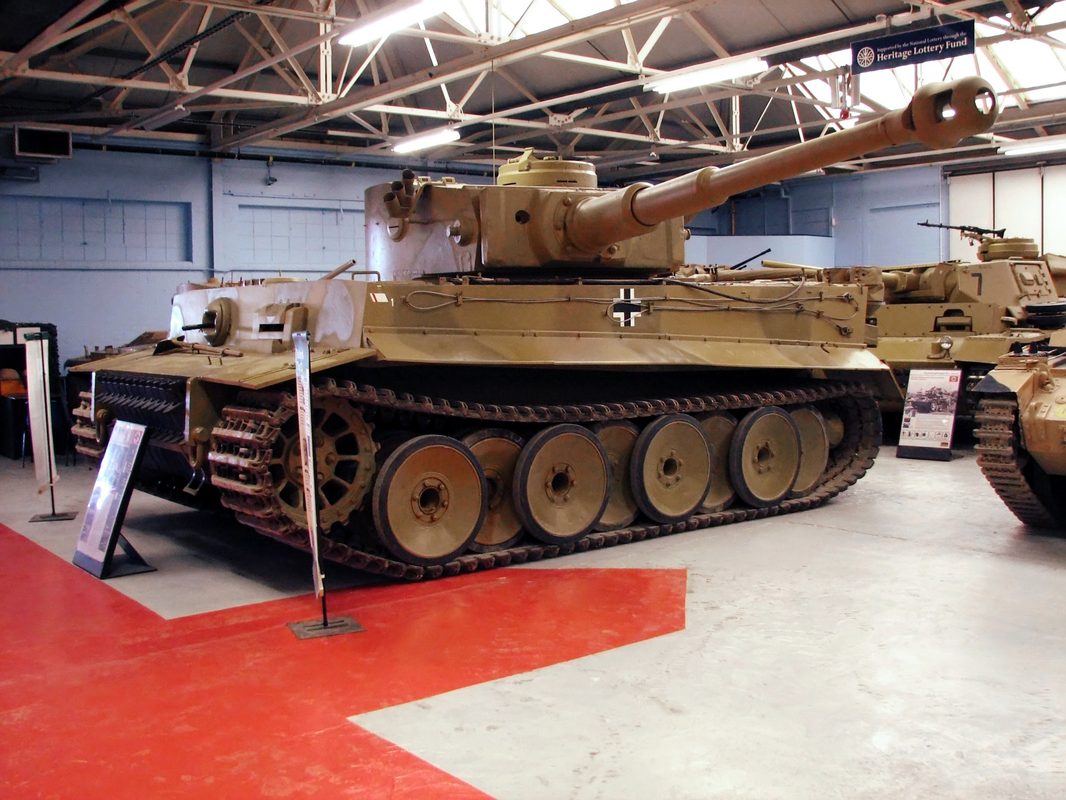
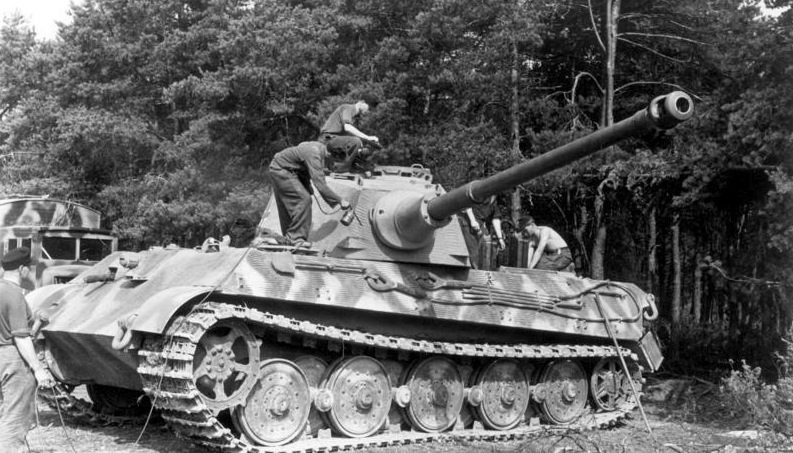
SS-Hauptsturmführer Michael Wittmann's Tiger I destroyed 138 tanks and 132 guns during his career, and in a single engagement at Villers-Bocage on June 13, 1944, his Tiger destroyed 14 tanks, 15 personnel carriers, and 2 anti-tank guns in 15 minutes, single-handedly halting the British 7th Armoured Division's advance.
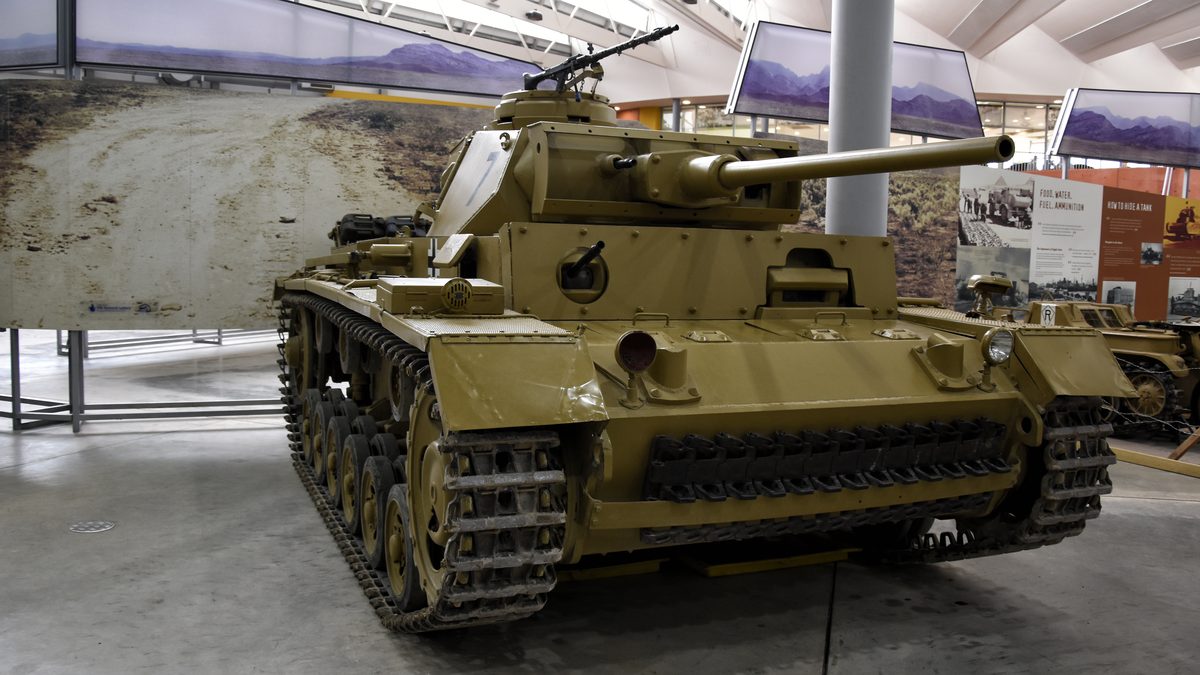
The Tiger I's legendary 88mm KwK 36 L/56 gun could penetrate 120mm of armor at 1,000 meters. It could kill a Sherman at 2,000 meters before the Sherman's 75mm could even scratch its 100mm frontal plate. Only 1,347 were built between 1942 and 1944, but the Tiger's psychological impact far exceeded its numbers. Allied intelligence reported "Tiger fright" among tank crews who assumed every German tank was a Tiger. Each Tiger cost 250,000 Reichsmarks, twice the price of a Panther and four times a Panzer IV. It consumed 540 liters of fuel per 100 kilometers, its interleaved road wheels were a maintenance nightmare in mud and ice, and it broke down constantly. But when a Tiger appeared on the battlefield, everything stopped. In military history, no tank has ever generated more terror per unit than the Tiger I.
#5: Panther: The Best Medium Tank of World War II
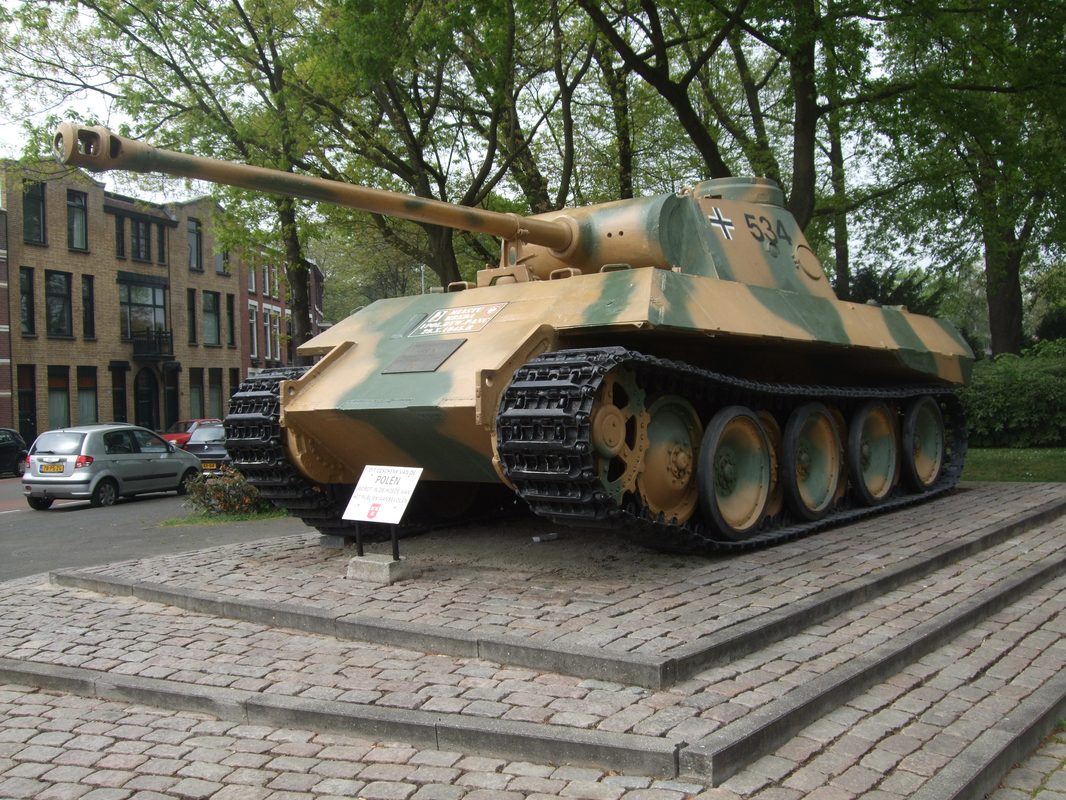
The Panther's 75mm KwK 42 L/70 gun could penetrate 124mm of armor at 1,000 meters, it outperformed the Tiger I's 88mm at long range despite being a smaller caliber. Its 80mm glacis, sloped at 55 degrees, provided an effective armor thickness of 140mm, making it virtually impervious to the Sherman's 75mm and the T-34's 76mm from the front.
Designed as a direct response to the T-34's shocking appearance on the Eastern Front, the Panther combined sloped armor, a high-velocity gun, wide tracks for low ground pressure, and a reliable suspension into a 45-ton package that many historians consider the best tank design of WWII. Over 6,000 were built from January 1943 to April 1945. At Kursk, Panthers of the Grossdeutschland Division engaged T-34s at ranges exceeding 2 kilometers. Post-war, the French Army operated captured Panthers (as the "Char Panther") until 1949, and both the Soviets and Americans extensively tested them. Early Panthers at Kursk suffered catastrophic mechanical failures, transmissions and final drives gave out at alarming rates. But by 1944, these issues were largely resolved. The Panther set the template for what a modern main battle tank should be, firepower, protection, and mobility in balance. Every post-war MBT carries its DNA in the philosophy of armored warfare.
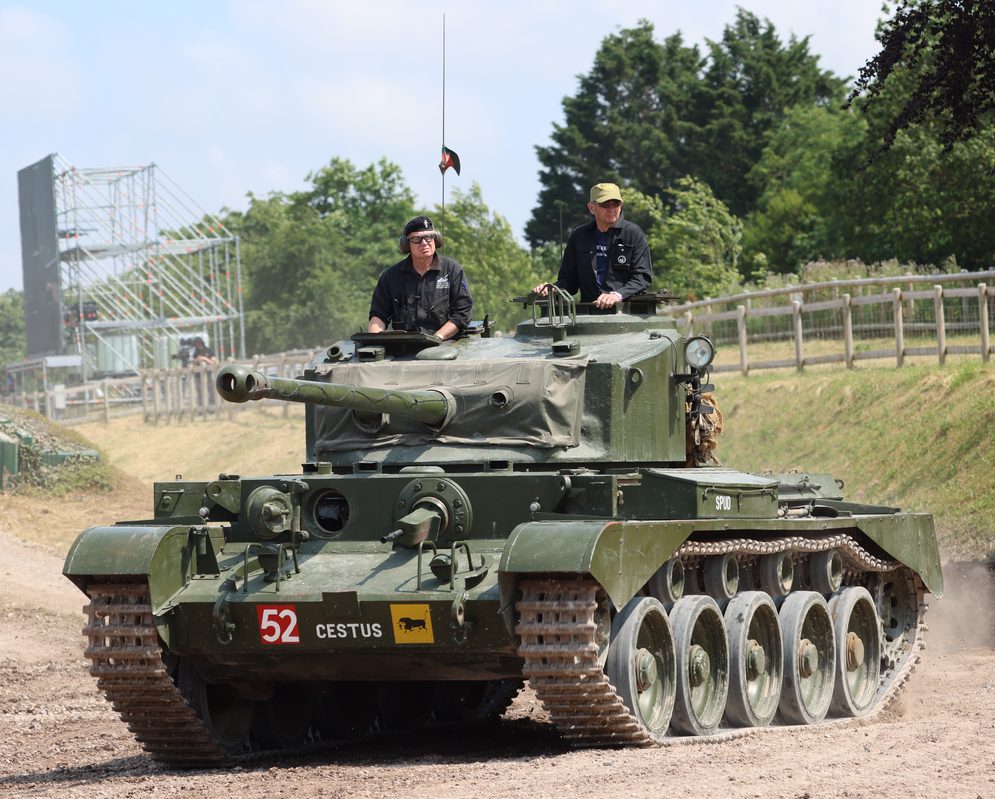
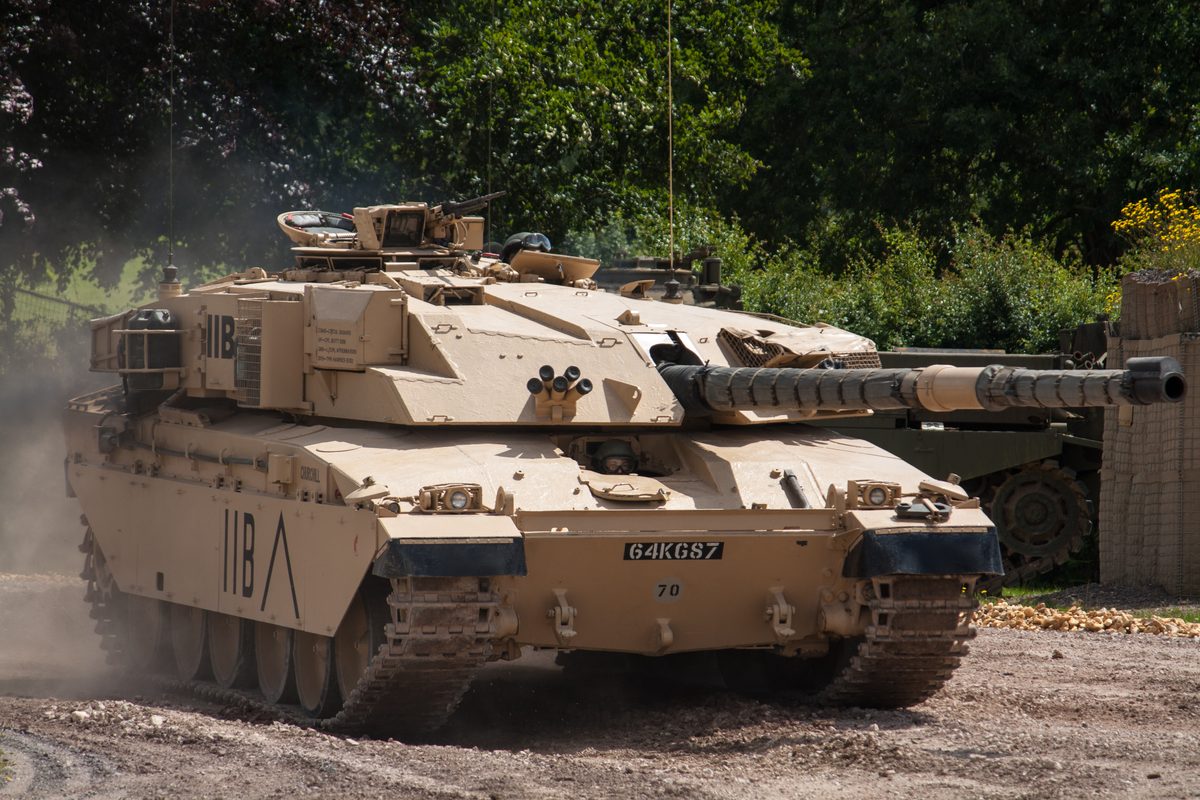
#4: Centurion: The Universal Tank That Fought for 50 Years
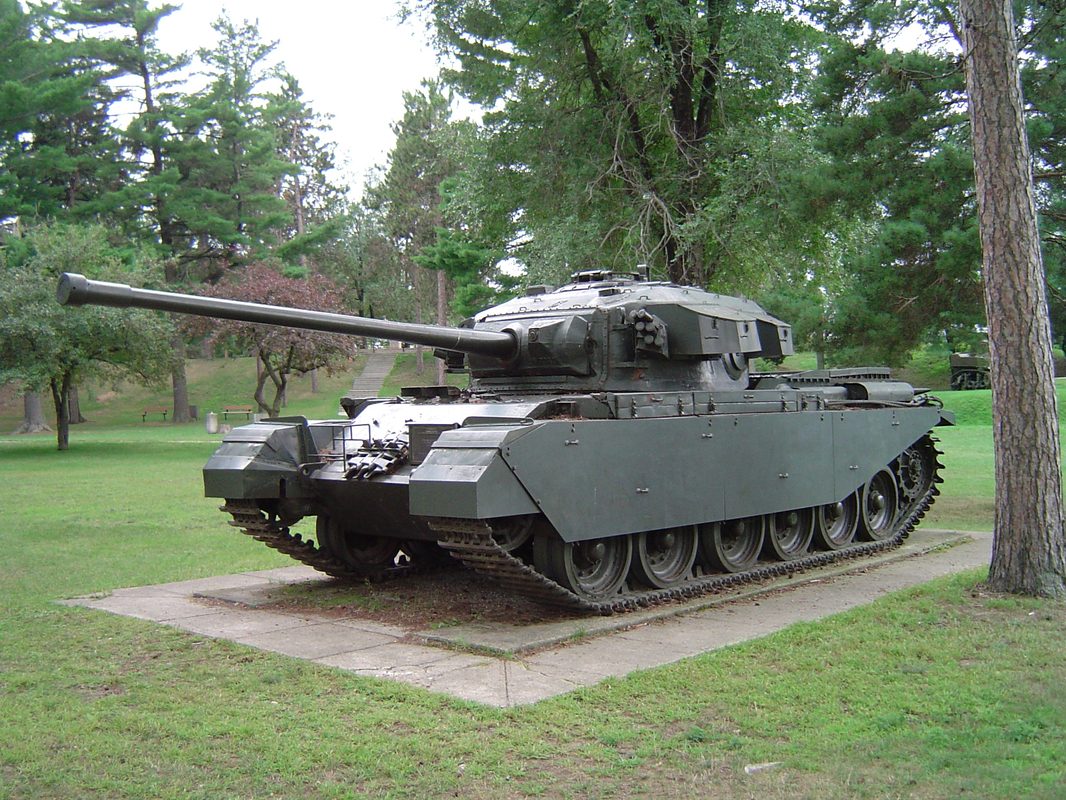
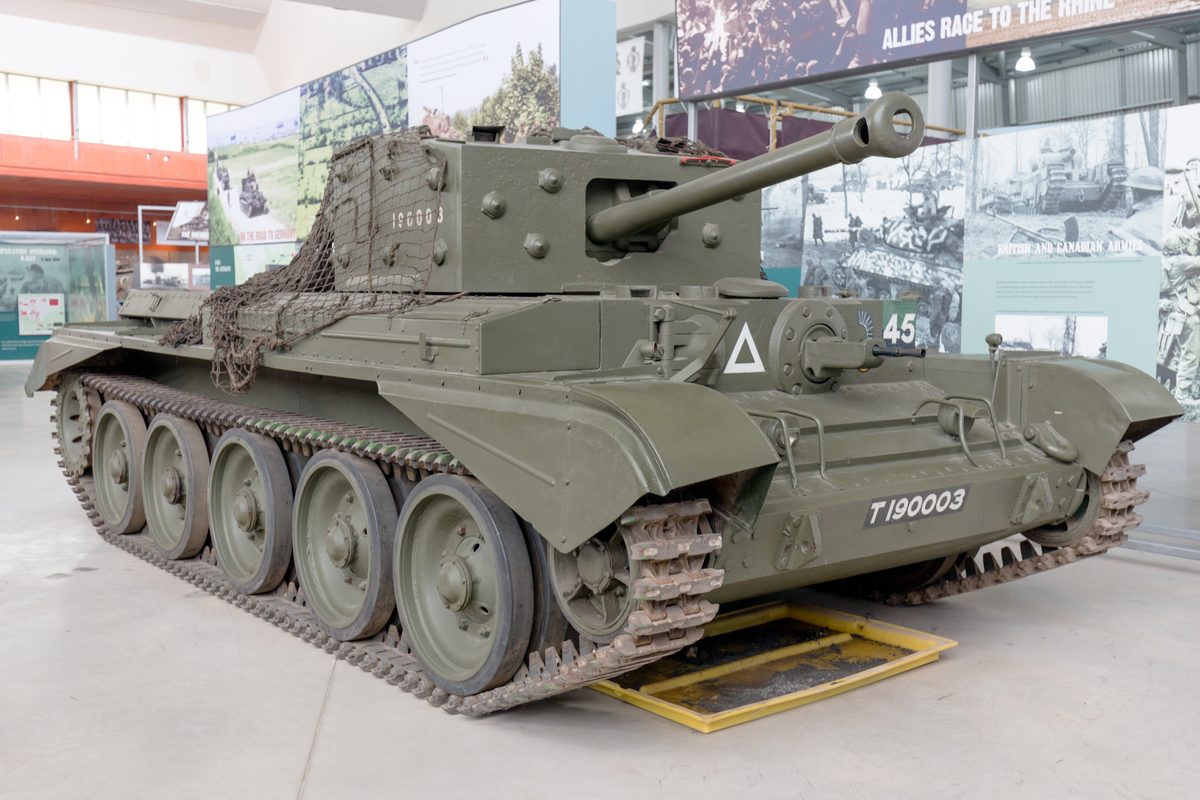
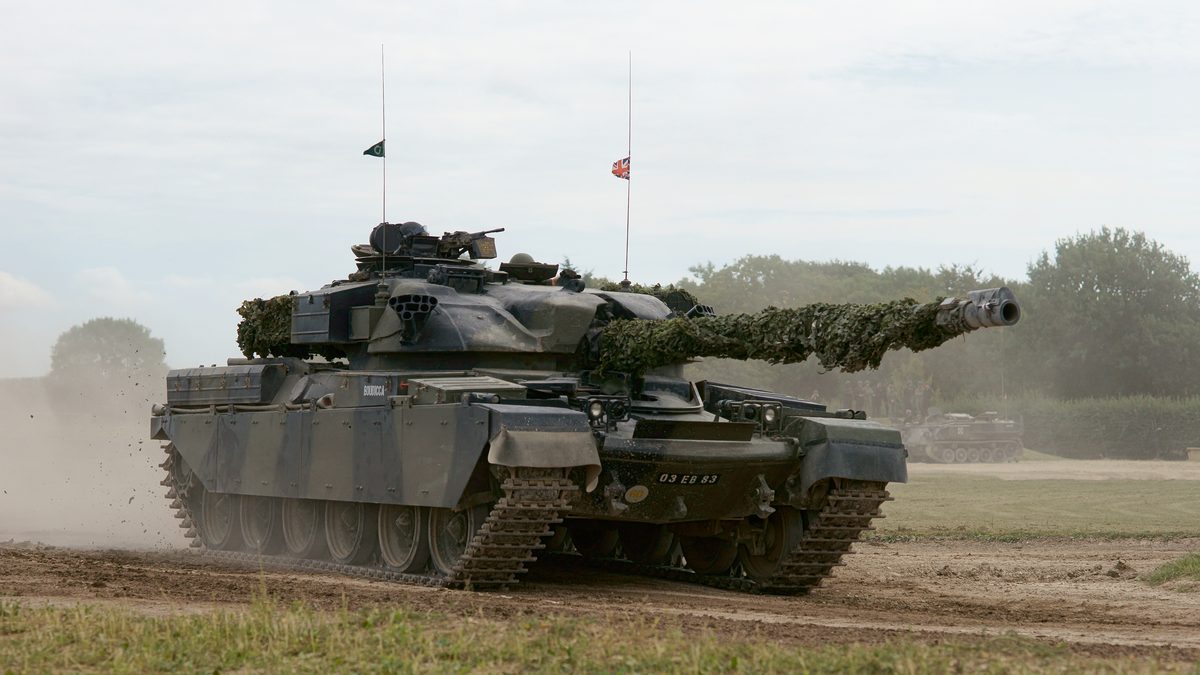
The Centurion saw combat in Korea, Vietnam, the Indo-Pakistani Wars, the Six-Day War, the Yom Kippur War, South African border conflicts, and Operation Desert Storm, a combat record spanning 50 years across five continents. No other tank in military history has fought in more wars or served more nations.
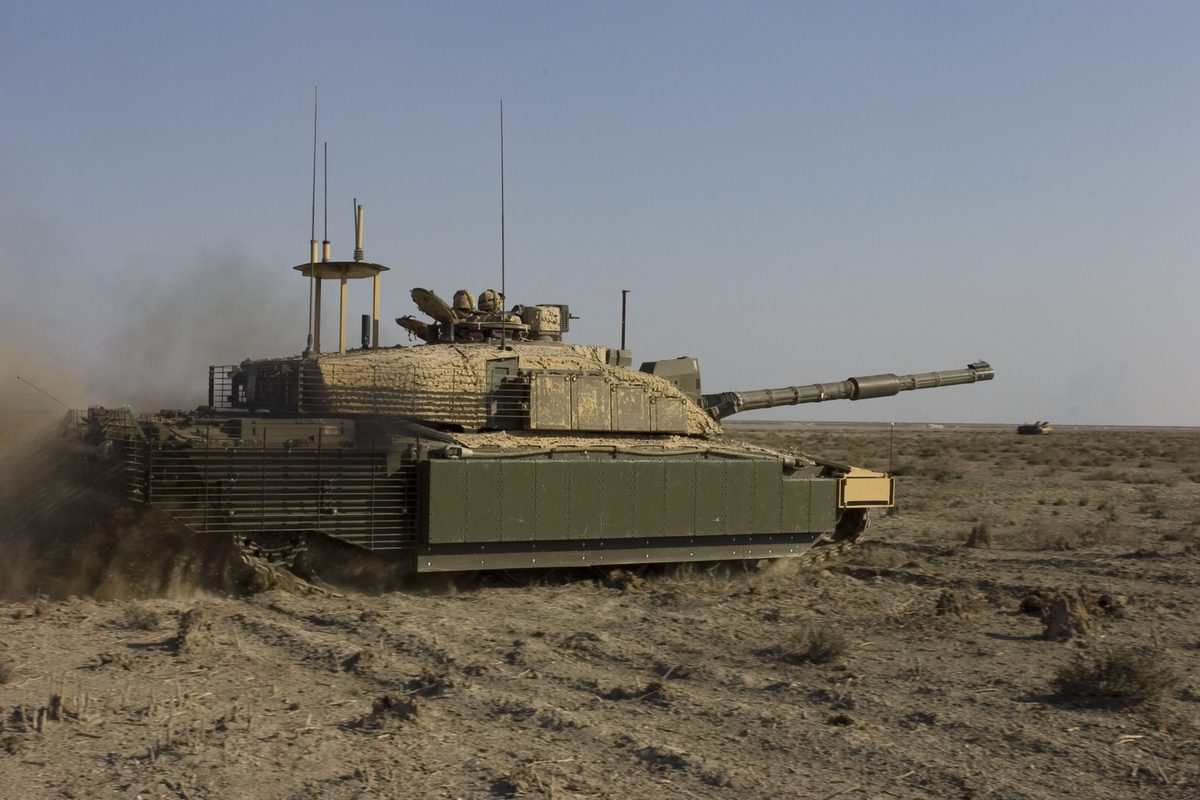
Entering service in 1945 (just too late for WWII), the Centurion was originally armed with a 76mm gun but was progressively upgraded to the legendary 105mm L7, the most successful tank gun of the Cold War, later adopted by the M60, Leopard 1, and early M1 Abrams. Over 4,423 were built across 13 marks. In the 1967 Six-Day War, Israeli Centurions (Sho't) destroyed dozens of Syrian and Jordanian tanks in the Golan Heights and the West Bank. In Vietnam, Australian Centurions proved that heavy armor was relevant even in jungle warfare, with crews crediting the tank's thick armor with saving their lives against mines and RPGs. The Centurion's adaptability was unmatched, it served as a bridge-layer, a beach recovery vehicle, an AVRE, and an armored personnel carrier. In the pantheon of armored warfare, the Centurion is the ultimate proof that a good basic design with room for upgrades outlasts any wonder weapon. Israel still uses Centurion-based engineering vehicles today, 80 years after the first one rolled off the line.
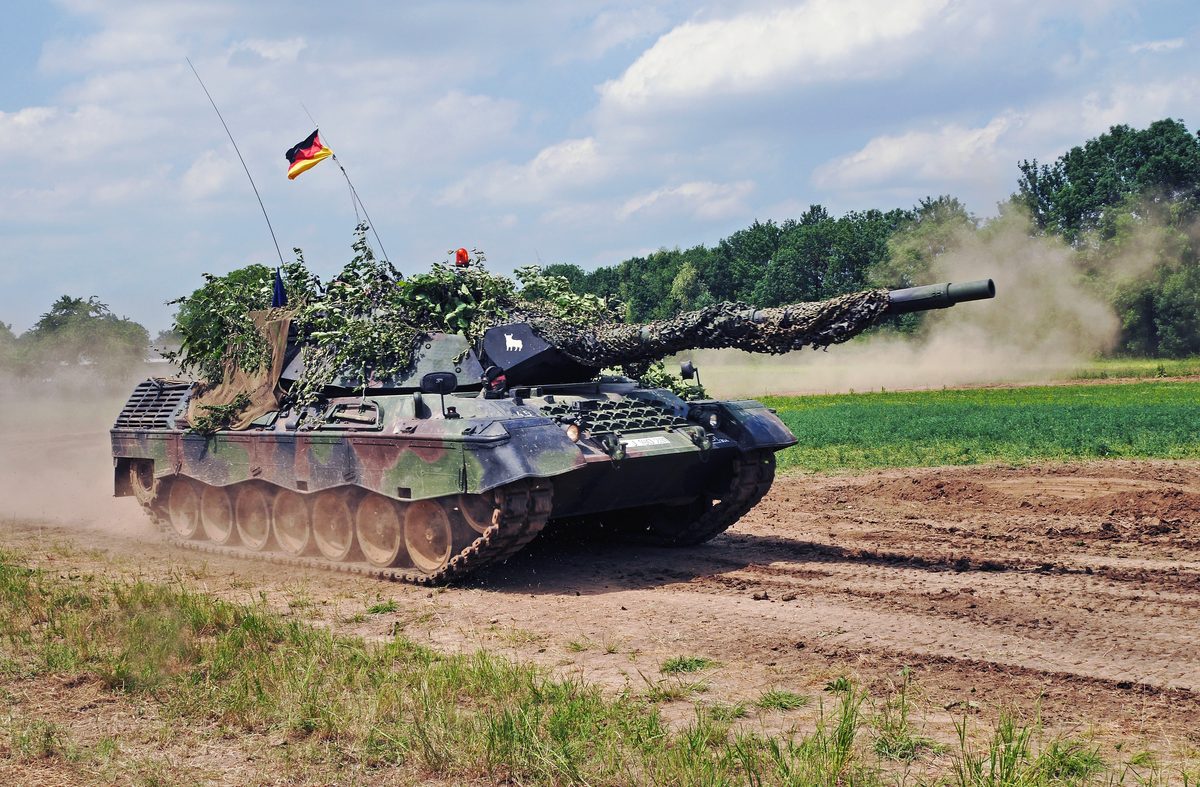
#3: Leopard 2: The Gold Standard of Modern Armored Warfare
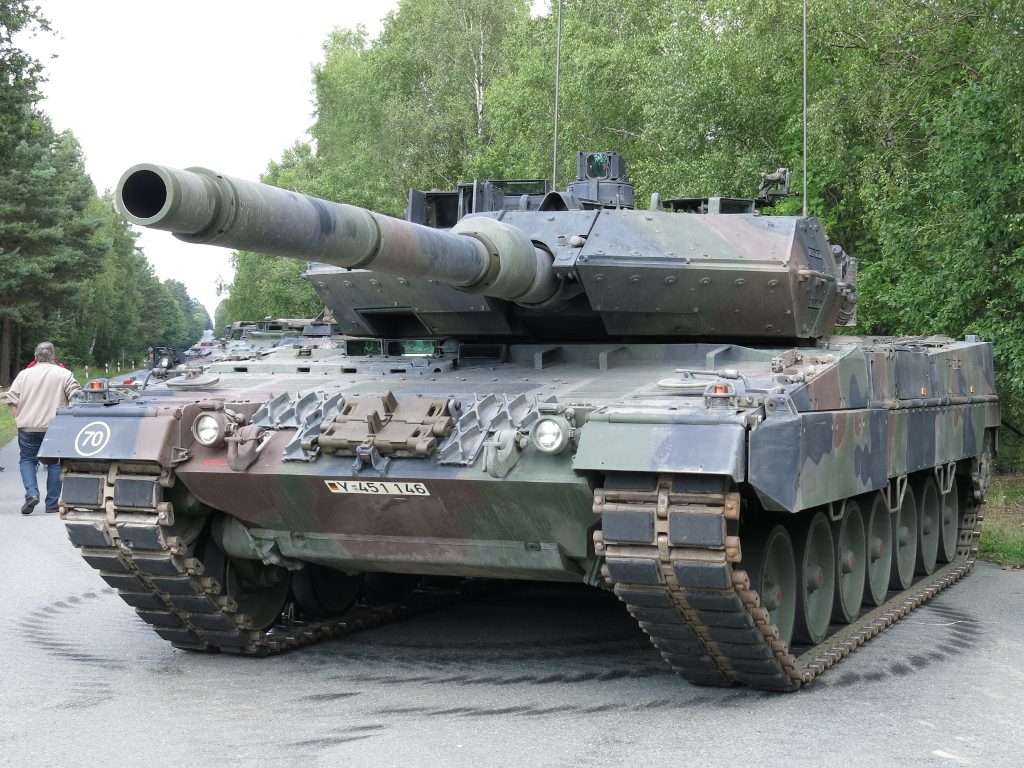
The Leopard 2 has been adopted by 19 nations, more than any other Western main battle tank in production. From the frozen forests of Finland to the deserts of Qatar, the Leopard 2 family serves as the armored backbone of NATO's European defense. Over 3,600 have been built, with orders still flowing for the latest 2A7+ variant.
Rheinmetall's 120mm L/55 smoothbore gun on the 2A6 and later variants fires DM53 APFSDS rounds capable of penetrating over 700mm of RHA at 2,000 meters, enough to defeat any tank currently in service. The third-generation composite armor on the 2A7 incorporates NERA elements that provide protection equivalent to over 900mm of RHA against shaped charges. Its 1,500-horsepower MTU MB 873 diesel engine gives the 62.3-ton 2A7 a top speed of 72 km/h with legendary reliability, German tank crews report the Leopard 2's powerpack as the most maintenance-friendly in NATO. Canadian Leopard 2A6Ms saw combat in Afghanistan, and the type has been deployed to the Baltics as part of NATO's Enhanced Forward Presence. The Leopard 2 represents the pinnacle of conventional defense technology: perfectly balanced firepower, protection, and mobility, backed by an upgrade path that will keep it relevant through the 2040s. It's the tank other tanks are measured against.
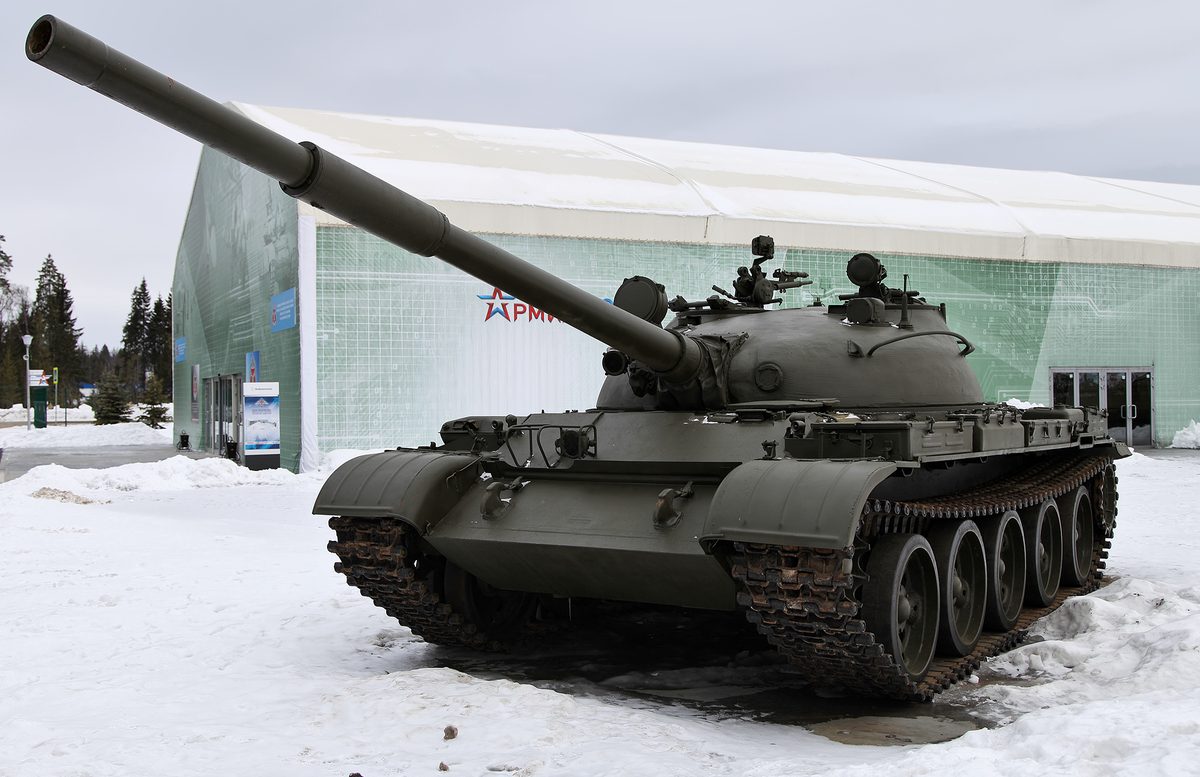
#2: T-34: The Tank That Broke the Wehrmacht's Back
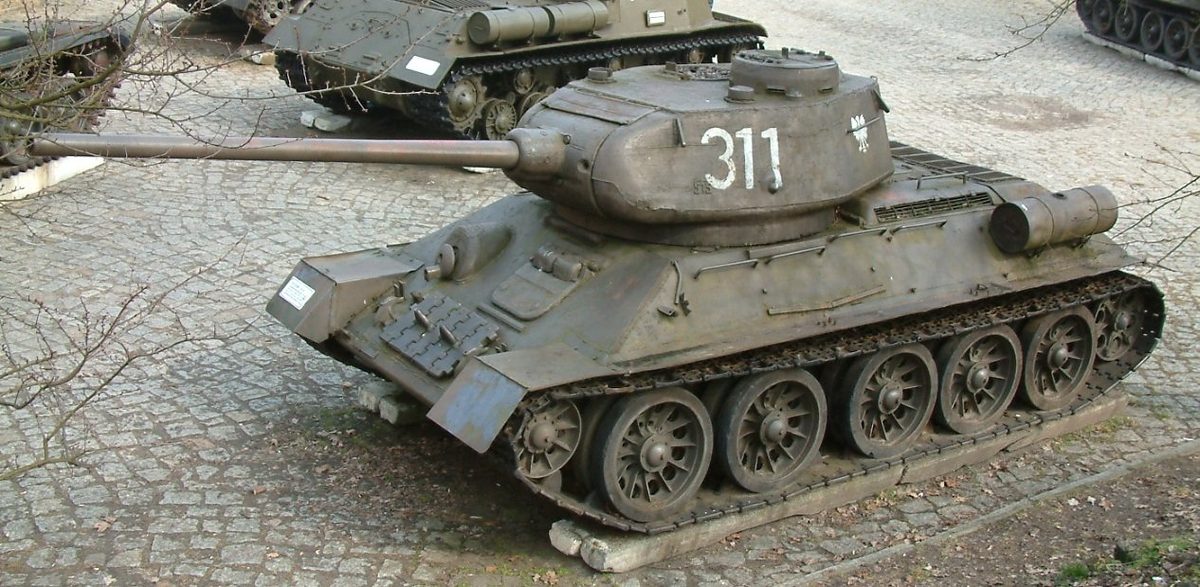
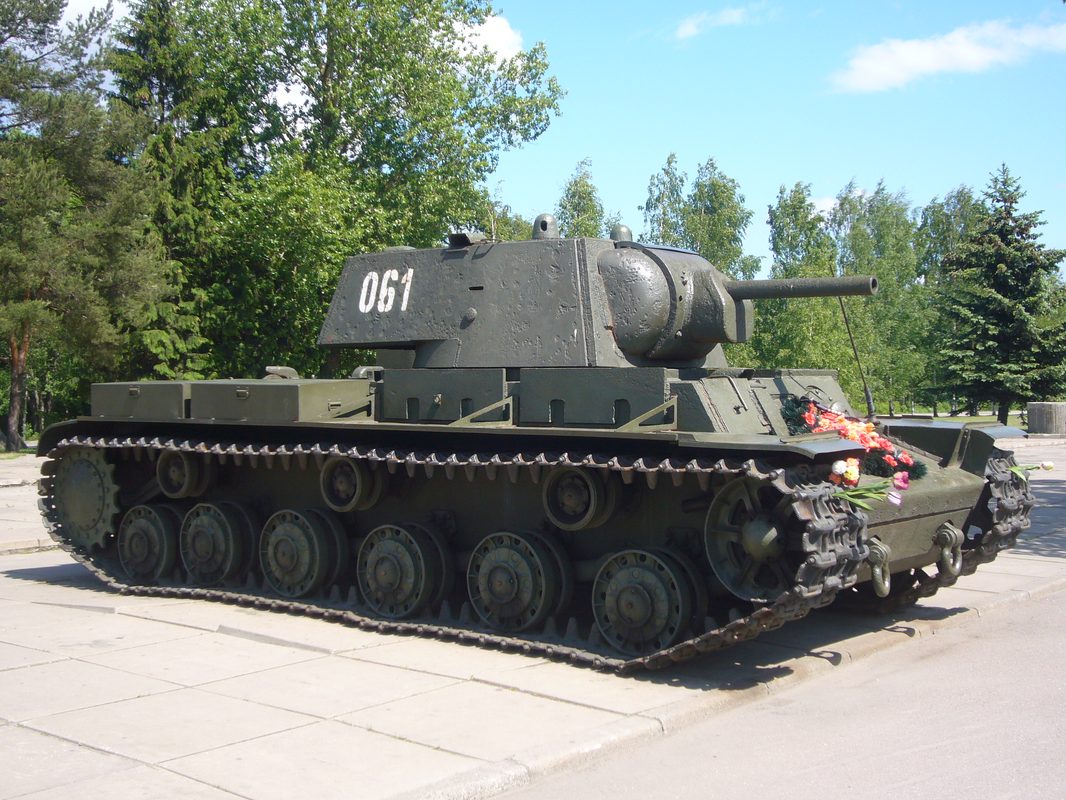
When the T-34 first appeared on the Eastern Front in June 1941, panicked German crews reported that their standard 37mm anti-tank guns were "absolutely useless" against it. General Paul Ludwig Ewald von Kleist called it "the finest tank in the world." The Wehrmacht had nothing that could reliably stop it, and the shock triggered an emergency German tank development program that produced the Panther.
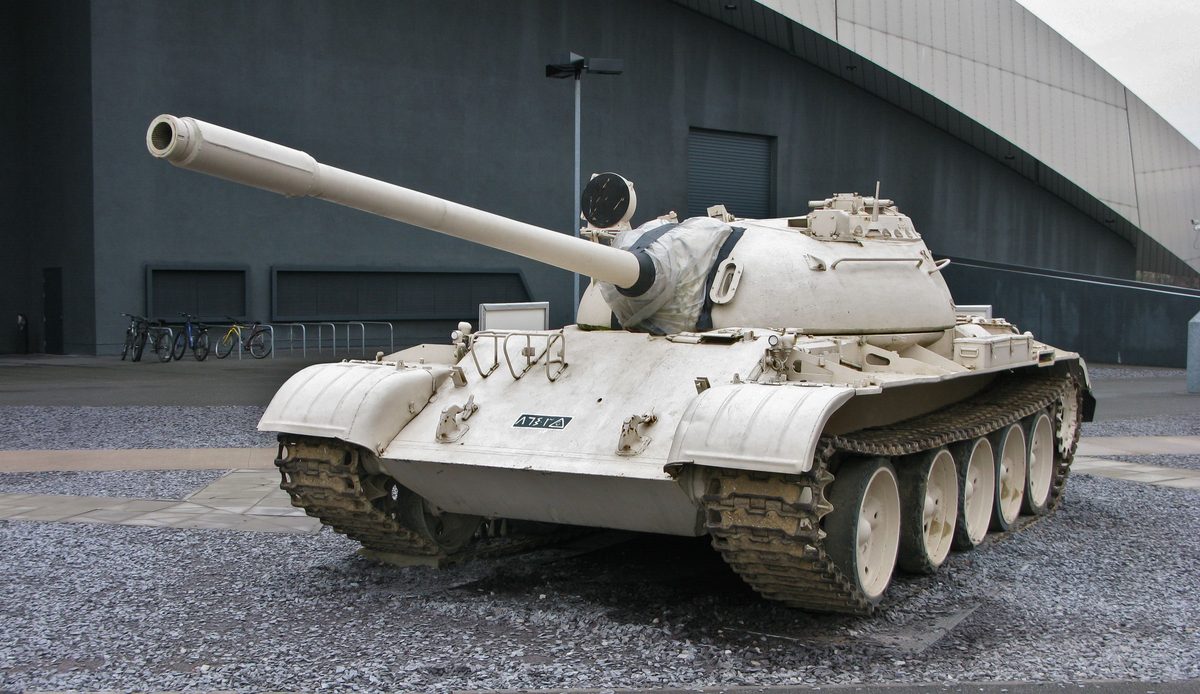
The T-34 combined sloped 45mm armor (equivalent to 90mm effective), a powerful 76mm F-34 gun, a 500-horsepower V-2 diesel engine, and wide Christie suspension tracks into a package that redefined what a medium tank could be. Over 84,000 T-34s were built in all variants, the second-most-produced tank in history behind the T-54/T-55 family. The T-34/85, with its 85mm ZIS-S-53 gun, could engage Tigers and Panthers at medium range and win. At the Battle of Kursk, over 6,000 Soviet tanks, primarily T-34s, clashed with German armor in the largest tank battle in military history. The T-34 was crude inside, ergonomically awful, and the four-man crew was jammed into a space designed for three. But it could be built by untrained workers in factories that had been relocated by rail to the Ural Mountains while under German bombardment. The T-34 didn't just fight in armored warfare, it proved that industrial capacity and design simplicity could defeat engineering excellence. It changed military history forever.
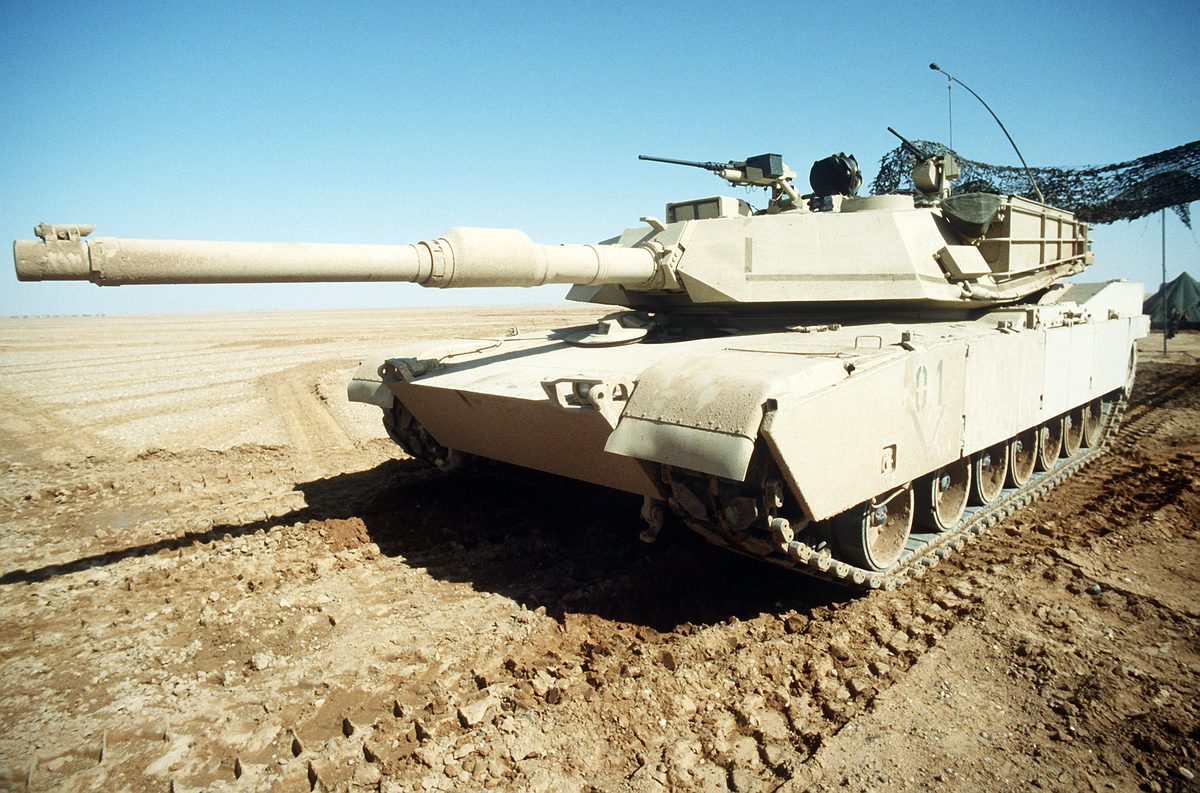
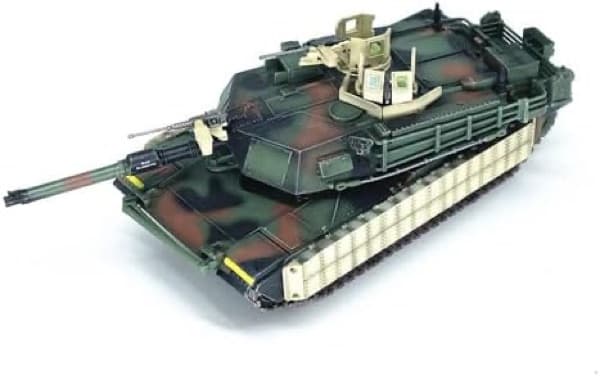
#1: M1 Abrams: The Undisputed King of the Modern Battlefield
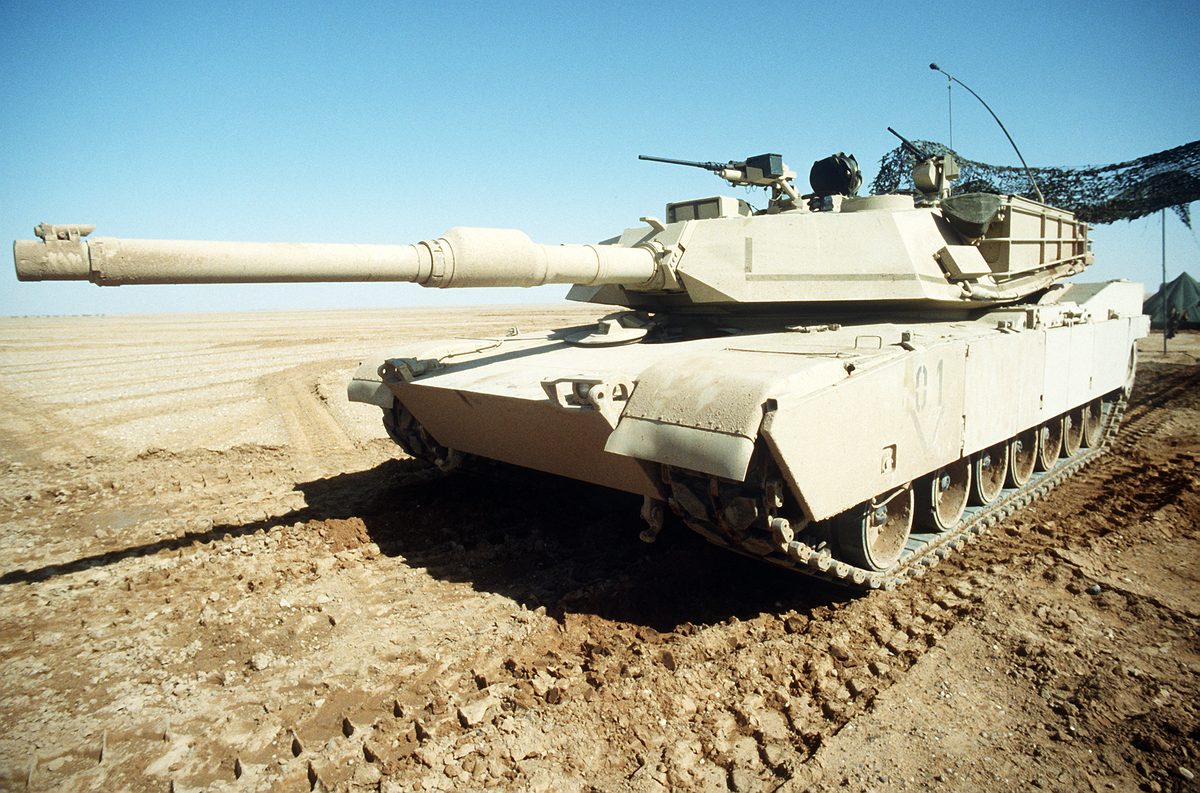
In the 1991 Gulf War, M1A1 Abrams destroyed over 2,000 Iraqi tanks while losing zero, not a single one, to enemy tank fire. At the Battle of 73 Easting, nine Abrams of the 2nd Armored Cavalry Regiment destroyed 28 Iraqi tanks in 23 minutes in a sandstorm, engaging at ranges the Iraqis couldn't even see. The kill ratio was functionally infinite.
The M1 Abrams has dominated every battlefield it has entered since 1991. Its 120mm M256 smoothbore (licensed Rheinmetall L/44) fires M829A4 depleted uranium APFSDS rounds that can penetrate any armored vehicle on earth. The depleted uranium mesh-reinforced composite armor on the M1A2 SEPv3 provides protection estimated at over 900mm RHA equivalent against kinetic rounds, and the exact composition remains classified. Its 1,500-horsepower Honeywell AGT1500 gas turbine can launch 73.6 tons from zero to 72 km/h, and the tank can sustain 60+ km/h cross-country. Over 10,300 Abrams have been built for the U.S., Egypt, Saudi Arabia, Australia, Poland, and others. The M1A2 SEPv3 features the CROWS remote weapon station, next-generation thermal sights, datalink integration with joint forces, and Trophy APS on latest deliveries. The Abrams isn't just a tank, it's a 73-ton networked weapons platform that represents the apex of American defense technology and the most combat-proven main battle tank in modern military history. Nothing else comes close.