
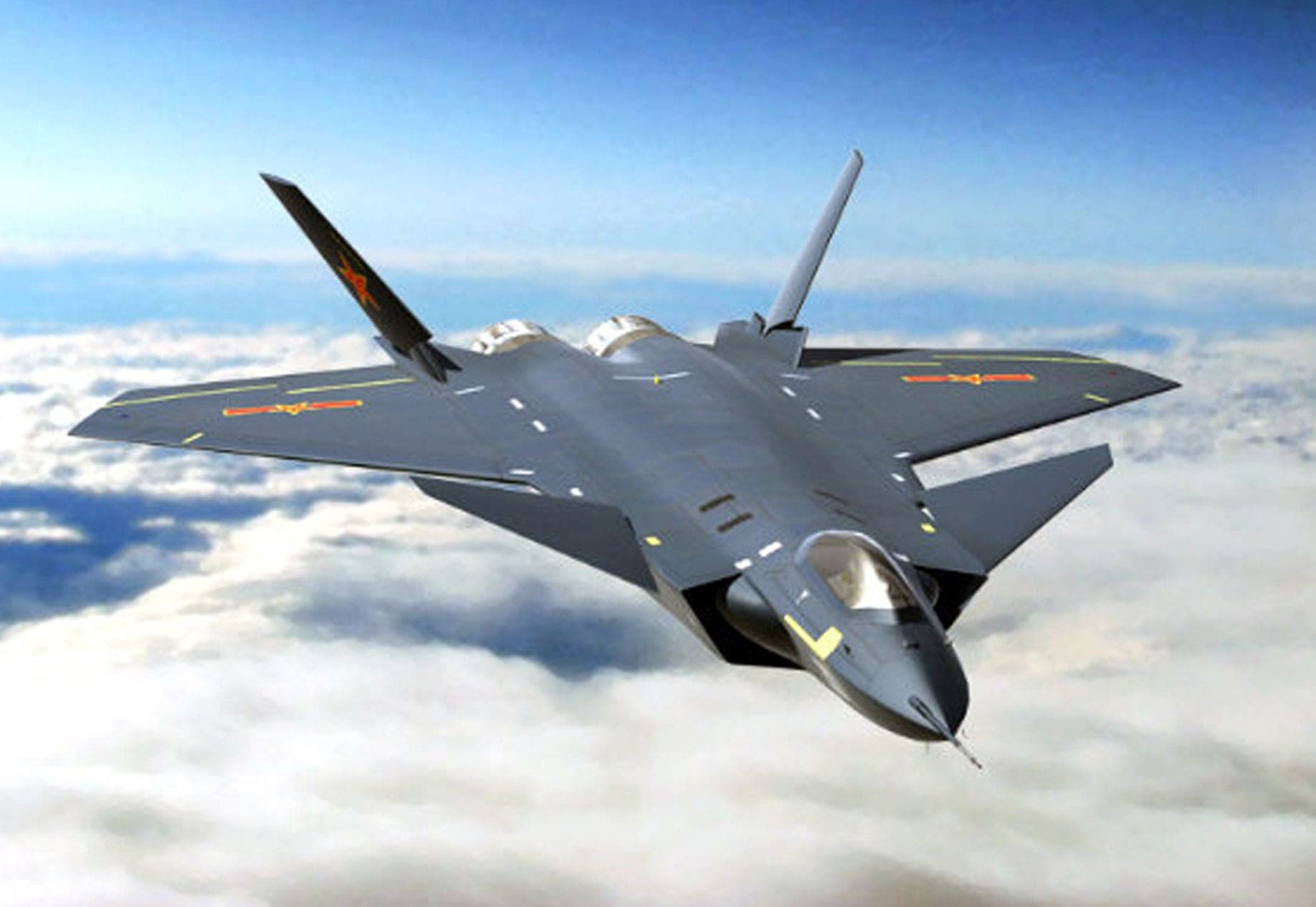

The Chinese Chengdu J-20 “Black Eagle” is a twin-engine, multi-role, fifth-generation strike fighter jet. Its main role is expected to be a long-range strike fighter against primarily ground targets but capable of engaging in air-to-air superiority contests. Although there were setbacks in production of its WS-15 engines, the J-20 entered service in late 2017. Aviation and military analysts have noted its striking similarity in appearance to the Lockheed-Martin F-35 Lightning II. Its anticipated role as a fifth-generation, multi-role aircraft will make it a primary contender to the F-22 Raptor.
Armament
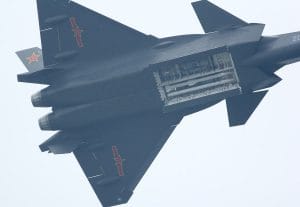
One of the main defining capabilities of the J-20 is its internal bomb bay. It is exceptionally dangerous to conventional ground forces and ground-based fire control. Its main weapons bay can hold both short-range and long-range air-to-air missiles. The two, smaller lateral weapon bays, which open and close before and after firing missiles in order to enhance stealth, hold short-range air-to-air missiles.
Capabilites
The biggest threat posed by the J-20 will be its ability to approach and potentially strike naval assets. Internal bays allow the J-20 Black Eagle to keep its air-to-air and air-to-surface armament retracted until ready to use. The Chengdu J-20 Black Eagle can quickly move into strike range, fire payload and return to base before the ship is able to use counter-measures. And with more fuel than the F-35, it can stay in the air longer without requiring in-air refueling.
In 1999, an American Lockheed-Martin F117A Nighthawk was allegedly shot down over Serbian airspace during the Kosovo conflict. While the pilot managed to eject to safety, the Russian and Chinese intelligence wasted no time in weeding through the wreckage to discover how the F-117A managed to evade most radar technology so well.










-1-e1493210496424.jpg)


