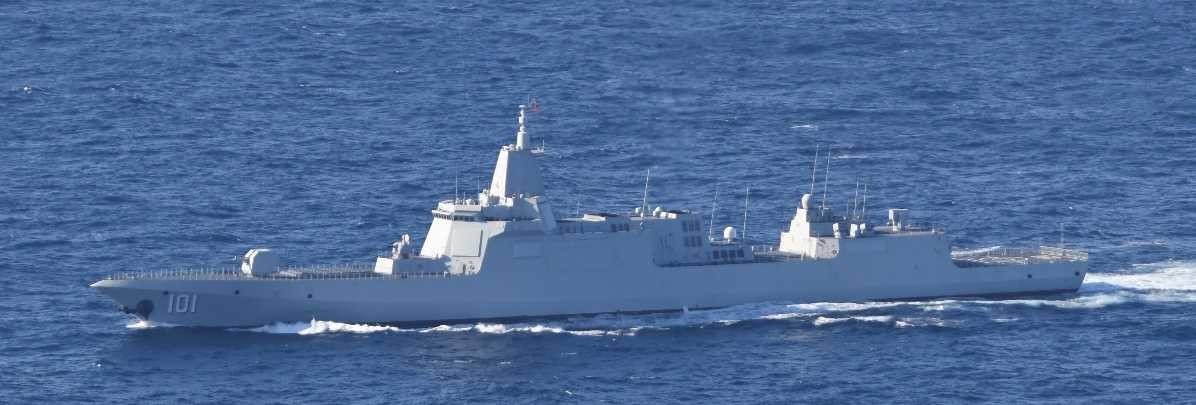
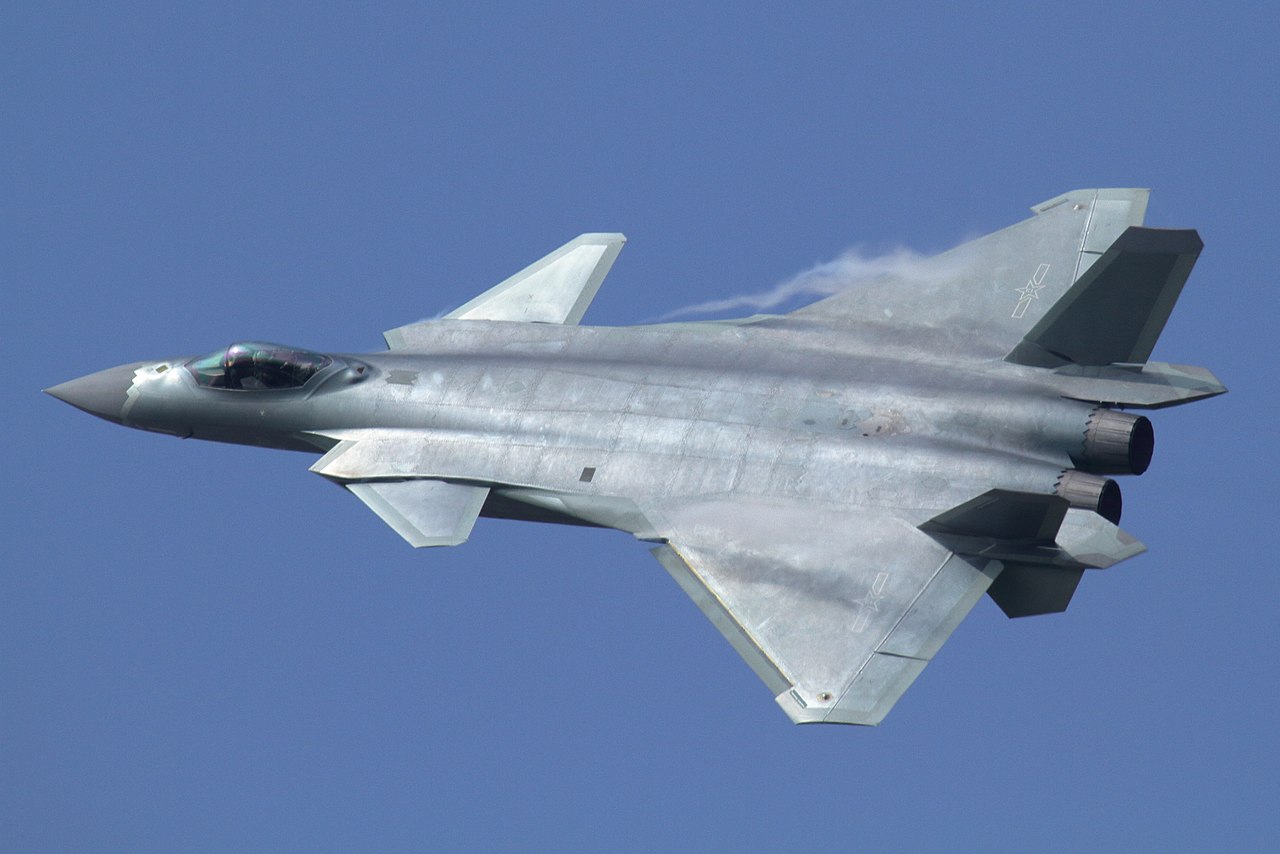
Taiwan. The central driver of PLA modernization is the Taiwan scenario. Beijing considers Taiwan a breakaway province that must eventually be reunified with the mainland, by force if necessary. Every major PLA capability investment -- anti-access/area denial (A2/AD) missiles, amphibious assault ships, stealth fighters, naval expansion -- is sized and shaped, at least in part, around the requirements of a potential military operation against Taiwan and the U.S. forces that would likely intervene. Xi Jinping has reportedly directed the PLA to be prepared for a Taiwan contingency by 2027, though U.S. intelligence officials have cautioned that this is a readiness directive, not necessarily a decision to act.
U.S. strategic competition. China's military planners studied American military operations in the Gulf War, Kosovo, Afghanistan, and Iraq with intense focus. They concluded that the United States' ability to project precision-strike power globally, backed by carrier aviation, stealth aircraft, and satellite-guided weapons, represented a fundamental threat to Chinese security. The PLA's modernization is, in many respects, a direct response to demonstrated American military capability. The A2/AD missile strategy, the focus on counter-space and cyber capabilities, and the investment in stealth and electronic warfare all reflect lessons drawn from watching the United States fight.
Xi Jinping's consolidation of power. Under Xi Jinping, who became General Secretary in 2012 and Chairman of the Central Military Commission, military modernization has been elevated to a core national priority. Xi oversaw the most significant organizational reform of the PLA since 1949, replacing the seven military regions with five theater commands, creating the Strategic Support Force (since reorganized into the Information Support Force, Aerospace Force, and Cyberspace Force), establishing the Joint Logistics Support Force, and conducting an unprecedented anti-corruption campaign that purged more than 100 senior officers. These reforms were designed to transform the PLA from a collection of semi-independent service fiefdoms into a modern, joint-capable fighting force.
Belt and Road military footprint. China's Belt and Road Initiative has created economic interests in regions far from China's borders -- from the Indian Ocean to Africa to the Middle East. Protecting those interests, and the sea lines of communication that sustain them, provides an additional rationale for a blue-water navy, overseas military facilities (such as the base in Djibouti, established in 2017), and long-range power projection capabilities. The PLA is building a military that can operate globally, even if its primary focus remains regional.
Lessons from U.S. operations. Chinese military writings extensively analyze American operations in Iraq, Afghanistan, Kosovo, Libya, and Syria. The PLA has drawn detailed lessons about the importance of precision strike, information dominance, joint operations, and logistics sustainability. Many of the PLA's modernization priorities -- from developing its own precision-guided munitions to building a joint command structure to investing in space and cyber capabilities -- reflect a deliberate effort to replicate capabilities that the United States demonstrated in combat while simultaneously developing counters to them.
How the U.S. Is Responding
The United States has not watched China's buildup passively. Across multiple administrations, the U.S. has shifted its military posture, investment priorities, and alliance relationships in direct response to the PLA's modernization. The scale of the American response is significant, though whether it is sufficient to maintain deterrence is a subject of intense debate among defense analysts.
AUKUS. The trilateral security partnership among Australia, the United Kingdom, and the United States, announced in September 2021, is perhaps the most consequential alliance initiative of the past decade. Under AUKUS Pillar I, Australia will acquire nuclear-powered attack submarines (SSN-AUKUS), giving it the ability to operate in contested waters at ranges and for durations that conventional submarines cannot match. Under Pillar II, the three nations are collaborating on advanced capabilities including hypersonic weapons, electronic warfare, quantum technologies, and artificial intelligence. AUKUS represents a long-term structural response to Chinese military power in the Indo-Pacific.
Pacific Deterrence Initiative. Modeled on the European Deterrence Initiative, the PDI provides dedicated funding for U.S. military capabilities in the Indo-Pacific, including integrated air and missile defense systems on Guam, distributed logistics infrastructure, pre-positioned munitions, and improved command-and-control networks. The PDI reflects a recognition that deterring China requires specific investments in the theater, not just global force structure.
Force posture shifts. The Marine Corps has undergone its most radical reorganization in decades under Force Design 2030, creating Marine Littoral Regiments (MLRs) specifically designed to operate in contested island environments in the Western Pacific. These smaller, more distributed units are equipped with anti-ship missiles (including the Naval Strike Missile) and air defense systems and are designed to operate inside China's A2/AD threat envelope rather than outside it. The Army is fielding Multi-Domain Task Forces with long-range precision fires, including the Typhon mid-range missile system. The Air Force is pursuing the F-47 sixth-generation fighter -- see our detailed F-47 vs F-22 vs F-35 comparison for how it stacks up against its predecessors -- and autonomous Collaborative Combat Aircraft (CCA) drone wingmen to maintain air superiority against increasingly capable Chinese fighters and air defenses. The B-21 Raider, the Air Force's new long-range stealth bomber, entered production with Pacific scenarios explicitly in mind.