Stealth
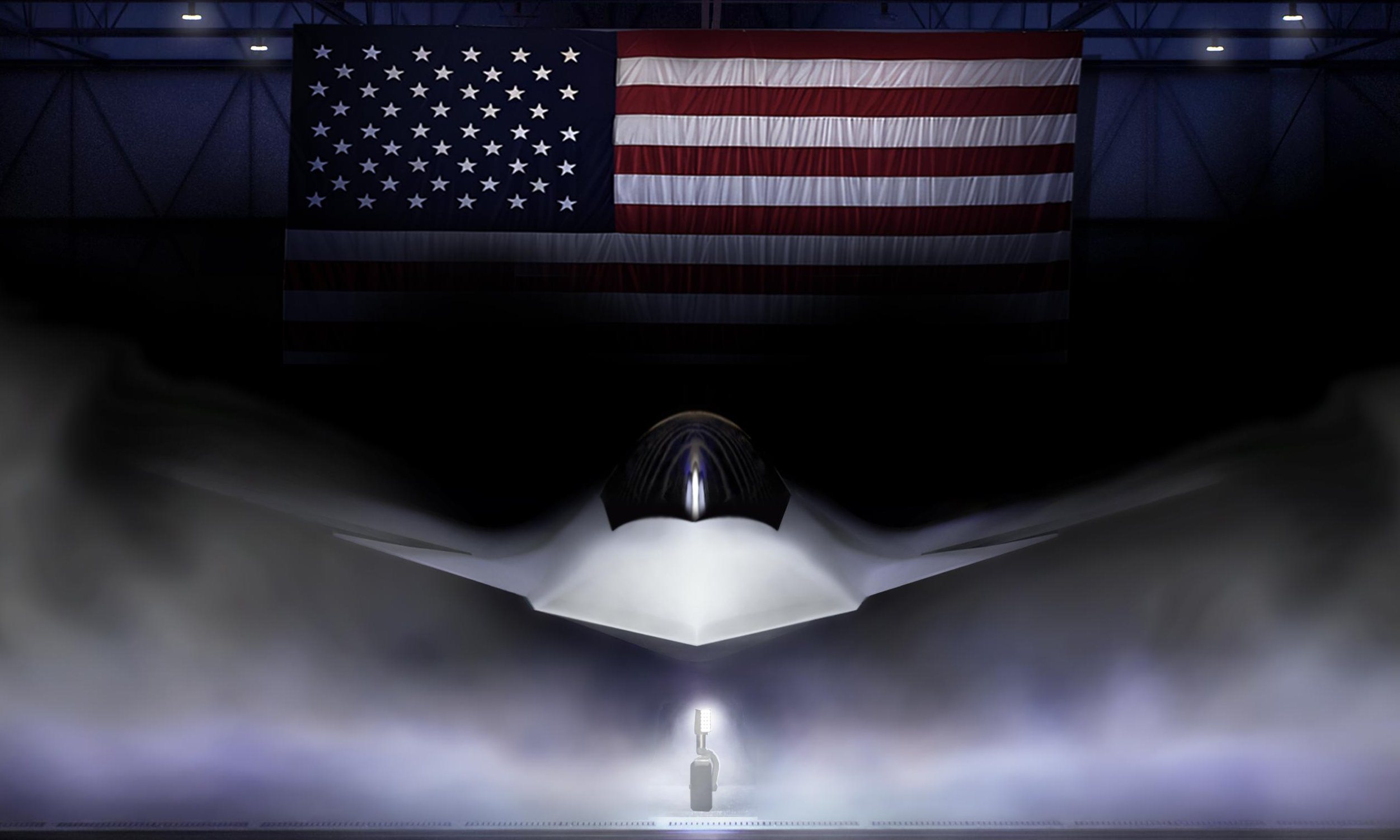
The Air Force has described the F-47 as featuring "all-aspect, broadband low-observability," meaning reduced radar and infrared signatures from every angle and across multiple radar frequency bands. Some defense analysts have described the F-47's stealth shaping as "bomber-like," according to the National Security Journal, suggesting a design that prioritizes signature reduction over traditional fighter agility.
Propulsion
The F-47 is expected to use a next-generation adaptive cycle engine from the NGAP program. Both General Electric (XA102) and Pratt & Whitney (XA103) are building prototypes, according to congressional budget documents. These "three-stream" engines can switch between high-thrust combat mode and high-efficiency cruise mode, promising roughly 30 percent more range and double the cooling capacity compared to current engines.
The cooling capacity is not a minor detail. Sixth-generation fighters generate enormous heat from their sensors, computers, and electronic warfare systems. Managing that heat without degrading performance or creating a detectable infrared signature is a defining engineering challenge of this generation. Budget documents released in July 2025 revealed the NGAP program has slipped more than two years due to supply chain challenges, per Breaking Defense.
Sensors, AI, and Weapons
Specific sensor details are classified, but the F-47 is expected to carry a significantly more capable suite than any existing fighter. It will fuse electro-optical, infrared, synthetic aperture radar, and signals intelligence data into a single tactical picture, an evolution of the sensor fusion architecture pioneered on the F-35.
AI is central to the design. The aircraft will use edge computing for predictive threat modeling, processing sensor data and recommending tactical decisions faster than a human pilot could manage alone. This capability becomes essential when the F-47 operates as a command node for multiple autonomous wingmen.
No weapons loadout has been officially confirmed. Based on current Air Force procurement programs, analysts expect the F-47 to carry the AIM-260 Joint Advanced Tactical Missile (replacing the AIM-120 AMRAAM), the AIM-174B for long-range engagements, and potentially the AGM-158D JASSM-XR cruise missile for strike missions. All weapons would be carried internally to preserve stealth.
Collaborative Combat Aircraft: The Drone Wingmen
The F-47 is not designed to fight alone. It will operate with Collaborative Combat Aircraft, autonomous drones that fly alongside the crewed fighter as "loyal wingmen." The Air Force envisions each F-47 controlling two or more CCAs that handle sensor coverage, weapons delivery, electronic warfare, or decoy missions.
Two CCA designs are in development. According to Air & Space Forces Magazine, the General Atomics YFQ-42A completed its first flight in August 2025, and the Anduril YFQ-44A (called "Fury") followed on October 31, 2025, flying semi-autonomously. Both are fighter-sized unmanned combat aircraft with internal weapons bays.
The Department of Defense has allocated $8.9 billion between 2025 and 2029 for CCA development, according to budget documents. The Air Force plans to buy more than 1,000 CCAs, roughly two for each F-47 and each F-35A in the fleet.
A flight of four F-47s with eight CCAs creates a twelve-platform formation sharing sensor data and distributing weapons. The CCAs can be sent into the most dangerous threat environments first, absorbing risk that would otherwise fall on crewed aircraft. If a CCA is lost, the cost is measured in dollars, not in pilots. The concept also builds on the broader shift toward autonomous systems that has accelerated from drone warfare lessons in Ukraine and other recent conflicts.
The Cost Problem
Estimated unit costs near $300 million make the F-47 one of the most expensive fighters ever built, roughly three times the cost of an F-35, according to multiple congressional analyses. The Air Force plans to buy approximately 185 aircraft, a fleet size that invites comparison to the F-22, which was capped at 187.
The pattern is familiar. The F-22 was originally planned for 750 aircraft before being cut to 187. The B-2 Spirit was designed for 132 bombers before being cut to 21. Some analysts have warned of a "math death spiral," per 19FortyFive, where rising costs lead to reduced orders, which further increase per-unit costs.