Marcus Webb writes about military ground vehicles, armored platforms, and the logistics of land warfare. His work covers everything from MRAPs and infantry carriers to the training pipelines that keep ground forces operational in contested environments.
Nine countries chose the K9 Thunder over American, German, and French howitzers. South Korea is now the world's surprise arms dealer, and a single artillery platform tells the story of how it got there.
The global self-propelled howitzer market has been dominated for decades by a handful of Western platforms: the American M109 Paladin, the German PzH 2000, and the French CAESAR. Each has loyal customers. Each has been refined through multiple upgrades. And each has been outsold by a South Korean platform that most defense analysts barely noticed until the orders started piling up.
The K9 Thunder, built by Hanwha Defense (formerly Samsung Techwin), has been exported to Turkey, India, Poland, Finland, Norway, Estonia, Australia, Egypt, and Romania. Total production has exceeded 1,700 units. In 2022, Poland alone ordered 672 K9s in a single contract worth over $5.8 billion, the largest artillery deal in modern history.
How did a South Korean howitzer beat the world's most established defense manufacturers? The answer isn't just about the gun. It's about price, delivery speed, technology transfer, and a willingness to do business on terms that Washington, Berlin, and Paris simply won't match.
The K9 Thunder is a 155mm/52-caliber self-propelled howitzer that entered service with the Republic of Korea Army in 1999. Designed to counter North Korea's massive artillery advantage along the DMZ, it was built for one purpose: put accurate fire downrange fast, survive the counterbattery response, and do it again.
The specifications reflect that mission. The K9 fires NATO-standard 155mm rounds to a maximum range of 40 kilometers with extended-range ammunition and up to 54 kilometers with rocket-assisted projectiles. Its burst rate of fire reaches 6 rounds in the first minute, settling into a sustained rate of 2-3 rounds per minute. The automated ammunition handling system stores 48 rounds and can reload without exposing the crew.
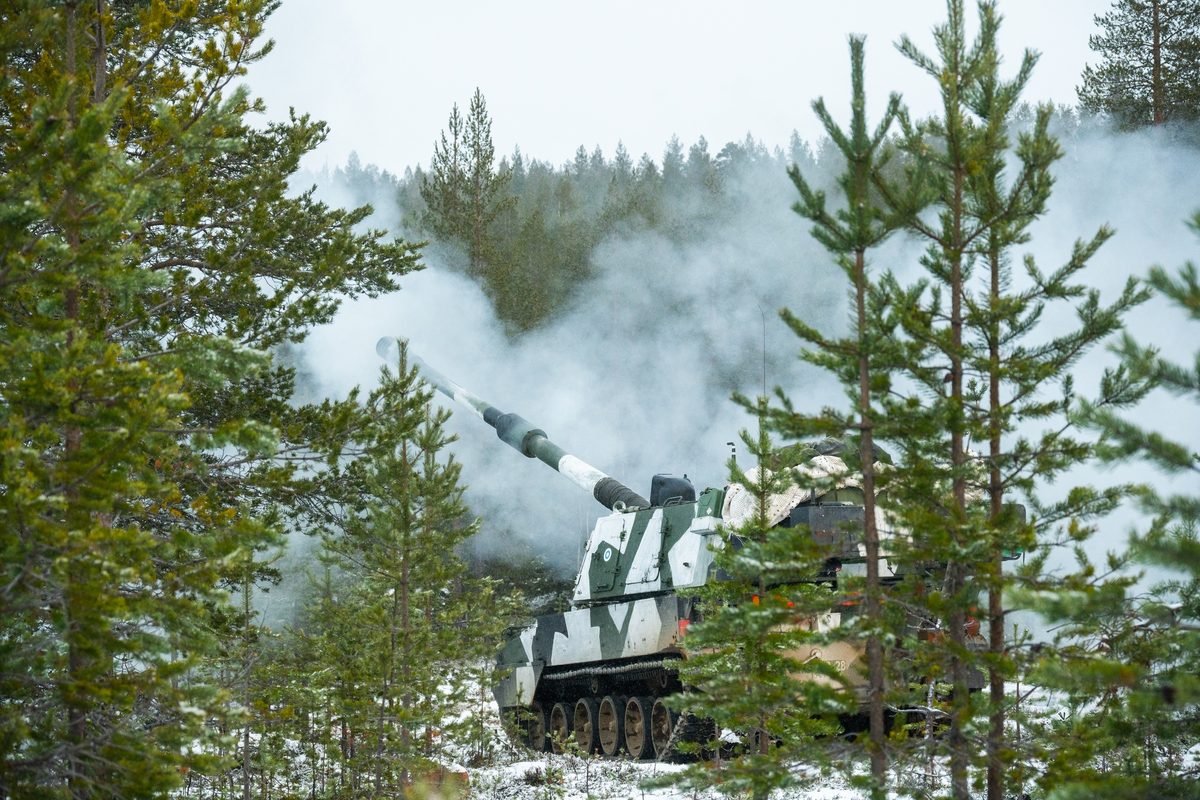
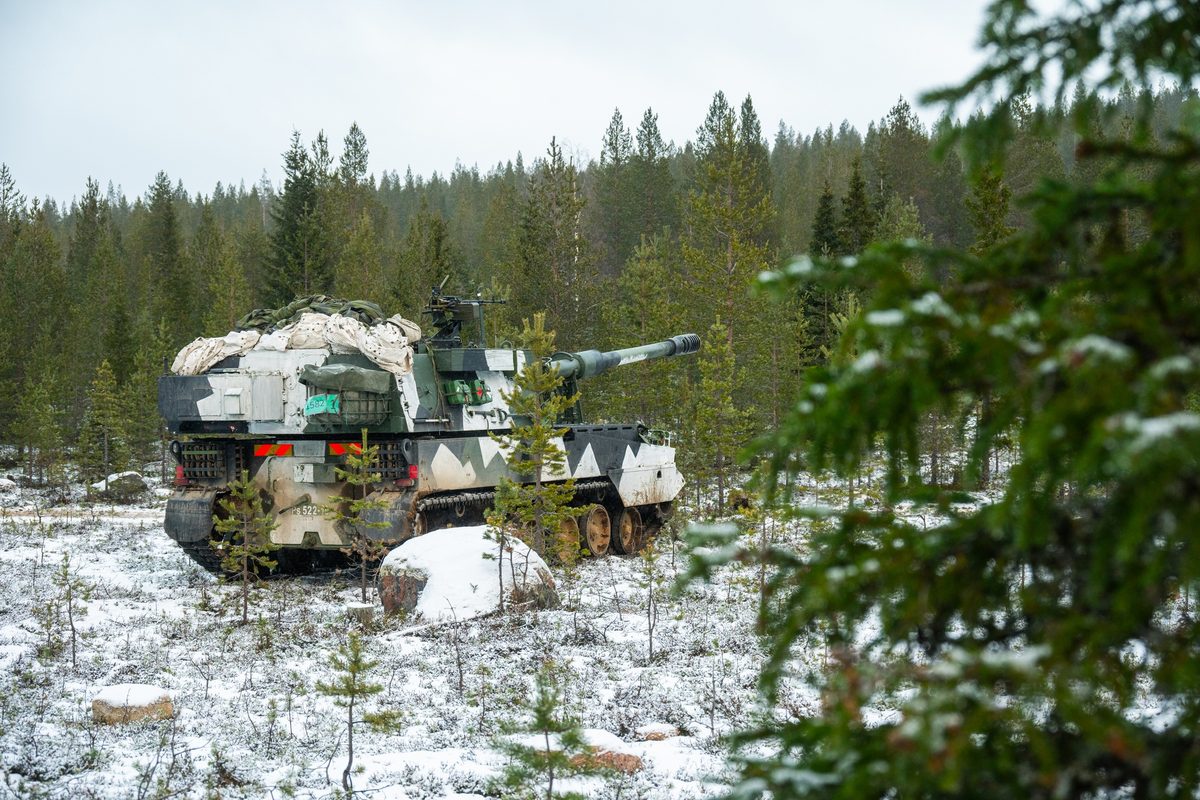
A Finnish Army K9 Moukari, their designation for the K9 Thunder, fires during Exercise Dynamic Front 25 at Rovaniemi Training Area, November 2024 (U.S. Army photo by Spc. Elijah Magaña)
At 47 tons, the K9 is lighter than the PzH 2000 (55.3 tons) but heavier than the wheeled CAESAR (17.7 tons). It rides on a modified K1 tank chassis, powered by an MTU 881 Ka-500 diesel engine producing 1,000 horsepower. Top road speed is 67 km/h. The crew of five operates in an NBC-protected turret with a digital fire-control system, inertial navigation, and automatic gun-laying.
None of these specifications are revolutionary individually. The PzH 2000 shoots faster. The CAESAR is more deployable. The M109A7 Paladin integrates better with American C4I systems. But the K9 does everything well enough, at a price point that makes its competitors look expensive.
The Price Advantage That Changes Everything
A K9 Thunder costs roughly $3.5 to $4 million per unit, depending on configuration and the technology transfer package. For comparison, the PzH 2000 runs approximately $7 to $8 million. The M109A7 Paladin costs around $8 million. The CAESAR sits at roughly $5 to $6 million.
That price gap is not a small difference. For a country building an artillery brigade, the choice between 100 PzH 2000s and 200 K9 Thunders is the difference between adequate coverage and overwhelming firepower. Poland's decision to buy 672 K9s, enough to equip virtually its entire artillery force, would have been financially impossible with German or American platforms.
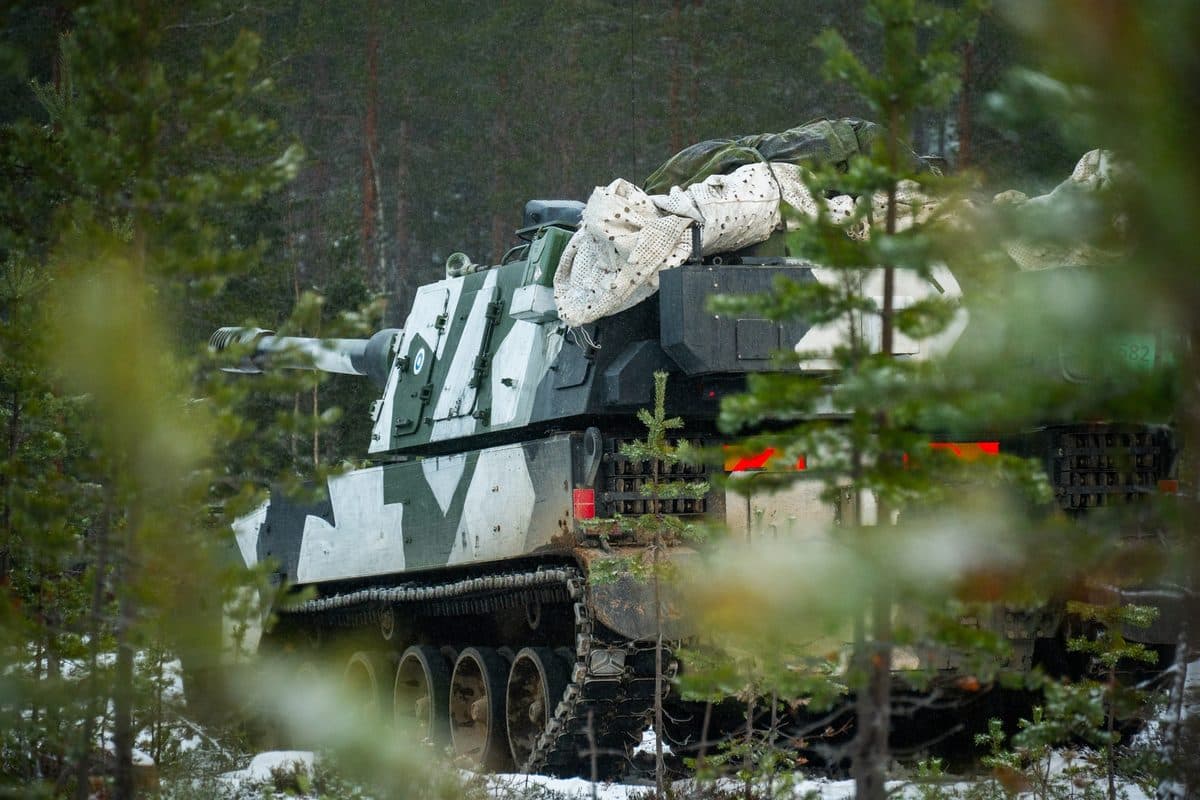
Finnish K9 Moukari howitzers prepare for action during Exercise Dynamic Front 25, demonstrating NATO interoperability (U.S. Army photo by Spc. Elijah Magaña)
But price alone doesn't explain the K9's dominance. Several factors make the deal sweeter.
Technology Transfer: The Dealmaker
When South Korea sells the K9 Thunder, it doesn't just ship finished vehicles. It offers manufacturing licenses, technology transfers, and co-production agreements that allow the buyer to build significant portions of the system domestically. This is the single biggest reason the K9 beats Western competitors.
Turkey received full technology transfer to produce its own variant, the T-155 Firtina, which incorporates a locally developed autoloader and Turkish electronics. Over 350 Firtina howitzers have been built, and Turkey now exports its own derivative versions. India's order for 100 K9 Vajras included a deal with Larsen & Toubro to assemble the vehicles domestically, with increasing Indian content over time.
Poland's contract includes provisions for K9A2 production at the Huta Stalowa Wola facility, creating Polish jobs and building domestic defense industrial capacity. For Warsaw, the K9 isn't just a howitzer purchase, it's an investment in Poland's ability to maintain and eventually produce heavy armor independently.
American and German manufacturers are generally reluctant to offer this level of technology transfer. Lockheed Martin won't hand over the M109's fire-control software. KMW guards the PzH 2000's advanced autoloader technology. South Korea, by contrast, treats technology transfer as a standard part of the deal, because selling the K9 builds relationships that lead to follow-on contracts for tanks, aircraft, and naval vessels.
Panel line washing is the single highest-impact finishing technique in armor modeling. Touch the brush to a recessed line, and capillary action draws the dark wash along the detail, creating shadow and depth instantly. Brown is the most versatile color for olive drab, sand, and dunkelgelb schemes.
Poland's K9 order illustrates another K9 advantage: delivery speed. After Russia's 2022 invasion of Ukraine, Poland needed to rebuild its artillery capabilities immediately. Warsaw had donated its Soviet-era howitzers to Ukraine and needed replacements fast. Hanwha Defense delivered the first batch of K9s within months, an impossibly fast timeline for Western defense contractors still working through pandemic-era backlogs.
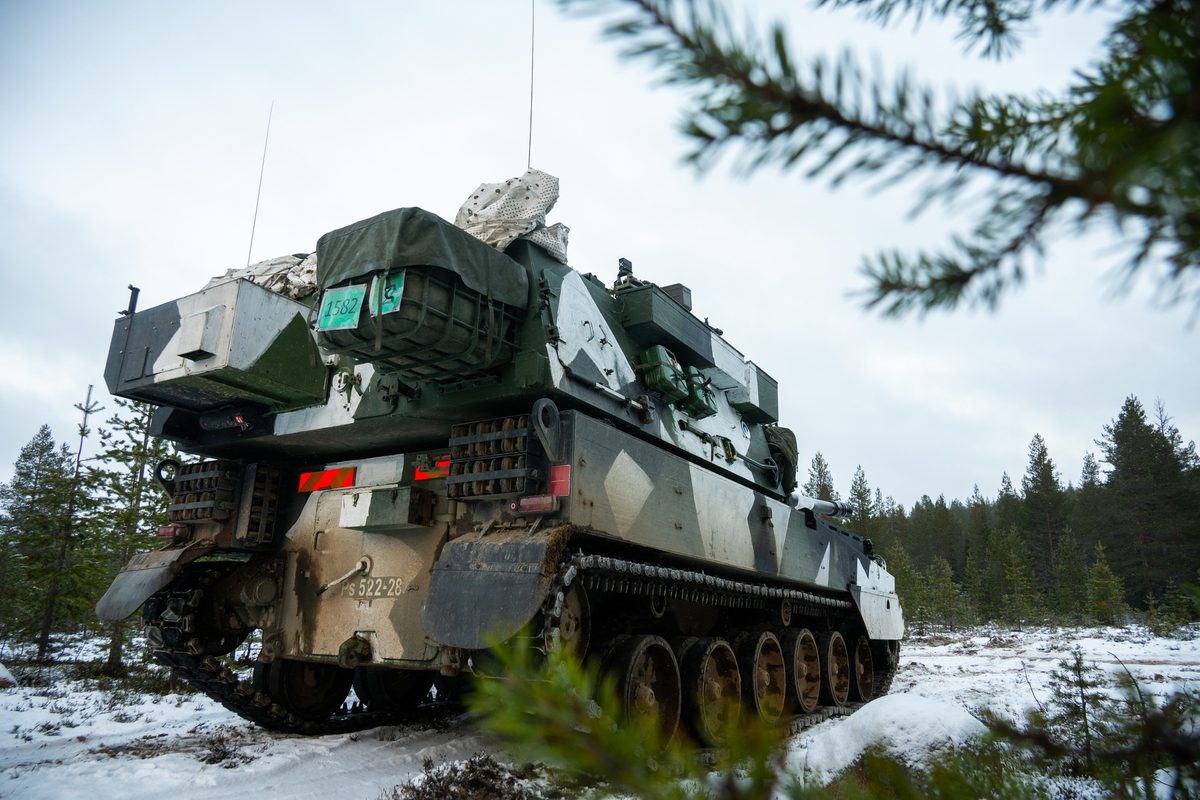
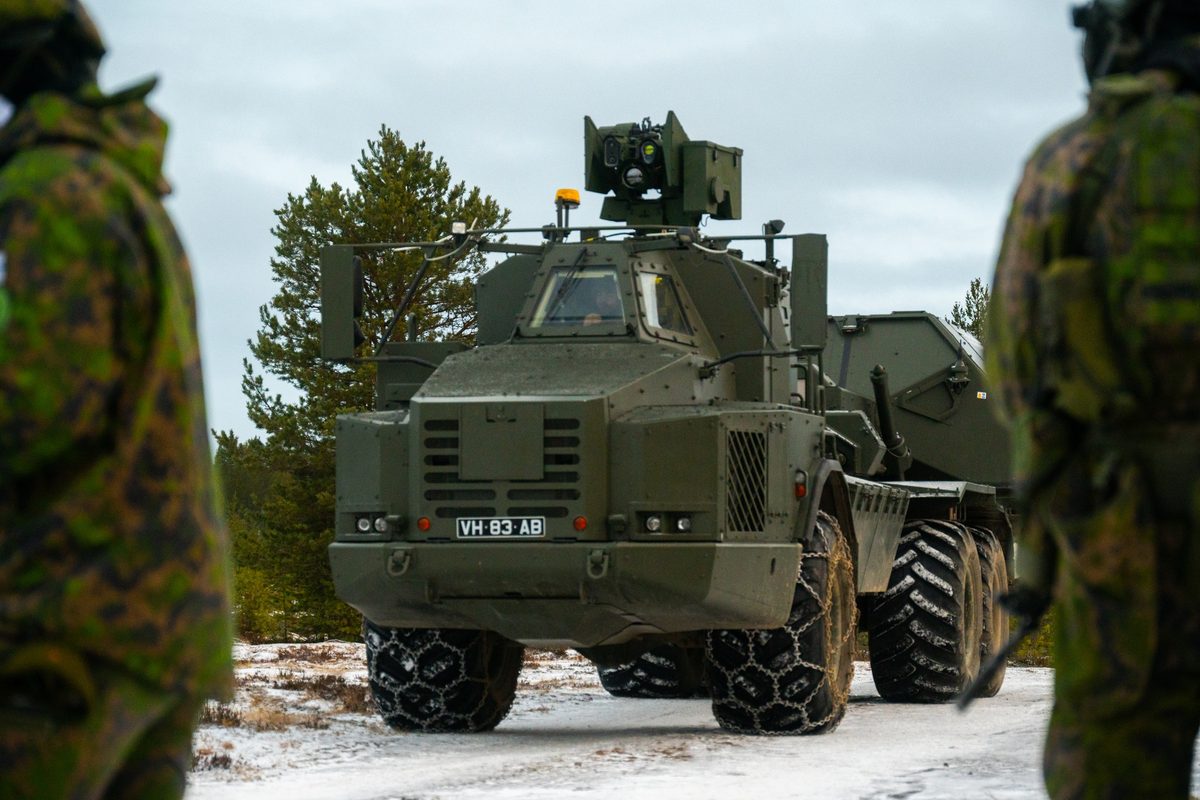
K9 Thunder self-propelled howitzers are transported to a training area during a multinational exercise in Finland, 2024 (U.S. Army photo)
South Korea's defense industry can move fast because it has maintained continuous production lines since the 1990s. The K9 line at Hanwha's Changwon facility has never gone cold. Contrast this with American manufacturers, where M109 production paused for years and restarting it required rebuilding supply chains from scratch.
For countries facing imminent threats, Poland watching Russia's war, Finland joining NATO, Estonia sitting on Russia's border, speed of delivery matters more than marginal performance advantages. A K9 in the field beats a PzH 2000 on order.
How South Korea Became a Top-Five Arms Exporter
The K9's export success is part of a larger story. South Korea has emerged as one of the world's top five arms exporters, alongside the United States, Russia, France, and China. In 2022, South Korean defense exports exceeded $17 billion, a figure that stunned the global defense community.
The K9 Thunder was the proof of concept. It demonstrated that South Korea could design, build, and support world-class military equipment at competitive prices. That credibility opened the door for exports of the K2 Black Panther tank, the FA-50 light combat aircraft, and the KSS-III submarine.
South Korea's approach is fundamentally different from traditional arms exporters. The United States sells weapons to build alliances and maintain strategic influence. France sells weapons to sustain its defense industrial base. Russia sells weapons at discount prices to geopolitical partners. South Korea sells weapons to make money and build industrial partnerships, and it's remarkably good at it.
Soldiers prepare a K9 Thunder for action during Dynamic Front 25, showcasing the crew coordination required to operate the 47-ton self-propelled howitzer (U.S. Army photo by Spc. Elijah Magaña)
The Operators: Nine Countries and Counting
Each K9 customer has its own story, but the pattern is consistent: nations chose the K9 because it offered the best combination of capability, cost, and industrial partnership.
South Korea operates over 1,100 K9s, the backbone of its counter-battery response to North Korean artillery. Turkey built 350+ T-155 Firtinas using K9 technology. India deployed K9 Vajras to the Line of Actual Control with China in Ladakh, where the vehicle's cold-weather performance was validated at 15,000 feet. Poland is receiving 672 K9A1s with plans to upgrade to the K9A2PL variant. Finland ordered 48 K9 Moukaris to replace aging Soviet-era howitzers. Norway chose the K9 for its Arctic conditions. Estonia, a small Baltic state with existential security concerns, bought K9s as its first-ever self-propelled howitzer. Australia selected the K9 for its LAND 8116 program. Egypt purchased K9s to modernize its artillery force.
What the Competition Got Wrong
The K9's success exposes a blind spot in Western defense exports. American and European manufacturers assumed that superior technology would always win contracts. They treated technology transfer as a concession to be avoided, delivery timelines as a function of demand rather than urgency, and pricing as secondary to capability.
The K9 proved that good enough, delivered fast, at the right price, with full technology transfer, beats the best platform on paper that arrives in three years with no industrial partnership. Most countries don't need the absolute best howitzer. They need artillery that works, that they can afford in quantity, and that they can eventually maintain and produce themselves.
As the global security environment deteriorates and more nations seek to rearm quickly, the K9 model, competitive pricing, fast delivery, generous technology transfer, is likely to become the standard, not the exception. South Korea bet that practical partnerships would beat prestige purchases. Nine countries, and counting, have proved them right.