Charles Bash covers military culture, global defense forces, and the human side of armed services around the world. His work explores how militaries shape the lives of the men and women who serve in them.
Memorial Day is the one day Americans pause to remember. These 10 places make sure they never forget.
The United States has thousands of military memorials, monuments, and cemeteries scattered across the country and around the world. But a handful of them have become something more than markers of history. They've become places of pilgrimage, destinations where millions of Americans go not just to learn, but to feel the weight of sacrifice that most of us experience only as an abstraction.
Each of these 10 memorials carries a story that goes deeper than what the guidebooks tell you. Behind the architecture and the inscriptions are design controversies, engineering feats, and quiet details that most visitors walk right past.
1. Vietnam Veterans Memorial, Washington, D.C.
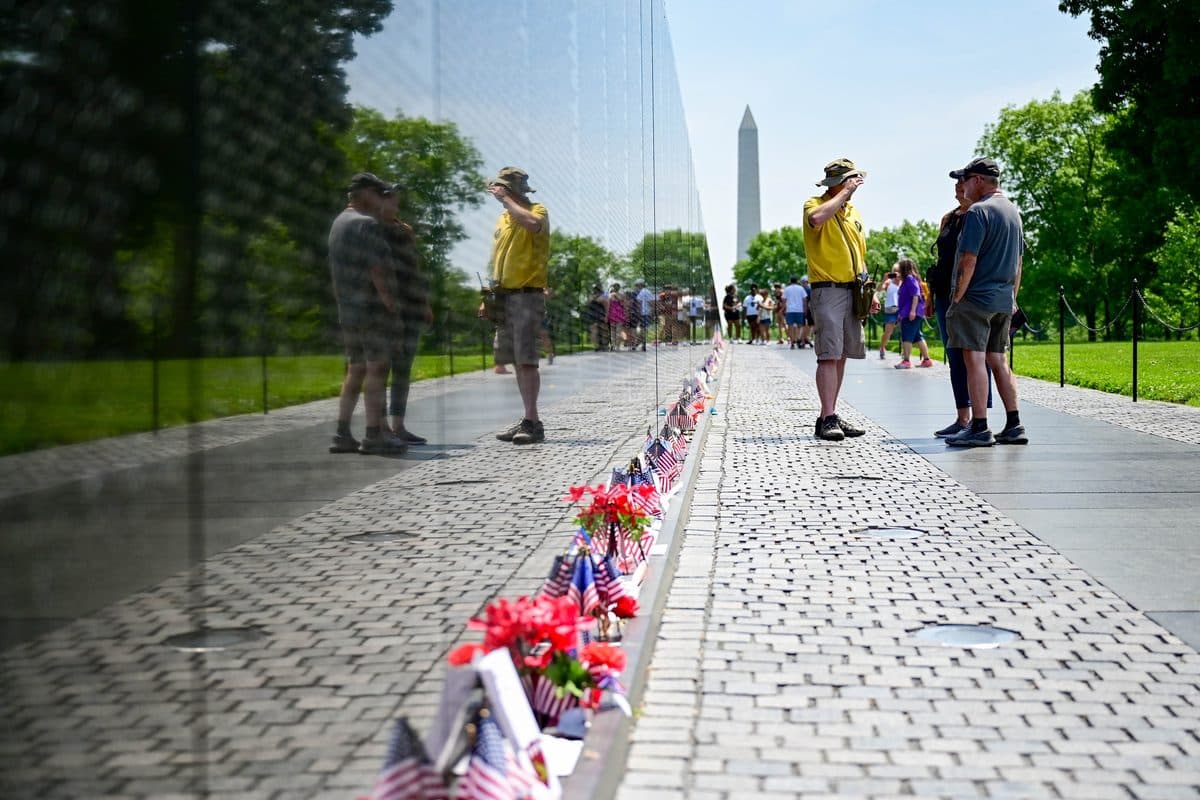
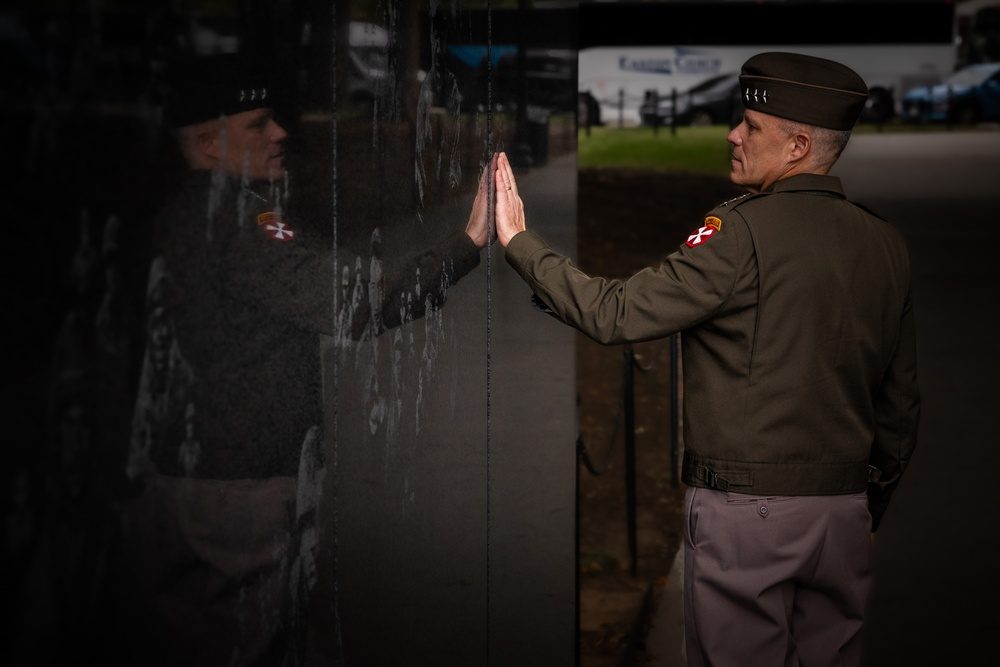
The most visited memorial on the National Mall draws 5.6 million visitors per year to a simple V-shaped wall of polished black granite sunk into the earth. It lists the names of 58,318 Americans killed or missing in Vietnam, arranged not alphabetically but chronologically, by the date of casualty. The first and last names on the wall meet at the vertex, creating a symbolic circle of the war's beginning and end.
More than 58,000 names are etched into the black granite of the Vietnam Veterans Memorial, each one representing an American service member who gave their life in the conflict (U.S. DoD photo)
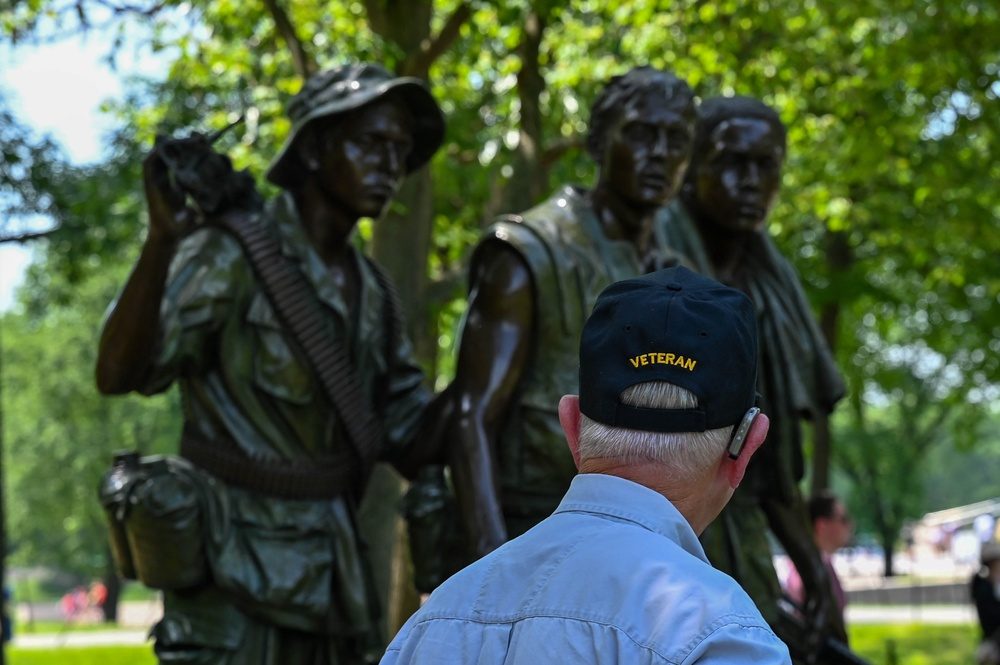
When 21-year-old Yale architecture student Maya Lin won the design competition in 1981, the backlash was immediate and fierce. Critics called it a "black gash of shame." Vietnam veterans protested that it looked like a grave rather than a tribute. The compromise: a traditional figurative sculpture, The Three Soldiers, was added nearby in 1984, along with the Vietnam Women's Memorial in 1993. Today, Lin's design is considered one of the most powerful pieces of memorial architecture ever created.
What most visitors don't know: the National Park Service collects every object left at the wall, dog tags, letters, medals, photographs, teddy bears, bottles of whiskey. The collection now exceeds 400,000 items, stored in a climate-controlled warehouse in Landover, Maryland. Each one is cataloged and preserved.
2. Arlington National Cemetery, Arlington, Virginia
More than 4 million people visit Arlington National Cemetery each year, walking among 400,000 graves spread across 639 acres on the hills above the Potomac River. The cemetery was established during the Civil War on the former estate of Robert E. Lee, a deliberate act by Union Quartermaster General Montgomery Meigs, who wanted to ensure Lee could never return home.
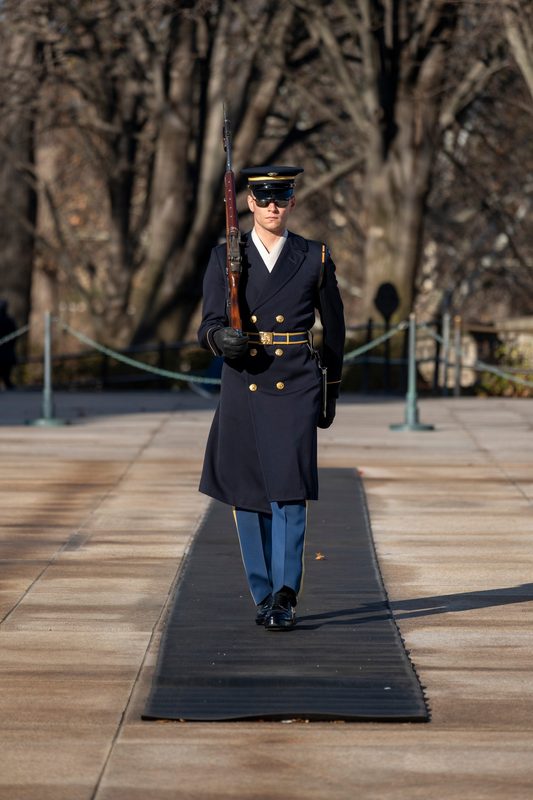
A soldier from the 3rd U.S. Infantry Regiment stands watch at the Tomb of the Unknown Soldier, a vigil maintained 24 hours a day, 365 days a year since 1937 (U.S. Army photo)
The Tomb of the Unknown Soldier is Arlington's most iconic site. Since April 6, 1948, the tomb has been guarded 24 hours a day, 365 days a year, through hurricanes, blizzards, and the September 11 attacks. The sentinels of the 3rd U.S. Infantry Regiment ("The Old Guard") walk 21 steps, pause 21 seconds, turn, and repeat, the number 21 representing the highest military honor, the 21-gun salute. Each sentinel's shift lasts exactly one hour in winter and 30 minutes in summer.
Arlington conducts an average of 27 funerals per day. At its current pace, the cemetery will reach capacity by the 2060s, despite a 70-acre expansion completed in 2025. Eligibility requirements have been tightened repeatedly to extend the cemetery's lifespan.
3. USS Arizona Memorial, Pearl Harbor, Hawaii
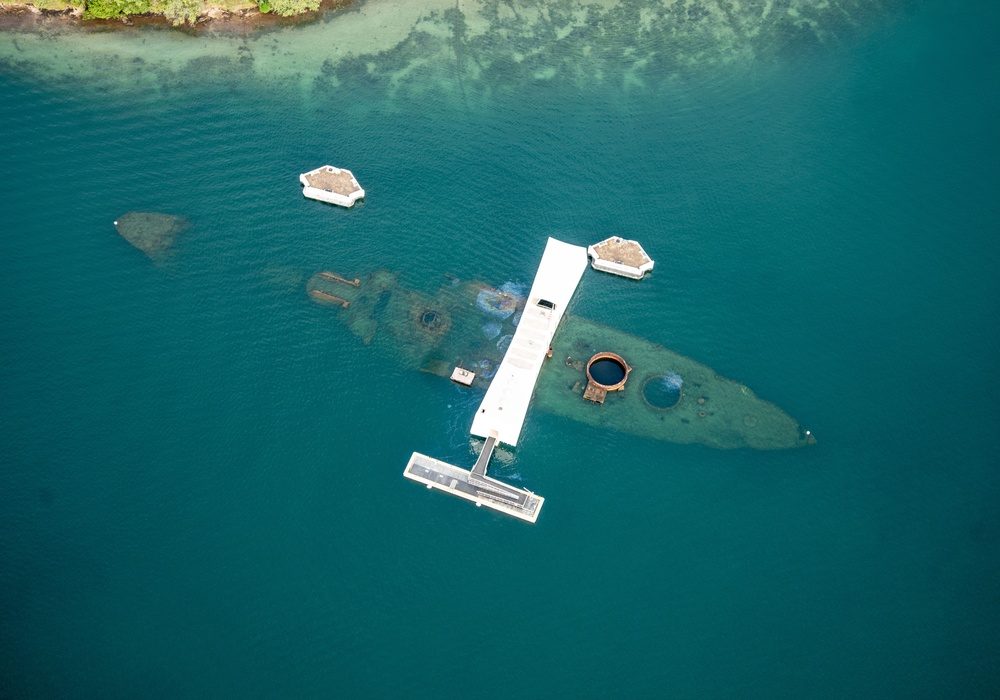
The white memorial structure straddles the sunken hull of USS Arizona without touching it, hovering over the final resting place of 1,102 of the 1,177 crew members killed on December 7, 1941. Approximately 1.8 million people visit the memorial each year, accessible only by boat from the Pearl Harbor Visitor Center.
The USS Arizona Memorial spans the sunken battleship at Pearl Harbor, which still leaks approximately 9 quarts of oil per day more than 80 years after the attack (U.S. Navy photo)
The Arizona still leaks approximately 9 quarts of fuel oil per day, what some call the "tears of the Arizona" or the "black tears." The ship went down with nearly 500,000 gallons of fuel oil still aboard. Marine scientists have studied the leak for decades, debating whether to extract the remaining oil (risking structural disturbance to the hull and the remains inside) or let it seep naturally over the next several decades.
The memorial's architect, Alfred Preis, an Austrian-born American who was detained during World War II as an "enemy alien," designed the structure with a deliberate sag in the center and strong ends, representing America's initial defeat, followed by ultimate victory.
Mattis traces his career from platoon leader to CENTCOM commander, weaving in the reading and historical study that informed his decisions. Part memoir, part master class in how a warrior-scholar thinks about command.
4. National World War II Memorial, Washington, D.C.
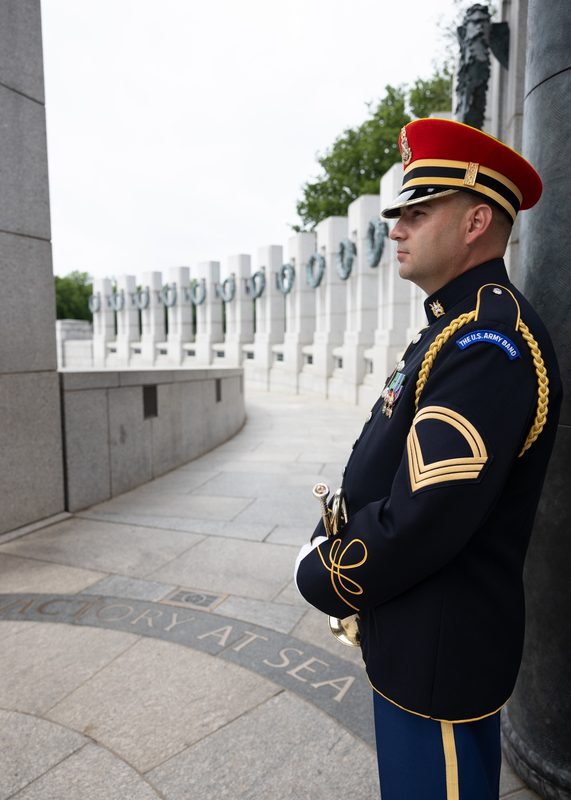
Opened in 2004, the WWII Memorial arrived decades after the war it commemorates, becoming the first national memorial dedicated to all Americans who served in the conflict. It draws 4.4 million visitors annually to the eastern end of the Reflecting Pool, between the Lincoln Memorial and the Washington Monument.
Veterans and visitors gather at the National WWII Memorial during a VE Day observance, surrounded by the 56 granite pillars representing every U.S. state and territory (U.S. Army photo)
The memorial's 56 granite pillars represent every U.S. state and territory at the time of the war. The Freedom Wall bears 4,048 gold stars, each representing 100 Americans who died in the conflict, totaling the approximately 405,000 who gave their lives. The inscription reads simply: "Here we mark the price of freedom."
The memorial almost didn't get built at its National Mall location. Critics, including some in the architecture community, argued it would obstruct the vista between the Lincoln Memorial and the Washington Monument. Congress ultimately approved the site, and the memorial was dedicated on May 29, 2004, with more than 150,000 people in attendance.
5. Korean War Veterans Memorial, Washington, D.C.
The Korean War is often called "the Forgotten War," and its memorial on the National Mall was designed to make sure that label doesn't stick. Nineteen stainless-steel soldier statues, representing a squad on patrol, stand in formation across a field of juniper bushes and granite strips meant to evoke the rugged terrain of Korea. The figures represent all branches of service and the ethnic diversity of the force.
Visitors view the Korean War Veterans Memorial, where 19 stainless-steel soldiers patrol alongside a polished granite wall bearing over 2,500 photographic images (U.S. Army photo)
A polished black granite wall running alongside the statues features more than 2,500 sandblast-etched photographs of actual service members and support personnel from the war. The reflection of the 19 statues in the wall creates the appearance of 38 figures, representing the 38th parallel that divides North and South Korea.
In 2022, the Wall of Remembrance was added to the memorial, listing the names of the 36,634 American service members and 7,174 Korean Augmentation to the United States Army (KATUSA) soldiers who died in the conflict. The inscription "Freedom Is Not Free" anchors the memorial's message.
6. Normandy American Cemetery, Colleville-sur-Mer, France
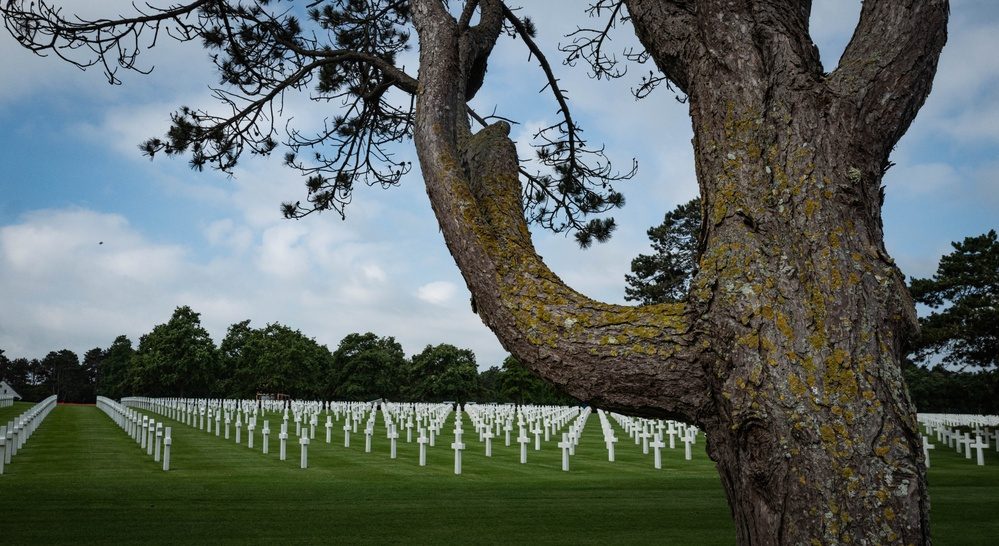
Overlooking Omaha Beach, the Normandy American Cemetery holds 9,388 graves, most of them belonging to service members who died during the D-Day landings and the subsequent campaign to liberate France. The white marble crosses and Stars of David are arranged in perfect arcs across 172.5 acres of immaculate grounds maintained by the American Battle Monuments Commission.
U.S. service members attend the 80th anniversary D-Day ceremony at the Normandy American Cemetery, where 9,388 Americans are laid to rest overlooking the beaches where many of them fell (U.S. Army photo)
Among the buried: Theodore Roosevelt Jr., the eldest son of President Theodore Roosevelt, who at 56 was the oldest man in the D-Day assault and the only general to land with the first wave. He died of a heart attack one month after D-Day and was posthumously awarded the Medal of Honor. His brother Quentin, killed in World War I, was reinterred beside him, making the Roosevelts the only father-and-son pair buried together at Normandy.
Sledge's raw memoir of Peleliu and Okinawa with the 1st Marine Division is widely considered the finest combat memoir to come out of WW2. Written from notes he kept hidden in his Bible during the fighting.
The cemetery includes a Garden of the Missing with 1,557 names, service members whose remains were never recovered or identified. Rosettes mark names that have since been accounted for through DNA identification, a process that continues today.
7. Marine Corps War Memorial, Arlington, Virginia
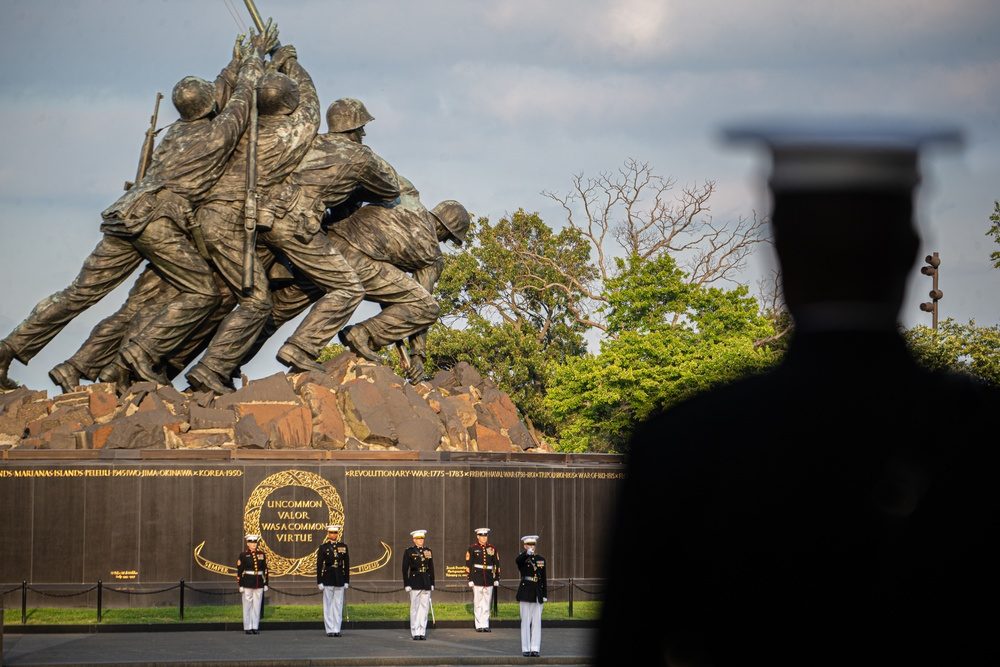
Based on Joe Rosenthal's iconic photograph of six Marines raising the American flag atop Mount Suribachi during the Battle of Iwo Jima on February 23, 1945, the 32-foot bronze sculpture is one of the most recognizable military monuments in the world. Sculptor Felix de Weldon spent nine years creating it, with three of the surviving flag-raisers posing for the sculpture.
Marines conduct an evening parade at the Marine Corps War Memorial, where sunset ceremonies have honored the fallen every week since 1956 (U.S. Marine Corps photo)
Of the six men depicted in the photograph, three were killed in the weeks following the flag-raising. In 2019 and 2024, the Marine Corps corrected the identifications of some of the men in the photo, using new photographic analysis and witness testimony. The memorial stands as a tribute to all Marines who have given their lives since 1775.
Every Tuesday evening from May through August, the Marine Barracks Washington presents Sunset Parades at the memorial, a tradition maintained since 1956.
8. National September 11 Memorial & Museum, New York City
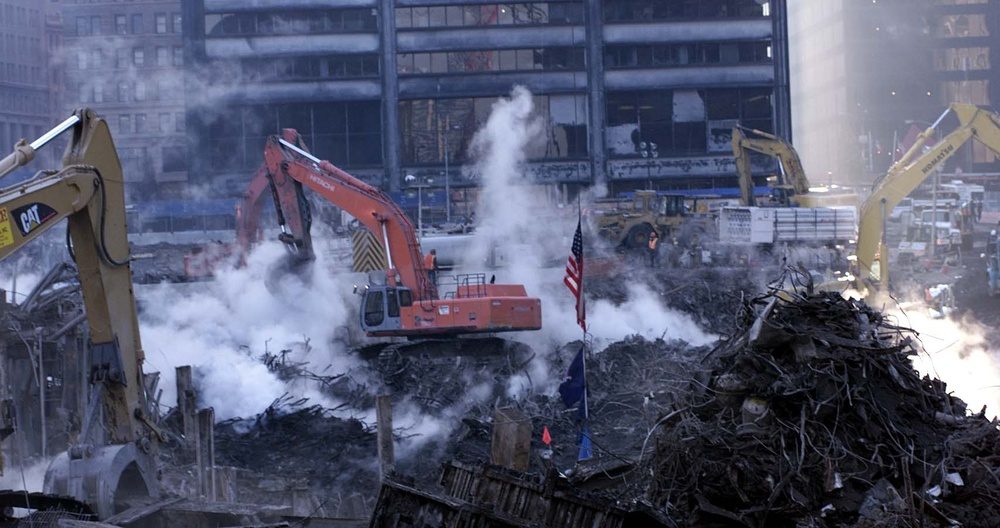
Located on the footprints of the Twin Towers in Lower Manhattan, the memorial draws approximately 3 million visitors per year. Two massive reflecting pools, the largest man-made waterfalls in North America, mark the exact locations where the towers stood. The names of all 2,977 people killed in the 2001 attacks and the 1993 World Trade Center bombing are inscribed on bronze panels surrounding the pools.
Military personnel participate in a 9/11 remembrance at Ground Zero, where two reflecting pools now mark the footprints of the fallen Twin Towers (U.S. DoD photo)
The underground museum preserves a last steel column removed from Ground Zero, a fire truck crushed during the collapse, and the Survivors' Staircase, a concrete stairway that hundreds of people used to escape the site. White roses are placed beside the names of victims on their birthdays.
While the 9/11 Memorial is not exclusively a military memorial, the attacks launched the longest war in American history and led directly to the deaths of over 7,000 U.S. service members in Afghanistan and Iraq. For many veterans, this is where their war began.
9. Gettysburg National Military Park, Gettysburg, Pennsylvania
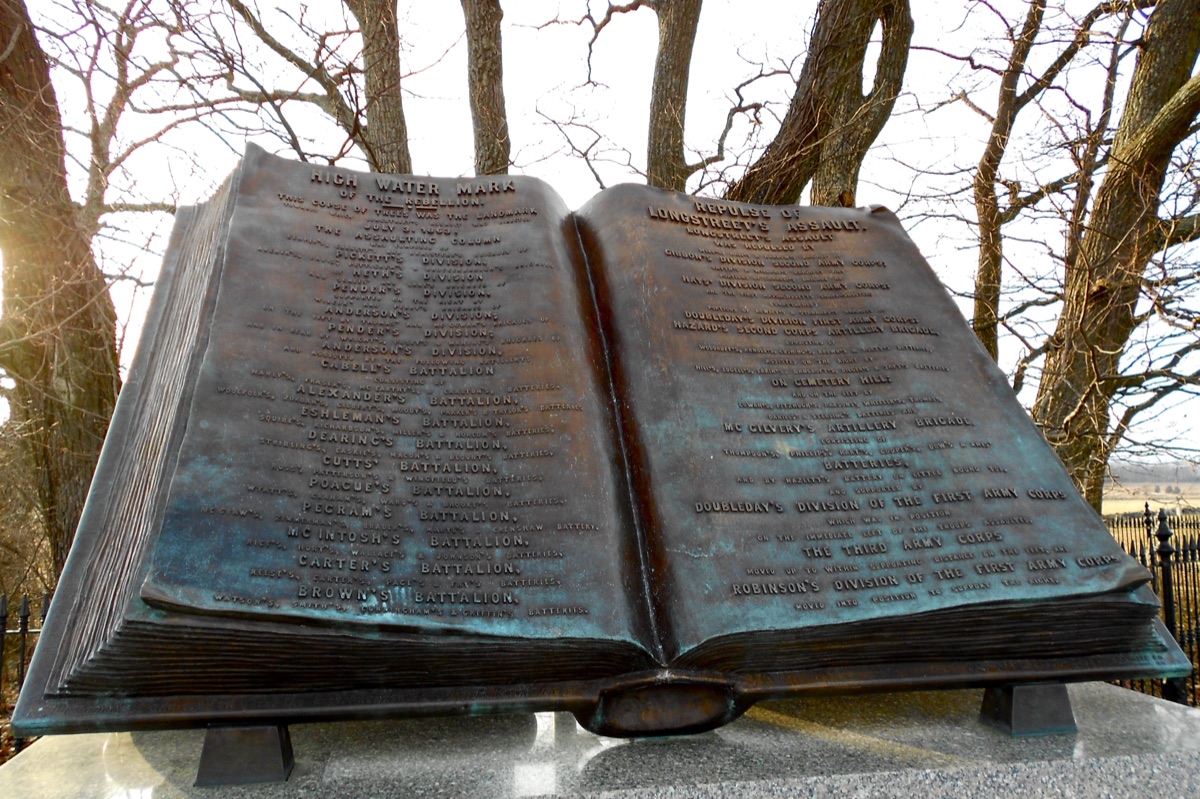
The site of the bloodiest battle of the Civil War, and the turning point of the conflict, Gettysburg receives approximately 1 million visitors per year. Over three days in July 1863, roughly 165,000 soldiers clashed on these Pennsylvania fields, leaving over 50,000 casualties. The park preserves more than 1,300 monuments, markers, and memorials across 6,000 acres.
Hastings covers Vietnam from 1945 to 1975, drawing on Vietnamese, French, and American sources to build the most comprehensive single-volume account of the conflict available in English.
Modern service members walk the Gettysburg battlefield during a military staff ride, studying the same terrain where over 50,000 Americans became casualties in three days of fighting (U.S. Army photo)
The U.S. military still uses Gettysburg as a training ground, not for combat, but for leadership. "Staff rides" bring officers to the battlefield to study decisions made under pressure, the fog of war, and the consequences of failed communication. Every year, hundreds of military leaders walk the same ground that Pickett's division charged across, studying what went wrong and why.
Unexploded ordnance from the battle is still occasionally discovered. In 2023, Army Explosive Ordnance Disposal technicians safely destroyed a Civil War-era artillery round found on park grounds, a reminder that the battlefield's dangers haven't entirely faded.
10. National Museum of the United States Air Force, Dayton, Ohio
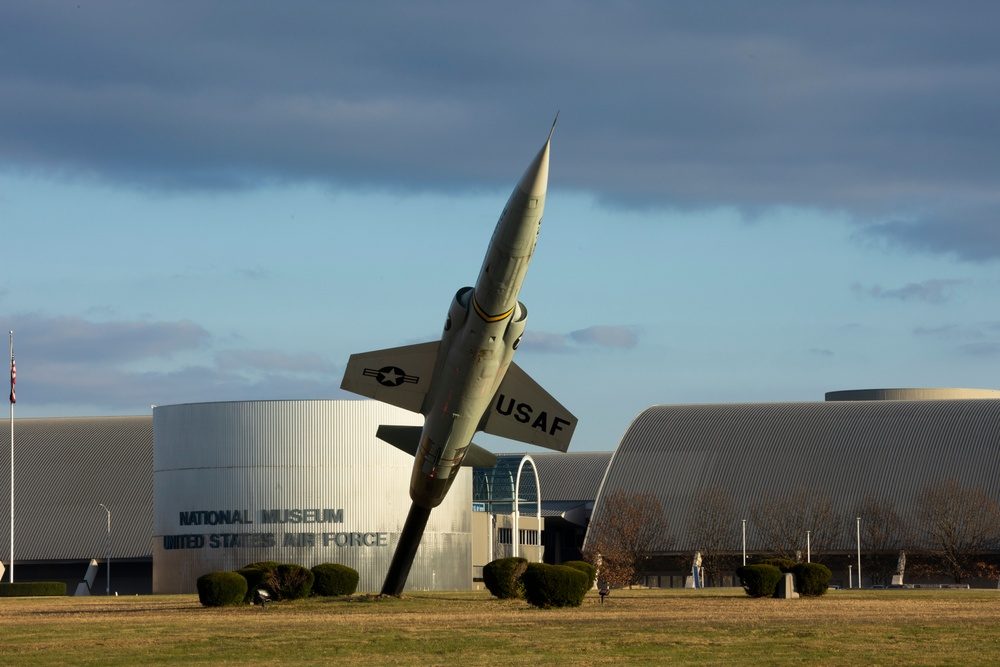
The world's largest and oldest military aviation museum houses more than 350 aerospace vehicles across four massive hangars at Wright-Patterson Air Force Base. Admission is free, it draws over 800,000 visitors annually, and the collection spans from a 1909 Wright Flyer to a B-2 Spirit stealth bomber.
The National Museum of the United States Air Force at Wright-Patterson Air Force Base houses more than 350 aircraft and missiles, making it the world's largest military aviation museum (U.S. Air Force photo)
Among the museum's treasures: the Boeing VC-137C SAM 26000, the presidential aircraft that carried John F. Kennedy's body from Dallas on November 22, 1963, and the same plane on which Lyndon B. Johnson took the oath of office. The "Bockscar" B-29 that dropped the atomic bomb on Nagasaki sits alongside experimental aircraft that never made it past the prototype stage.
The museum traces its origins to 1923, when it occupied a single corner of a hangar at McCook Field. A century later, it stands as the most comprehensive collection of military aviation history anywhere in the world.
Why These Places Matter
Military memorials serve a function that no textbook, documentary, or classroom lecture can replicate. They make abstract numbers into concrete experiences. The 58,318 names on the Vietnam Wall are not statistics, they are individuals, arranged in the order they fell, reflecting back at you as you read them. The 9,388 white crosses at Normandy are not data points, they are rows that stretch further than you can see, each one representing someone who never came home.
On Memorial Day, these places remind us that the cost of the freedoms we enjoy was paid by specific people, in specific places, at specific moments in history. The memorials exist so that payment is never forgotten.