Ryan Caldwell writes about military decision-making, failed programs, and the tradeoffs behind major defense choices. His work is focused on understanding why systems succeed or fail beyond headlines, promises, and initial expectations.
Military history is full of moments that defy belief. Operations planned by serious professionals
with serious consequences that, when described to someone unfamiliar with the context, sound
like rejected movie plots or elaborate pranks.
But that's the thing about war and military planning: desperation breeds creativity, bureaucracies
sometimes approve absurd ideas, and chaos produces outcomes no one could have predicted. Some of
history's strangest military operations succeeded precisely because they were too outlandish for
the enemy to anticipate.
The following 15 operations are all real. Each was planned, funded, and executed by professional
military organizations. Some worked brilliantly. Others failed spectacularly. All of them demonstrate
that when it comes to war, truth really is stranger than fiction.
What makes these operations seem unbelievable isn't just their strangeness; it's that they were
conducted by institutions we expect to be methodical and conventional. When the same organizations
that deploy aircraft carriers and satellite surveillance also attempt to weaponize bats or train
dolphins for naval warfare, it reveals how military planning can take unexpected turns under
pressure, necessity, or just institutional curiosity about what might work.
1. Operation Mincemeat: The Dead Man Who Fooled Hitler
In 1943, British intelligence needed to convince Germany that the upcoming Allied invasion
would target Sardinia and Greece, not Sicily, the actual objective. Their solution: dress
a corpse as a Royal Marines officer, plant fake invasion plans in his briefcase, and dump him
off the coast of Spain where German agents would find him.
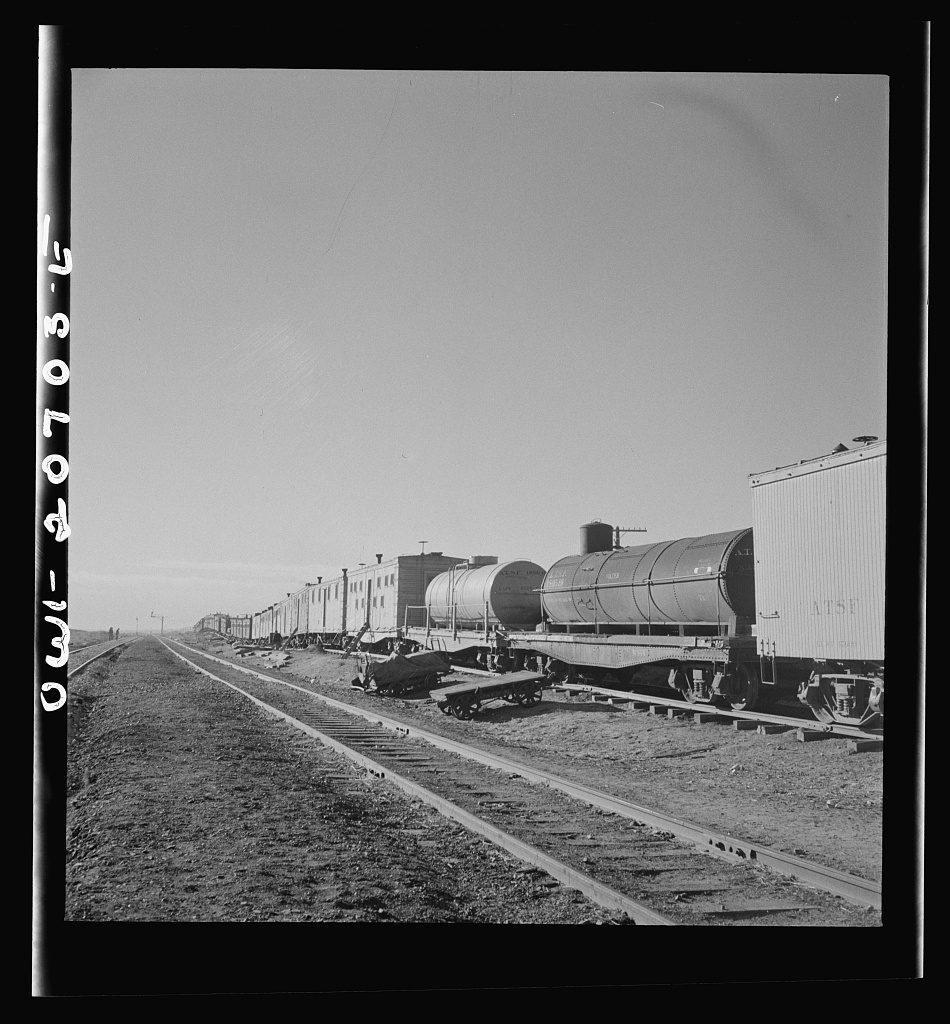
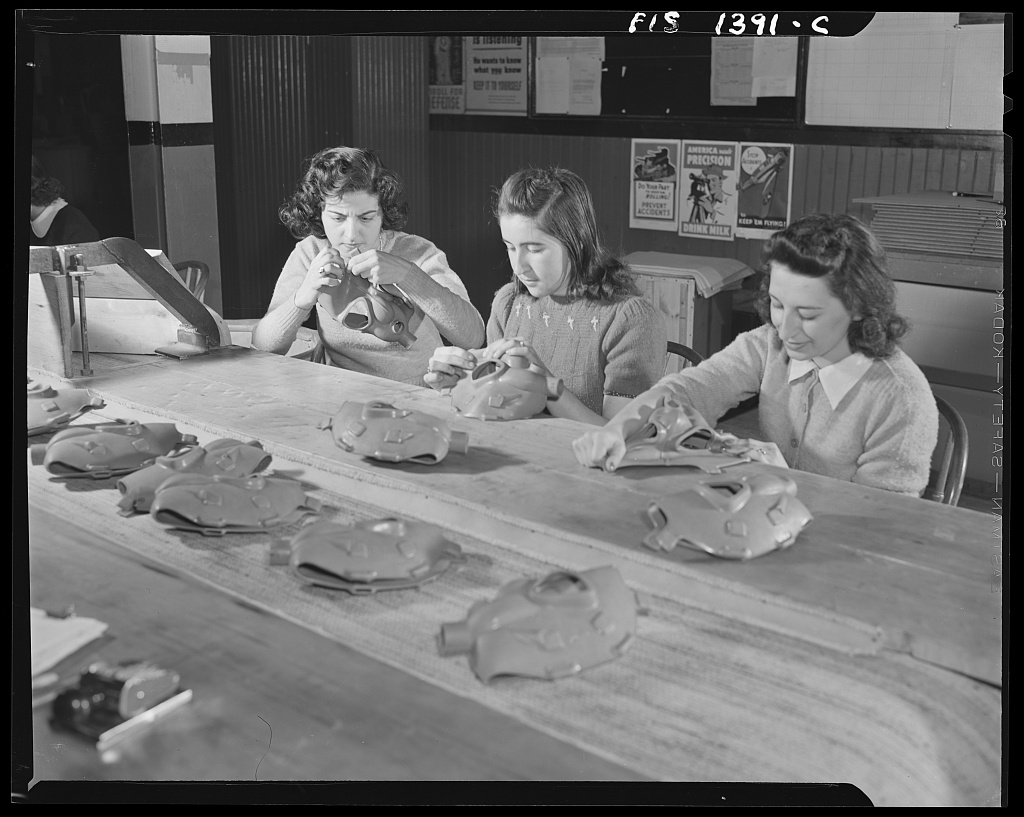
British intelligence officers carefully crafted elaborate false documents and backstories
for deception operations during WWII. Photo: Library of Congress, Public Domain
The body, given the identity "Major William Martin," was obtained from a London morgue.
British planners created an elaborate backstory: love letters, theater ticket stubs, and
a photograph of a fictitious fiancée. The Germans intercepted the documents, believed them,
and redirected forces away from Sicily.
When Allied forces landed in Sicily on July 10, 1943, they faced weaker resistance than expected.
The operation was declassified in the 1950s and inspired the book and films titled "The Man Who
Never Was."
2. Project Pigeon: Training Birds to Guide Missiles
Before electronic guidance systems existed, American psychologist B.F. Skinner proposed using
pigeons to steer missiles toward enemy ships. The pigeons would be trained to peck at an image
of the target displayed on a screen inside the missile's nose cone. Their pecking would send
steering signals to the guidance fins.
The National Defense Research Committee funded the project in 1943. Skinner successfully trained
pigeons to track ship silhouettes with remarkable accuracy. The project demonstrated that pigeons
could reliably guide a missile to impact.
Despite the pigeons' performance, the military never deployed the system. Committee members
couldn't shake their skepticism about relying on birds for weapons guidance, even as the
data showed it worked. The project was cancelled in 1944, revived briefly in 1948 as "Project
Orcon," then abandoned permanently as electronic alternatives improved.
3. The Ghost Army: Inflatable Tanks and Sound Effects
The 23rd Headquarters Special Troops was a US Army unit of roughly 1,100 men whose job was
to deceive the Germans about Allied positions and strength. Their equipment: inflatable tanks,
fake artillery, sound trucks playing recorded battle noises, and scripted radio traffic designed
to be intercepted.
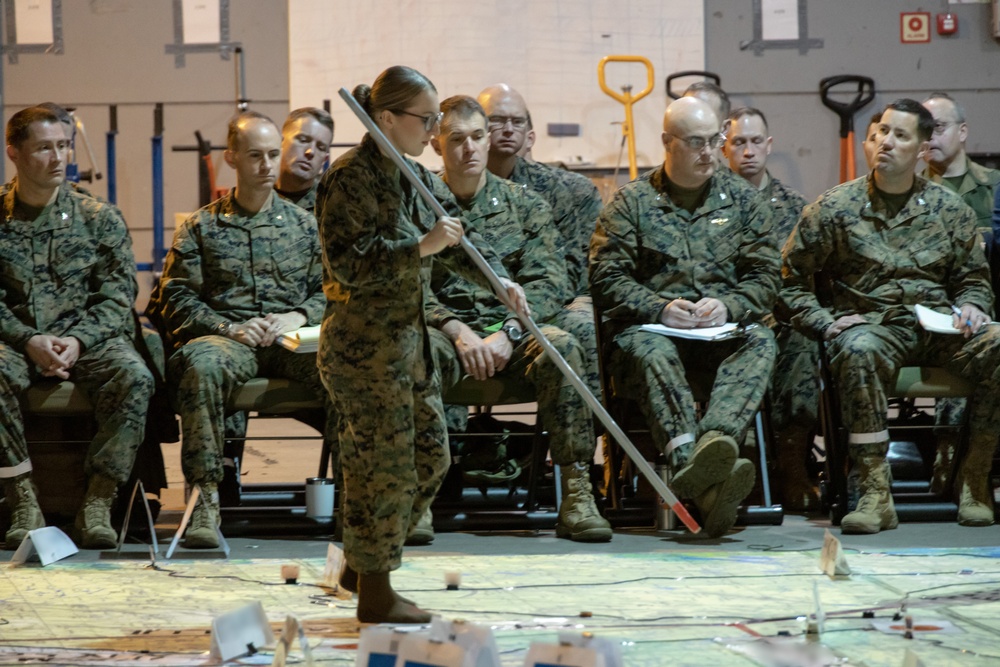
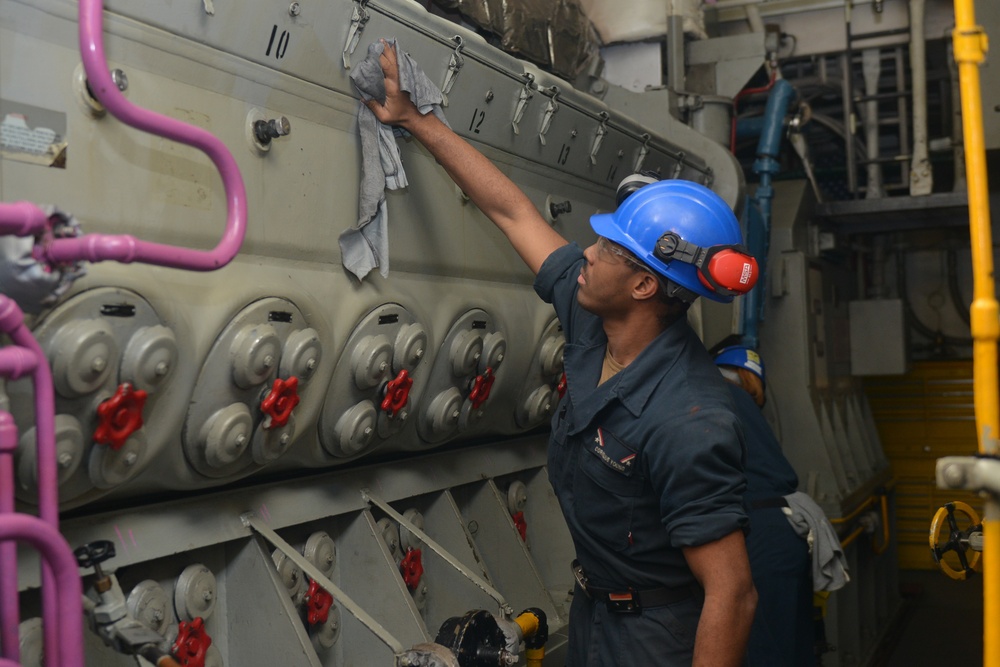
U.S. Army soldiers during a tactical operations session. Military deception remains a
key component of modern operations (U.S. Army photo)
From 1944 to 1945, the Ghost Army conducted more than 20 deception operations across France,
Luxembourg, Belgium, and Germany. They simulated entire divisions, drawing German attention
and firepower away from actual Allied forces. The unit included artists, designers, and sound
engineers, many of whom later became famous in civilian careers.
The Ghost Army's existence remained classified until 1996. Their work is credited with saving
thousands of lives by misdirecting German responses.
4. The Great Emu War: Australia vs. Flightless Birds
In 1932, Australian farmers in Western Australia faced a crisis: approximately 20,000 emus
were migrating through their wheat fields, destroying crops. Local farmers requested military
assistance. The Royal Australian Artillery deployed soldiers armed with two Lewis guns.
What followed was less a war than a comedy of errors. Emus proved remarkably difficult targets:
fast, dispersed, and apparently intelligent enough to post sentries. The birds scattered when
fired upon and regrouped elsewhere. After firing approximately 2,500 rounds, the military had
killed fewer than 200 birds.
Australian soldiers deployed with Lewis guns against emus, but the fast-moving birds
proved surprisingly difficult to engage effectively. Photo: Library of Congress, Public Domain
The operation was withdrawn after less than a week. Subsequent requests for military intervention
were denied. Farmers eventually returned to using bounty systems, which proved more effective.
The incident is remembered as one of history's stranger military operations, though calling
it a "war" overstates the engagement.
5. Operation Paul Bunyan: 800 Men to Cut Down a Tree
On August 18, 1976, North Korean soldiers attacked a work party attempting to trim a poplar tree
in the Korean Demilitarized Zone, killing two US Army officers with axes. The tree blocked
observation between two United Nations Command posts.
Worker placement meets deck-building meets military conflict, set in Frank Herbert's Dune universe. BGG 8.3 with 60,000+ ratings. You place agents to gain resources and political influence, then commit troops to fight over control of Arrakis. The three interconnected systems create more strategic depth than any single mechanism could deliver alone.
Three days later, the United States and South Korea launched Operation Paul Bunyan, a massive show of
force to cut down the tree. The operation involved 23 American and South Korean vehicles, 27
helicopters, multiple fighter aircraft, B-52 bombers circling nearby, and an aircraft carrier
task force positioned off the coast.
Operation Paul Bunyan required extensive military planning and coordination for what was
essentially a tree-cutting mission. Photo: Library of Congress, Public Domain
A team of engineers cut the tree down in 42 minutes while armed forces stood ready. North Korea,
faced with overwhelming force, did not intervene. The operation demonstrated that even a tree
in the DMZ could trigger military posturing at a strategic level, and that sometimes the
appropriate response to provocation is disproportionate preparation.
6. Project X-Ray: Bat Bombs
In 1942, a Pennsylvania dentist named Lytle Adams proposed a novel weapon to the US military:
bats carrying tiny incendiary devices. The idea was to release thousands of bats over Japanese
cities at dawn. The bats would roost in wooden buildings, their incendiaries would ignite, and
widespread fires would result.
The National Defense Research Committee approved the project, codenamed "X-Ray." Researchers
captured Mexican free-tailed bats by the thousands and developed miniature incendiary capsules.
Testing at a New Mexico airfield proved the concept could work. In fact, the bats accidentally
set fire to the test facility itself.
The project consumed $2 million and two years of development before being cancelled in 1944.
The official reason: the atomic bomb program was progressing faster and promised more decisive
results. The bat bombs worked in principle but were deemed too slow to scale compared to
nuclear weapons.
7. Operation Acoustic Kitty: The CIA's Cat Spy
In the 1960s, the CIA attempted to implant listening devices into cats and use them to eavesdrop
on Soviet conversations. The project, codenamed "Acoustic Kitty," involved surgically implanting
a microphone, antenna, and power source into a live cat.
Cold War intelligence operations explored many unconventional surveillance methods
(U.S. Government photo)
The first field test in 1967 reportedly ended when the cat was struck by a taxi shortly after
deployment. The project was cancelled after spending approximately $20 million. A declassified
CIA memo concluded that cats could be trained to move short distances but "the environmental
and security factors in using this technique in a real foreign situation force us to conclude
that for our purposes it would not be practical."
The lesson: animals make unpredictable surveillance platforms.
8. The Battle of Los Angeles: Shooting at Nothing
On the night of February 24-25, 1942, less than three months after Pearl Harbor, anti-aircraft
batteries across Los Angeles opened fire on what gunners believed was an enemy attack. Over
1,400 rounds were fired into the night sky. Air raid sirens wailed. Searchlights swept the darkness.
The problem: there were no enemy aircraft. Post-incident analysis concluded that the initial
reports were likely triggered by weather balloons or war nerves. Once firing began, the muzzle
flashes and bursting shells created the appearance of targets, leading more batteries to open fire.
The Battle of Los Angeles saw over 1,400 anti-aircraft rounds fired into the night sky
at targets that likely never existed. Photo: Library of Congress, Public Domain
The incident killed five people: three from car accidents during the blackout and two from
heart attacks attributed to the stress. It remains one of the most dramatic examples of
wartime hysteria producing real casualties without any enemy involvement.
9. Operation Moolah: Paying $100,000 for a MiG
During the Korean War, the US Air Force desperately wanted to examine a Soviet MiG-15, the
fighter that was challenging American air superiority. In April 1953, they announced Operation
Moolah: a $100,000 reward (plus asylum) for any communist pilot who defected with an intact MiG-15.
Leaflets advertising the offer were dropped across North Korea and broadcast via radio. For
months, nothing happened. Then, on September 21, 1953 (after the armistice), North Korean
Lieutenant No Kum-sok landed his MiG-15 at Kimpo Air Base in South Korea.
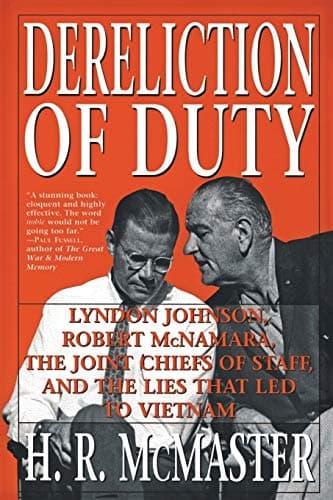
McMaster's doctoral dissertation turned book examines how the Joint Chiefs of Staff failed to challenge the Johnson administration's flawed Vietnam strategy. A devastating critique of what happens when military leaders prioritize career survival over honest counsel.
Operation Moolah offered $100,000 for a MiG-15, and eventually succeeded when a North Korean
pilot defected with his aircraft. Photo: Library of Congress, Public Domain
No Kum-sok claimed he hadn't heard of the reward; he defected for personal reasons. The US
paid him anyway. The aircraft was extensively tested at Wright-Patterson Air Force Base,
revealing the MiG's strengths and weaknesses to American engineers.
10. The Great Panjandrum: The Explosive Wheel That Couldn't
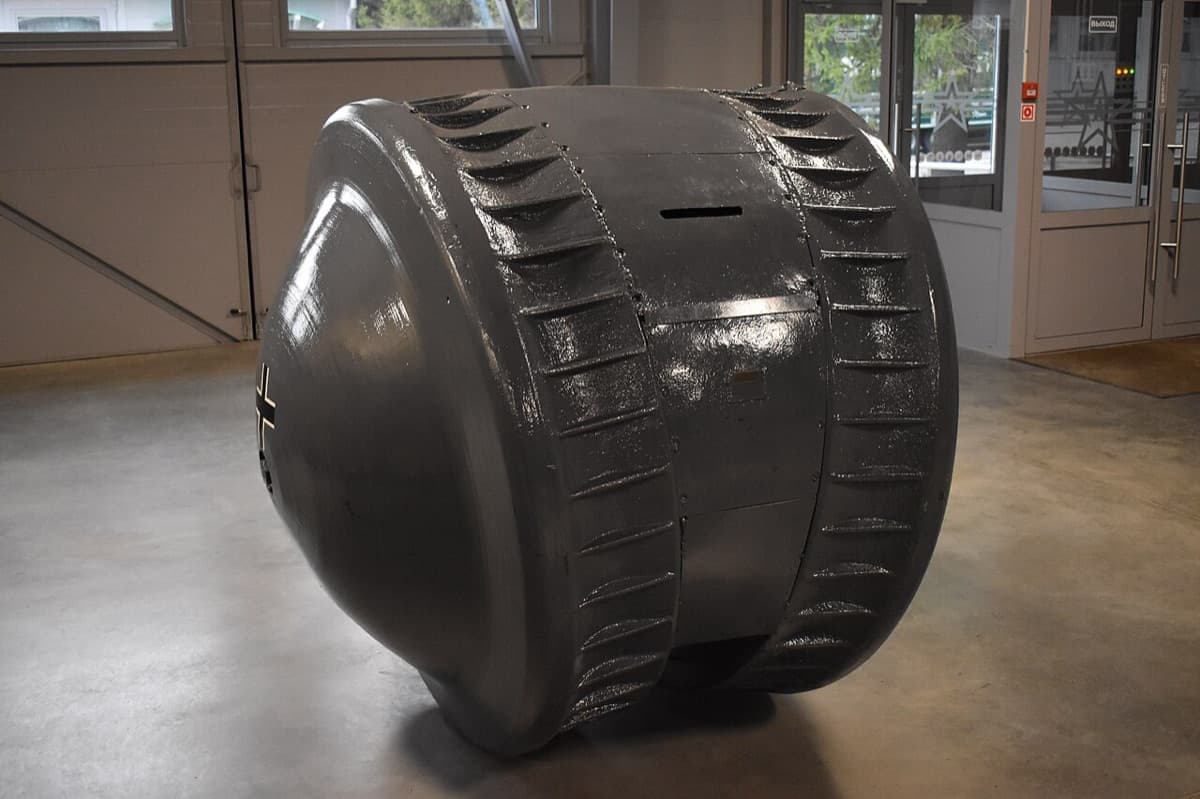
In 1943, British engineers developed the Panjandrum - a ten-foot-diameter rocket-powered wheel
designed to roll up beaches, smash through German defenses, and explode. Two wooden wheels
connected by a central drum were propelled by cordite rockets attached to the rims.
Testing revealed immediate problems. The rockets fired unevenly, sending the device careening
in unpredictable directions. In one notorious test, the Panjandrum turned around and charged
back toward the observers, scattering officials, cameramen, and a dog.
The Great Panjandrum was one of many experimental weapons developed during WWII that
proved impossible to control in practice. Photo: Library of Congress, Public Domain
The project was abandoned before D-Day. Some historians suggest the entire spectacle may have
been a deliberate deception - designed to be observed by German spies and convince them that
any invasion would target fortified beaches requiring such devices. Whether intentional or not,
the Panjandrum remains a symbol of wartime innovation gone comically wrong.
11. Operation Bernhard: Nazi Counterfeiting at Industrial Scale
During World War II, Nazi Germany produced approximately £135 million in forged British banknotes
- roughly $600 million in wartime value. The operation, named after SS officer Bernhard Krüger,
employed Jewish concentration camp prisoners as forced labor to produce the forgeries.
The forged notes were of exceptional quality. The Bank of England later called them "the most
dangerous ever seen." The original plan was to drop the notes over Britain to destabilize the
economy, but the scheme shifted to using them for German intelligence operations abroad.
As the war ended, the Nazis dumped crates of forged currency into Lake Toplitz in Austria,
where divers recovered some of them in 1959. The operation demonstrated that economic warfare
could be conducted at industrial scale - and that desperation leads to unconventional strategies.
12. Operation Cottage: Invading an Empty Island
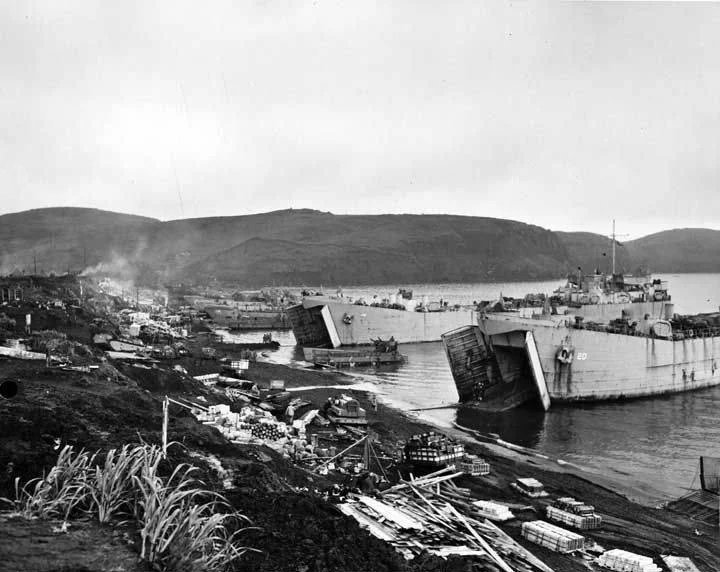
In August 1943, a combined force of 34,000 American and Canadian troops landed on Kiska Island
in the Aleutians, expecting fierce Japanese resistance. The invasion was carefully planned with
naval bombardment, air support, and coordinated ground assault.
Allied forces landed on Kiska Island in August 1943, only to discover the Japanese
had evacuated two weeks earlier. Photo: National Park Service, Public Domain
There was just one problem: the Japanese had evacuated two weeks earlier. Under cover of fog,
the entire garrison of 5,183 troops had slipped away undetected. Allied forces spent days
searching the island and taking casualties from friendly fire and booby traps - 28 dead and
50 wounded without engaging a single enemy soldier.
The incident revealed intelligence failures and demonstrated how fog of war extends to knowing
whether the enemy is even present.
13. The US Navy's Dolphin Program
Since the 1960s, the US Navy has trained bottlenose dolphins for military purposes. The Navy
Marine Mammal Program, based in San Diego, uses dolphins to detect underwater mines, locate
enemy divers, and recover objects from the ocean floor.
Dolphins' natural sonar capabilities exceed any technology humans have developed. They can
detect mines buried in sediment that mechanical sensors miss. The Navy has deployed dolphins
operationally, including during the Iraq War in 2003, when they helped clear the port of
Umm Qasr.
The US Navy Marine Mammal Program has trained dolphins for mine detection and other
military purposes since the 1960s. Photo: Library of Congress, Public Domain
The program has faced criticism from animal rights activists, but the Navy maintains that
dolphins are treated humanely and that no technology can match their capabilities. The
program remains active today.
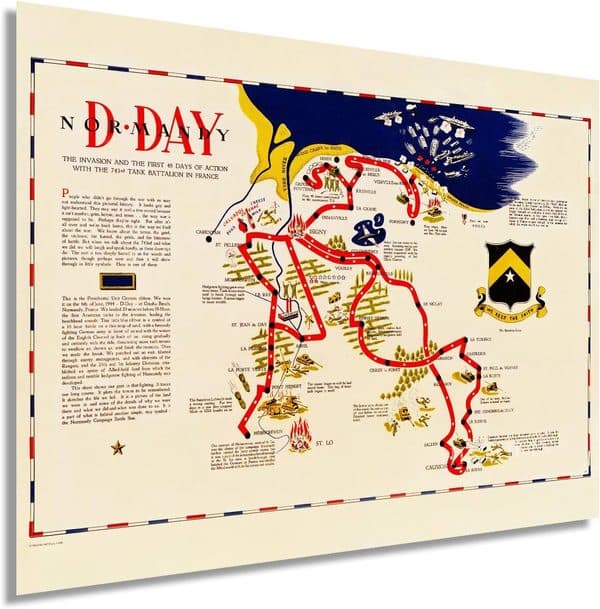
An archival reproduction of the actual D-Day operational map from the Library of Congress collection, printed on heavyweight matte stock at 18x24 inches.
14. Operation Chaff: Confusing Radar with Aluminum Strips
On the night of July 24, 1943, British bombers approaching Hamburg released bundles of aluminum
strips cut to specific lengths. The strips, codenamed "Window" by the British and "Chaff" by
the Americans, created thousands of false radar returns, blinding German air defenses.
German radar operators reported seeing what appeared to be 11,000 bombers instead of the actual
746. Night fighters couldn't distinguish real aircraft from the clouds of metallic confetti.
The result was one of the most devastating bombing raids of the war - the Hamburg firestorm
killed approximately 37,000 people.
The concept had been known to both sides for years, but each feared the other would copy it
if used. Once the British demonstrated its effectiveness, chaff became a standard electronic
countermeasure used to this day. The simplicity of the solution - aluminum strips - contrasts
with its strategic impact.
15. Operation Fortitude: The Army That Never Existed
The largest military deception in history wasn't a single operation but a coordinated campaign
of lies. Operation Fortitude convinced German High Command that the D-Day landings at Normandy
were a feint - and that the real invasion would target Pas-de-Calais, the closest point between
Britain and France.
General George S. Patton commanded the fictitious First United States Army Group
as part of Operation Fortitude. Photo: Library of Congress, Public Domain
The deception included the fictitious First United States Army Group (FUSAG), supposedly
commanded by General George Patton. Inflatable tanks, fake radio traffic, double agents
feeding false intelligence, and elaborate staging in southeast England all contributed to
the illusion.
The deception worked so well that even after D-Day, Hitler held Panzer divisions in reserve
near Calais, waiting for the "real" invasion. Those forces could have been decisive at Normandy.
Instead, they sat idle, waiting for an army that existed only on paper.
Why History Produces Stranger Stories Than Fiction
These operations aren't strange because military planners lack judgment. They're strange
because war creates conditions where unconventional ideas get funded, tested, and sometimes
deployed. Desperation, secrecy, and the fog of war combine to produce outcomes that no
novelist would dare invent.
What makes these stories valuable isn't their entertainment value - though they're certainly
entertaining. It's what they reveal about military institutions: their capacity for creativity,
their tolerance for failure, and their willingness to try almost anything when stakes are high.
The Ghost Army's inflatable tanks saved lives. Operation Mincemeat changed the course of a
campaign. The bat bombs almost worked. Each operation began with someone asking "what if?"
and an institution willing to find out.
Skepticism matters when encountering these stories. Not every claim of strange military
history is true, and exaggeration is common. But verified operations like these remind us
that reality contains surprises that fiction rarely matches - and that the line between
genius and absurdity often depends on whether an idea works.
Frequently Asked Questions
What was Operation Mincemeat?
Operation Mincemeat was a British WWII deception operation that used a dead body dressed
as a military officer to mislead the Germans about the Allied invasion of Sicily in 1943.
False documents planted on the corpse convinced German High Command to redirect forces
away from the actual invasion site.
Did the US really try to train pigeons to guide missiles?
Yes. Project Pigeon, led by psychologist B.F. Skinner during WWII, trained pigeons to peck
at targets on a screen inside a missile nose cone. The project was funded by the National
Defense Research Committee but was cancelled before deployment as electronic guidance
systems became viable.
What was the Ghost Army in WWII?
The Ghost Army was a US Army tactical deception unit that used inflatable tanks, sound
effects, and fake radio traffic to simulate large military formations. The 23rd Headquarters
Special Troops conducted over 20 deception operations in Europe, drawing German attention
away from actual Allied positions.
Did Australia really lose a war against emus?
In 1932, the Australian military deployed soldiers with Lewis guns against emus destroying
crops in Western Australia. Despite firing thousands of rounds, the fast-moving birds
proved difficult to kill in large numbers. The operation was withdrawn after less than
a week, and farmers returned to using bounty systems instead.