Type-X: The Robotic Combat Vehicle That Thinks
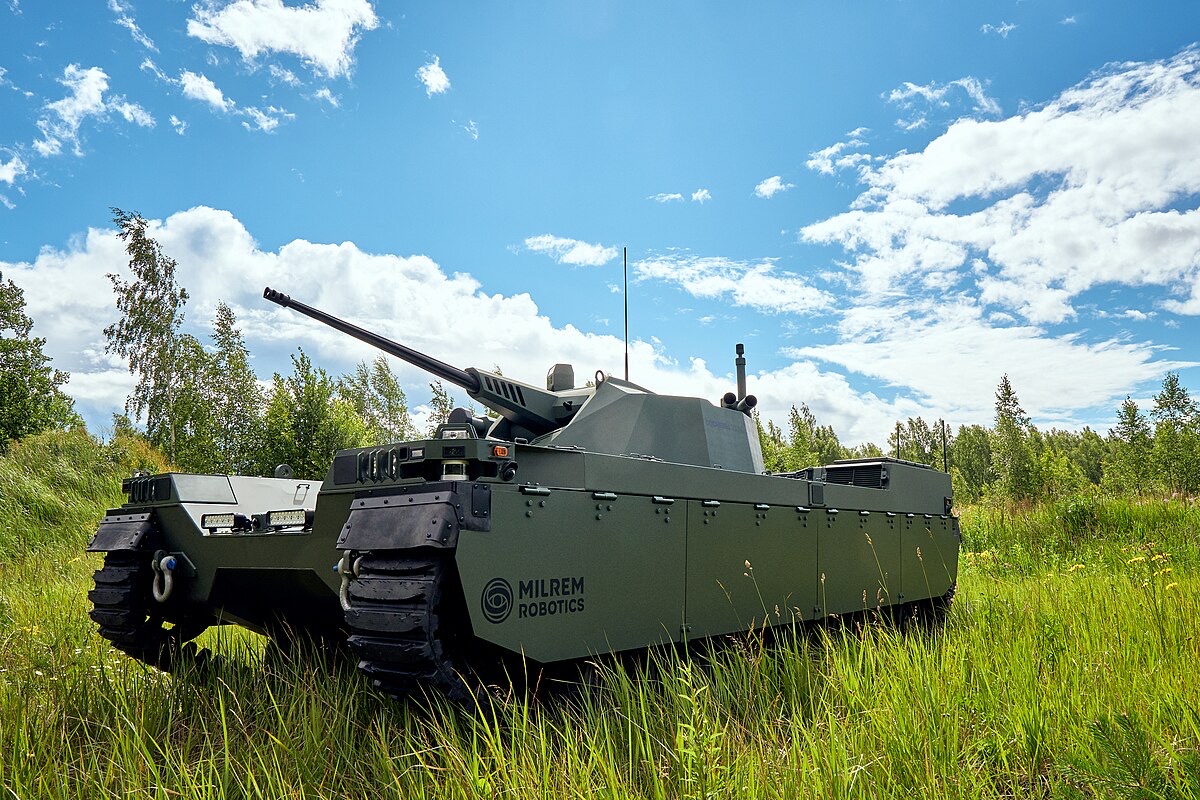
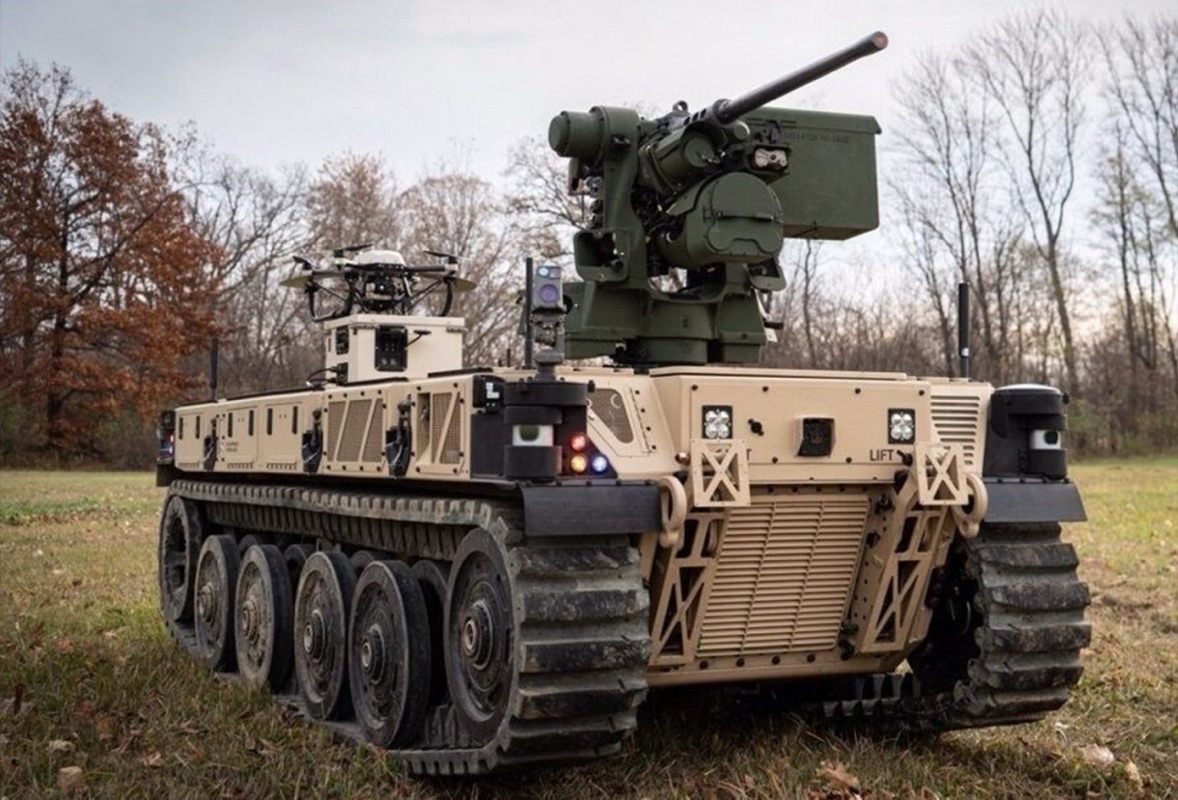
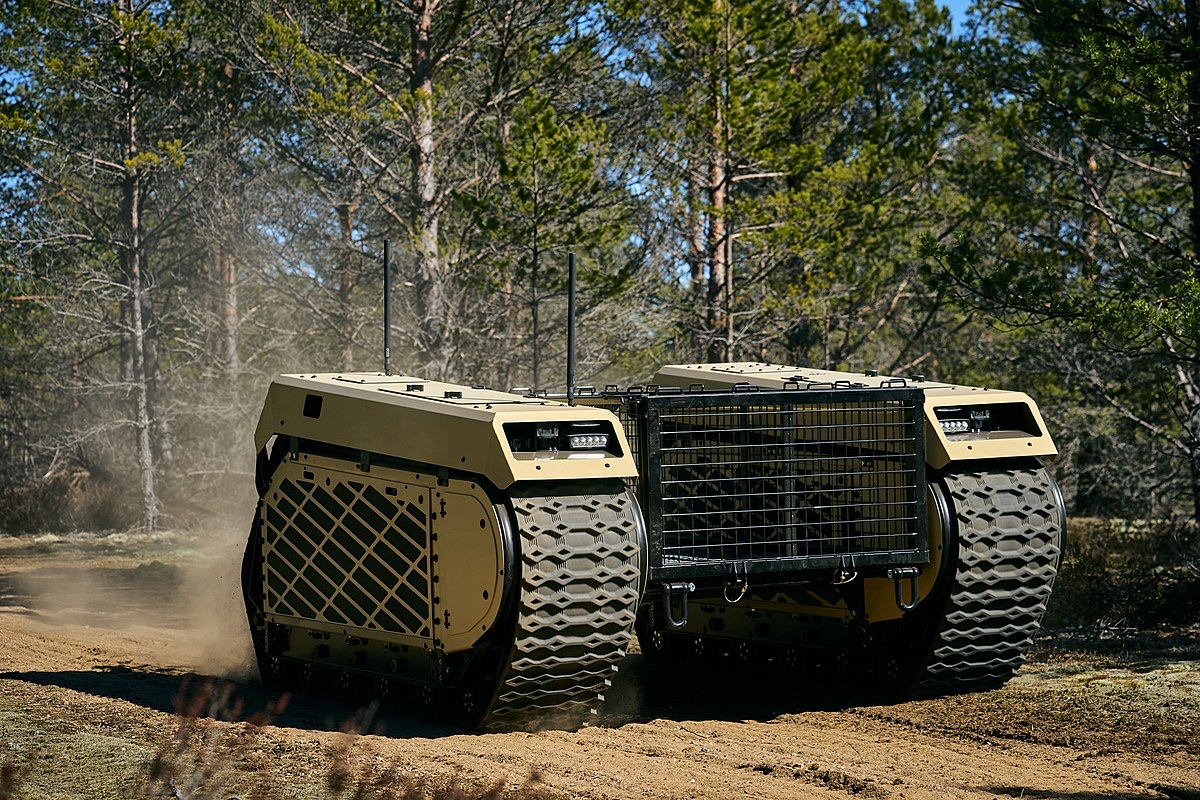
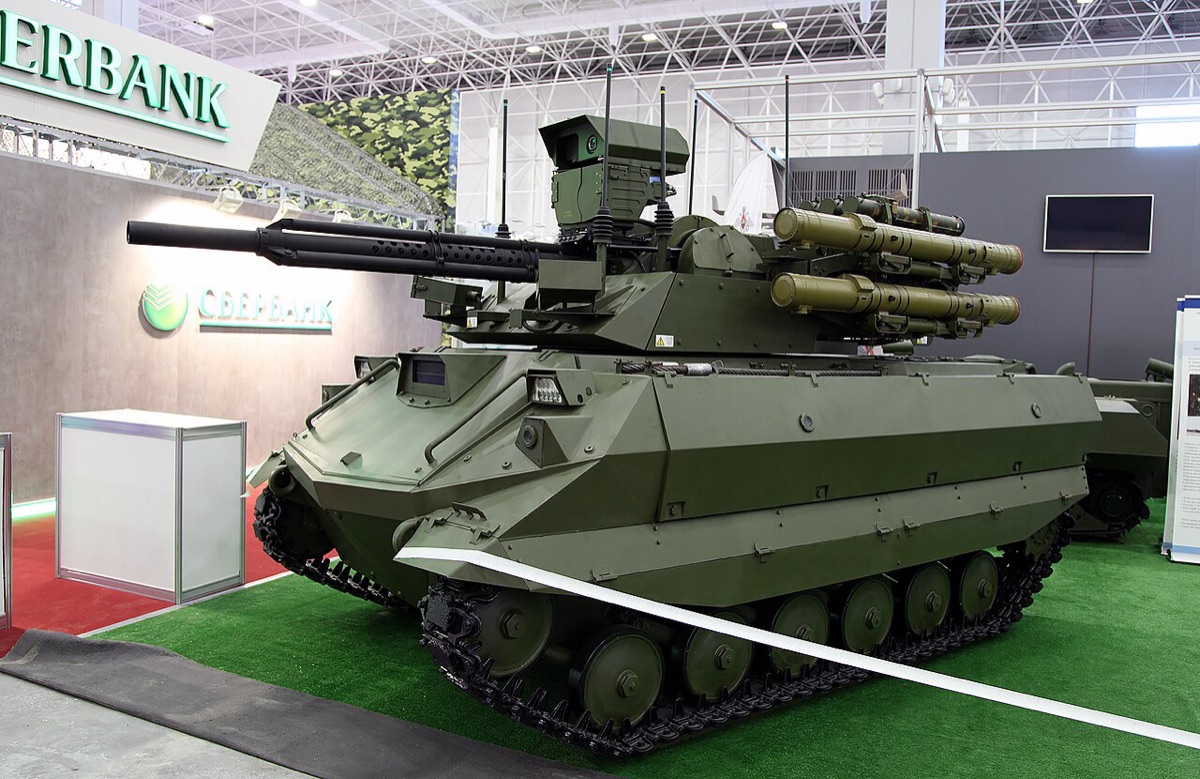
Also from Milrem Robotics, the Type-X is a full-sized robotic combat vehicle, larger and more heavily armed than the THeMIS. Weighing 12 tons, the Type-X can be equipped with a 25mm or 30mm autocannon turret, anti-tank missiles, or reconnaissance payloads. It's designed to operate in a "wingman" role alongside manned infantry fighting vehicles, advancing into danger zones first to trigger ambushes, draw fire, and provide suppressive fire, all without risking human crews.
The Type-X incorporates artificial intelligence for autonomous navigation, target identification, and convoy operations. It can follow a lead vehicle, maintain formation, and navigate obstacles without human input. When the AI detects a potential threat, it alerts a human operator who makes the engagement decision. This "human-in-the-loop" approach addresses the ethical and legal challenges of armed autonomous systems while still providing the tactical advantages of robotic combat. The Type-X is already being evaluated by several NATO allies, and its combination of meaningful firepower, autonomous capability, and expendable (because crewless) design represents where armored warfare is heading within the next decade.
DARPA RACER: The Off-Road Robot That Teaches Itself
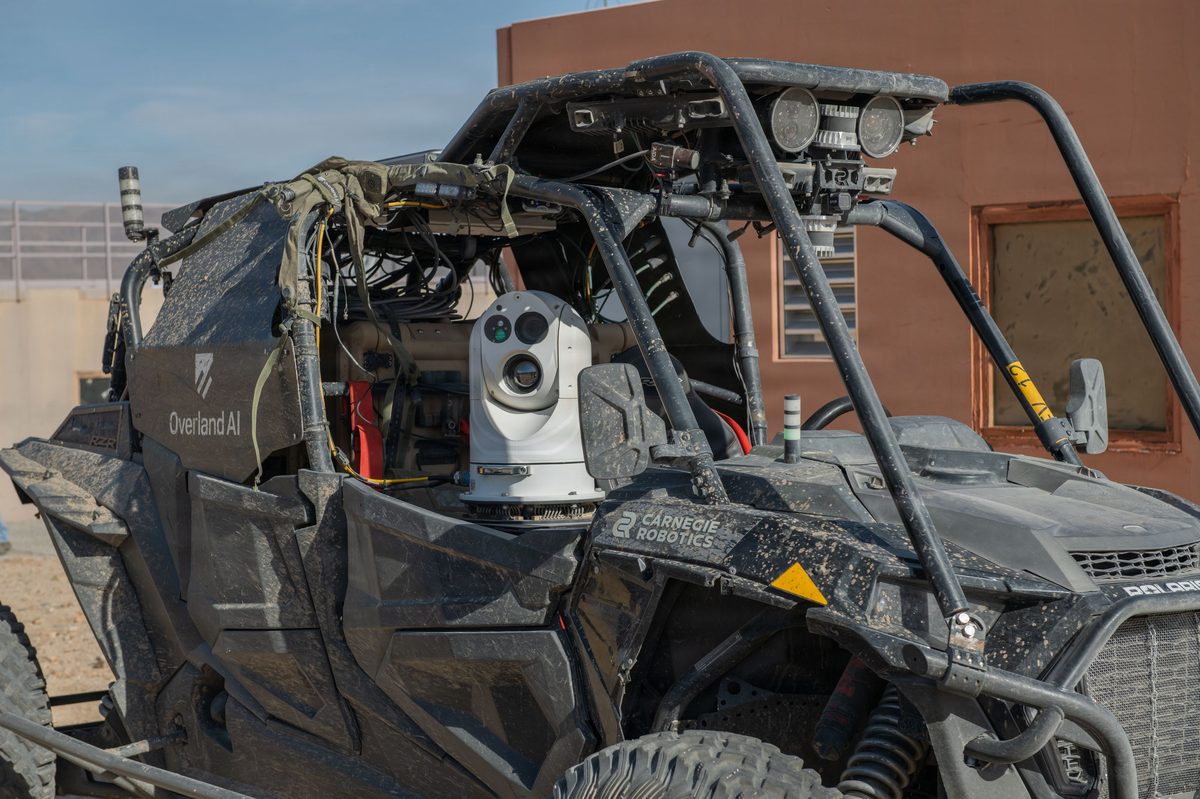
DARPA's RACER (Robotic Autonomy in Complex Environments with Resiliency) program is developing unmanned ground vehicles that can navigate complex off-road terrain at speeds approaching what a skilled human driver would achieve. Unlike previous autonomous vehicles that relied on detailed pre-programmed maps, RACER vehicles use machine learning to adapt to terrain they've never seen before (rocks, ditches, vegetation, mud, and slopes) in real time.
The program represents DARPA's push to solve the hardest problem in military robotics: getting unmanned vehicles to move quickly through unstructured terrain without human intervention. Urban roads have lane markings and traffic rules; cross-country terrain has nothing predictable. RACER vehicles use LiDAR, cameras, and AI to "read" the ground ahead, classify terrain types, and choose optimal paths, all at speeds that would challenge a human driver. The military application is obvious: autonomous supply convoys, robotic scouts, and unmanned combat vehicles that can keep pace with manned forces across any landscape. The technology is still in development, but each test cycle pushes autonomous off-road speed closer to human parity.
LS3 AlphaDog: The Robotic Pack Mule That Follows You Anywhere
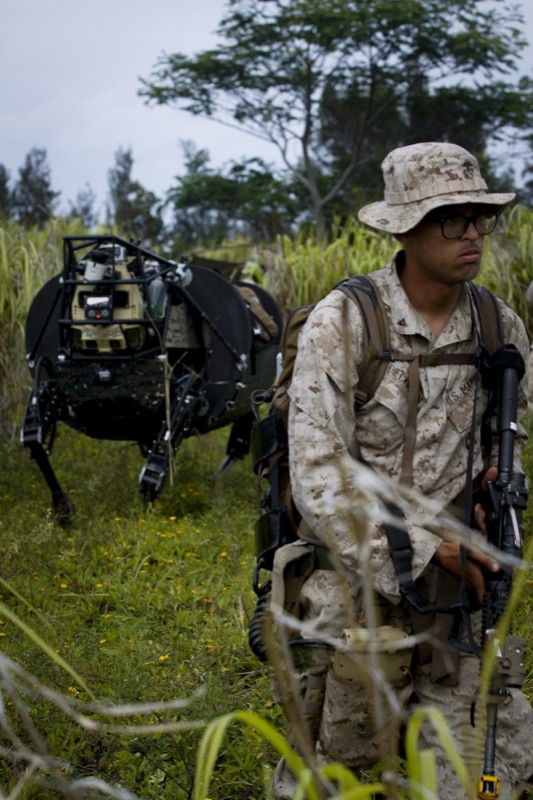
Boston Dynamics' LS3 (Legged Squad Support System), nicknamed "AlphaDog," was a four-legged robotic pack animal designed to carry 400 pounds of equipment and follow a squad of Marines across 20 miles of rough terrain in 24 hours. Using dynamic balance algorithms derived from Boston Dynamics' earlier BigDog robot, the LS3 could walk, trot, jog, and even recover from stumbles across terrain that would stop wheeled or tracked robots cold.
DARPA and the U.S. Marine Corps funded the LS3 program, and the robot underwent extensive field testing with Marines at Quantico and during RIMPAC exercises. It could follow a designated leader using computer vision, respond to voice commands, and navigate autonomously using GPS waypoints. The LS3 was technologically impressive but had one fatal flaw for military use: noise. Its gasoline-powered hydraulic system was so loud that Marines in field tests concluded it would compromise squad stealth during patrols. The program was shelved in 2015, but the walking-robot technology it developed flowed directly into Boston Dynamics' later commercial robots. The LS3 proved legged locomotion worked, just not quietly enough for the infantry.
Vityaz DT-30: Russia's Articulated Arctic Monster
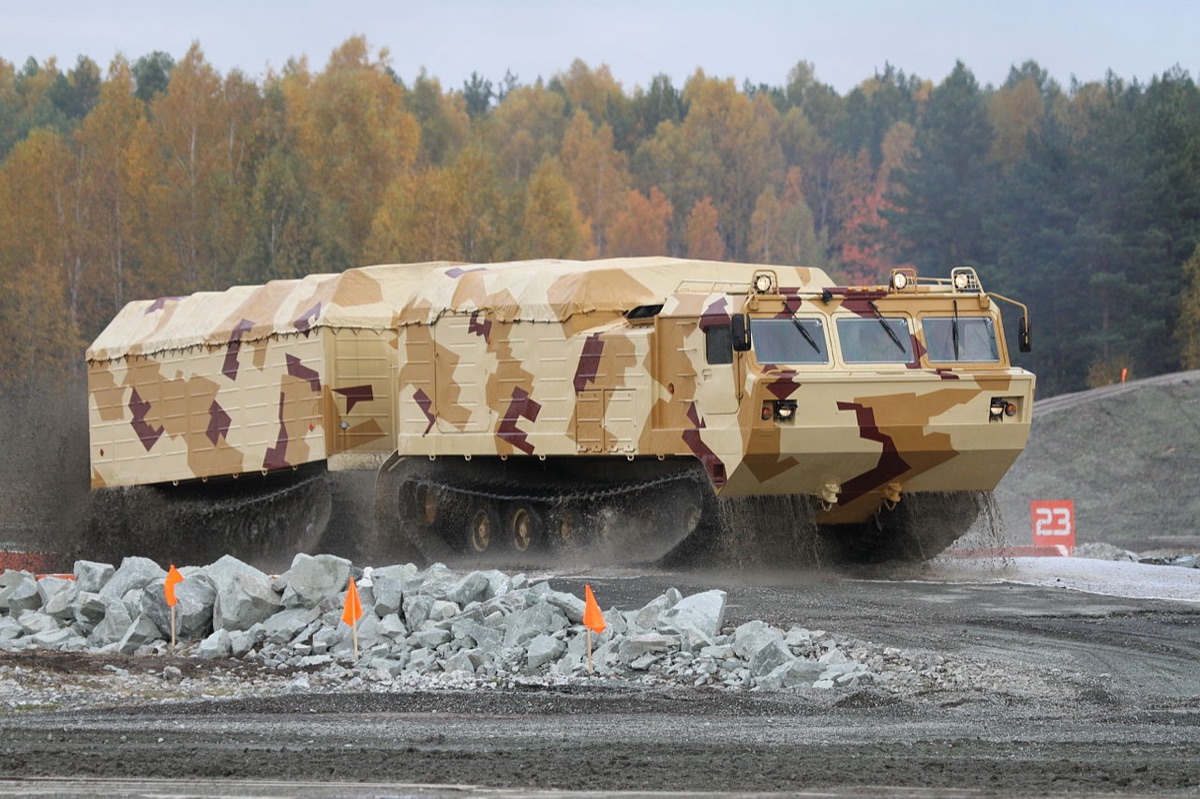
The DT-30 Vityaz is a two-section articulated tracked carrier that can haul 30 tons of cargo across the most hostile terrain on Earth: Arctic tundra, deep snow, swamps, and rivers. The two sections are connected by a powered articulation joint that allows each unit to pitch, roll, and yaw independently, giving the 30-ton vehicle the ability to snake across terrain that would stop a conventional vehicle in its tracks. It can also swim, crossing rivers and lakes using its tracks for propulsion.
Russia operates the Vityaz extensively in its Arctic military operations, where it's the primary heavy logistics vehicle for moving supplies, equipment, and troops across regions with no roads and no infrastructure. The vehicle's enormous low-pressure tracks distribute its weight so effectively that it exerts less ground pressure than a human footprint, allowing it to traverse thin ice and soft snow that would swallow a normal truck. The articulated design lets it climb gradients and cross ditches that would be impassable for a rigid-frame vehicle. In the Arctic, where Russia is building new military bases and claiming new territory, the Vityaz is as strategically important as any weapons system.
MAZ-7907: The 12-Axle Soviet Missile Carrier
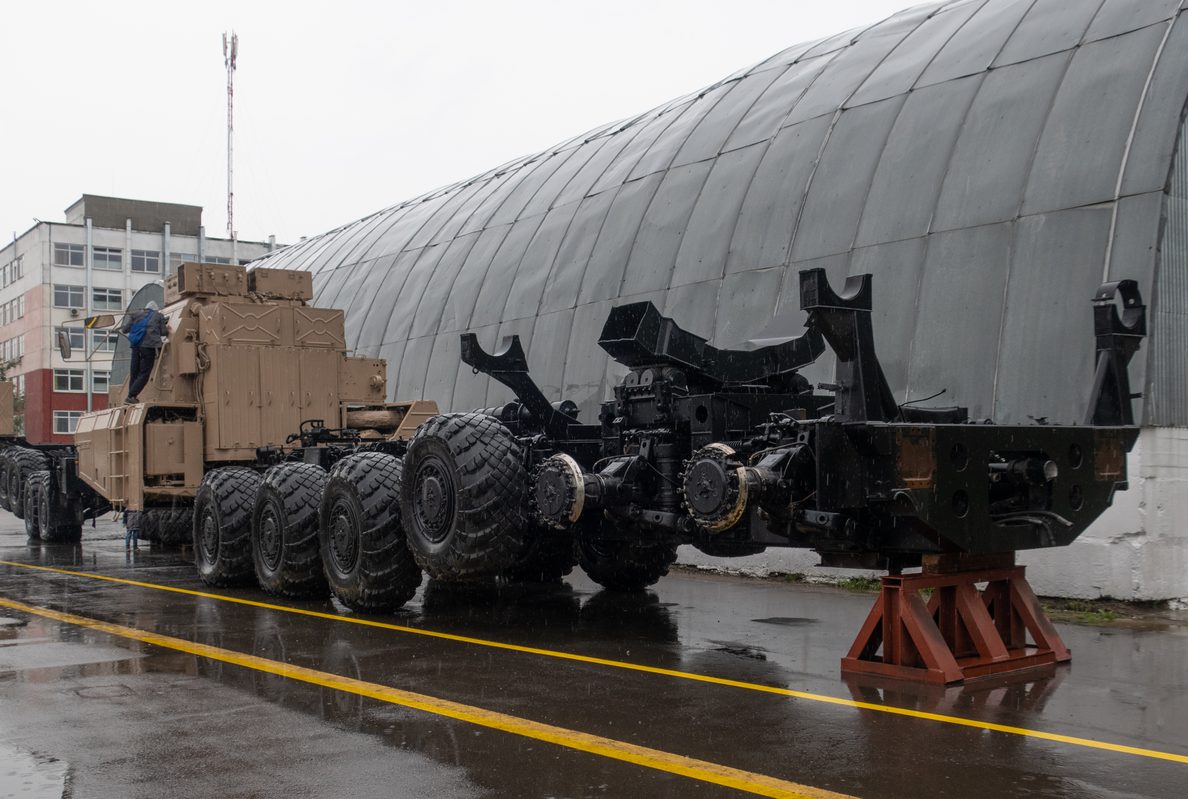
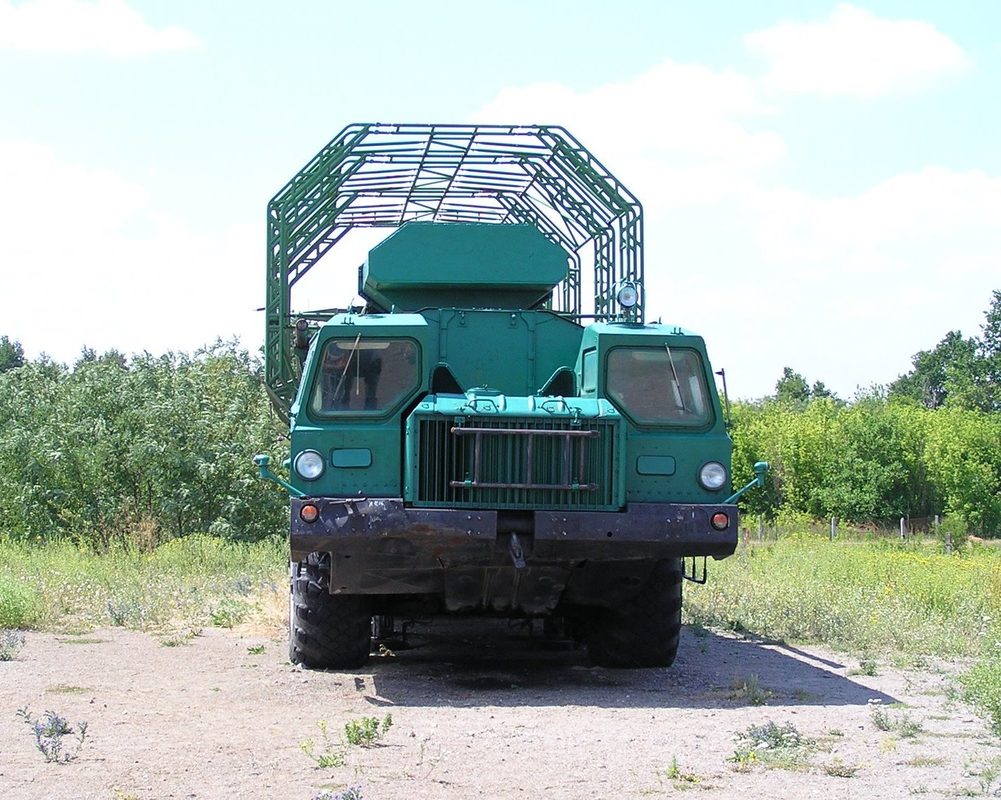
The MAZ-7907 was the Soviet Union's attempt to build the ultimate mobile missile launcher. With 12 axles and 24 driven wheels, this behemoth was over 28 meters long and weighed approximately 65 tons empty. It was designed to carry and launch the RT-23 (SS-24 Scalpel) ICBM, a solid-fuel intercontinental ballistic missile with multiple warheads capable of striking targets across the globe. All 24 wheels were steerable, giving this massive vehicle a surprisingly tight turning radius.
Powered by a gas turbine engine producing 1,250 horsepower, the MAZ-7907 could reach 40 km/h on roads, fast for its enormous size. The all-wheel-drive, all-wheel-steer configuration allowed it to traverse unpaved roads and disperse into forests, making it extremely difficult for enemy satellite reconnaissance to track. Only two prototypes were built before the Soviet collapse ended the program. The MAZ-7907 represented the peak of Soviet mobile-missile-launcher engineering, a vehicle so large it needed its own class designation, yet designed to disappear into the Russian wilderness carrying enough nuclear firepower to end civilization.
MZKT-79221: The Topol-M's Road-Going Launch Pad
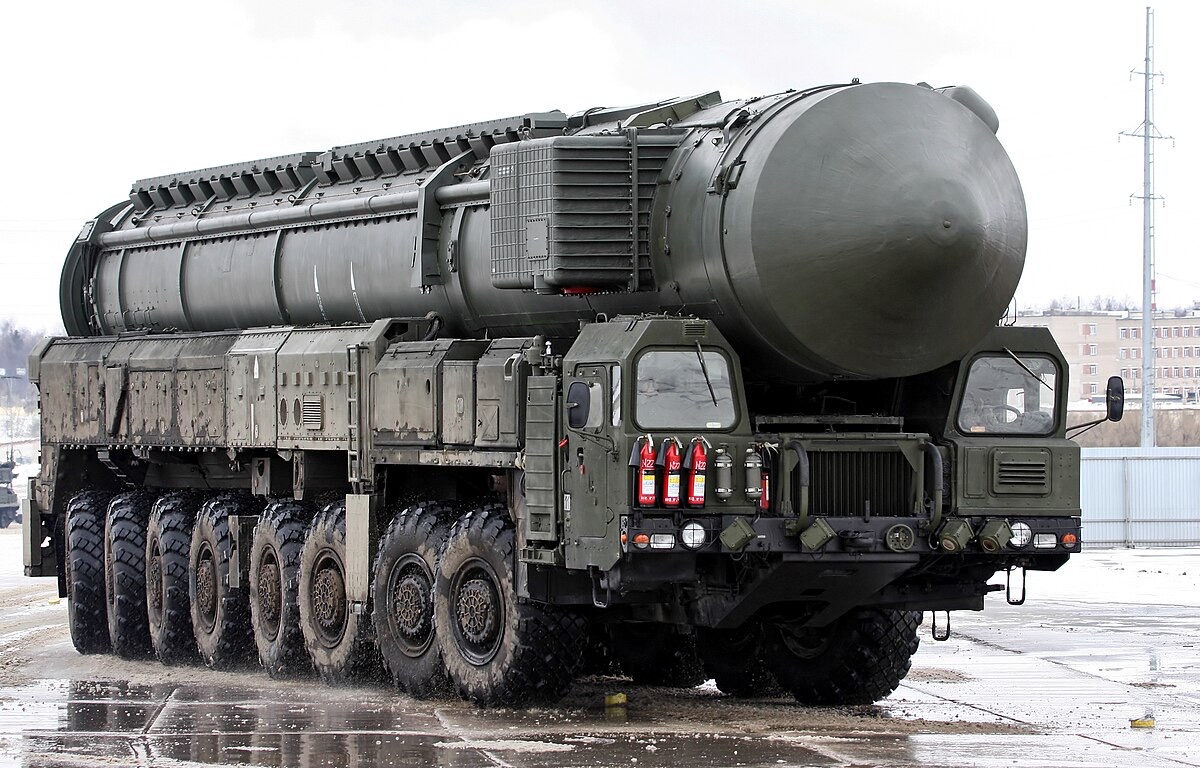
The MZKT-79221 is the Transporter-Erector-Launcher (TEL) for Russia's Topol-M intercontinental ballistic missile, one of the most important vehicles in Russia's nuclear deterrent. This 8-axle, 16-wheel behemoth carries a single Topol-M ICBM in a sealed launch canister, drives to a pre-surveyed launch point, erects the missile to vertical, and fires it, all without leaving the vehicle. The entire sequence from road march to launch can be completed in minutes.
The Topol-M system's mobility is its key survivability feature. Unlike silo-based missiles with fixed, known locations, a road-mobile ICBM can be anywhere along thousands of kilometers of Russian roads and forest trails. Satellite surveillance can photograph the vehicle, but by the time the image is processed, the TEL has moved to a new location. The MZKT-79221 weighs over 120 tons fully loaded, yet it can operate on unpaved roads and forest tracks. Russia maintains dozens of these vehicles in constant rotation, ensuring that any first-strike attempt against Russian nuclear forces would miss the mobile component entirely.
Bandvagn 206: Sweden's Go-Anywhere Articulated Carrier
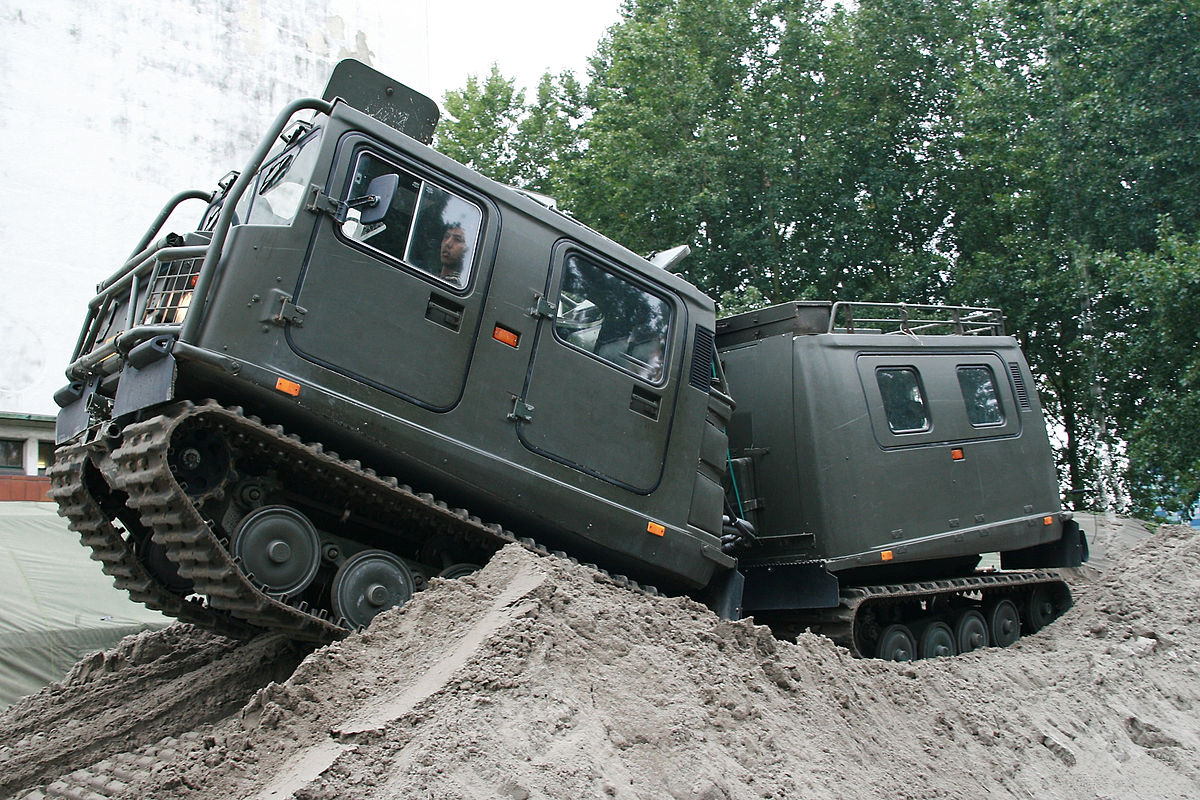
The Hagglunds Bandvagn 206 (BV206) is a small, lightweight articulated tracked vehicle that has been adopted by over 40 countries for a simple reason: it goes everywhere. The BV206's two units are connected by a steering joint that allows the vehicle to twist and flex across terrain, deep snow, mountain slopes, arctic ice, swamps, and even moderate water crossings. Its rubber tracks and low ground pressure let it float across surfaces that would swallow heavier vehicles.
Weighing just 4.5 tons, the BV206 can be helicopter-slung, transported inside larger aircraft, or towed by trucks. Its versatility has made it the standard small utility vehicle for Nordic and mountain warfare forces worldwide. British Royal Marines used BV206s extensively in Norway, Afghanistan, and the Falkland Islands. The vehicle has been configured as a troop carrier, ambulance, command post, cargo hauler, and weapons platform. The articulated design gives it a caterpillar-like ability to conform to terrain, climbing slopes and crossing obstacles that would be impassable for rigid vehicles twice its size. Simple, reliable, and supremely versatile.
LCAC: The U.S. Navy's Beach-Storming Hovercraft
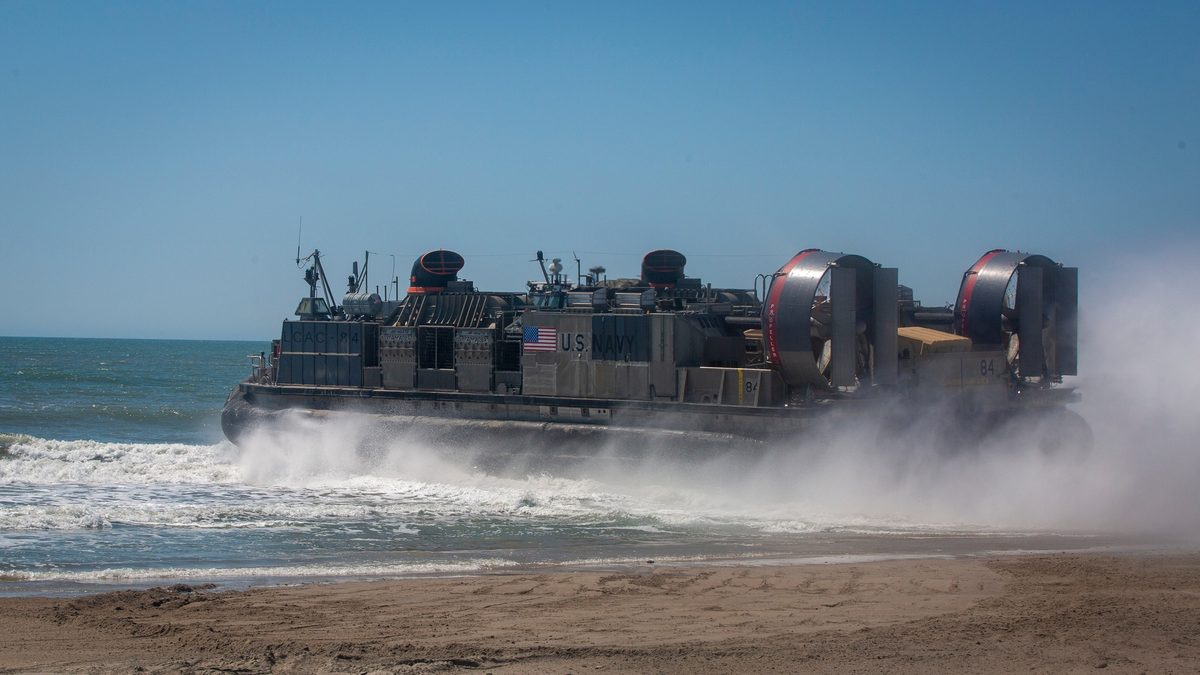
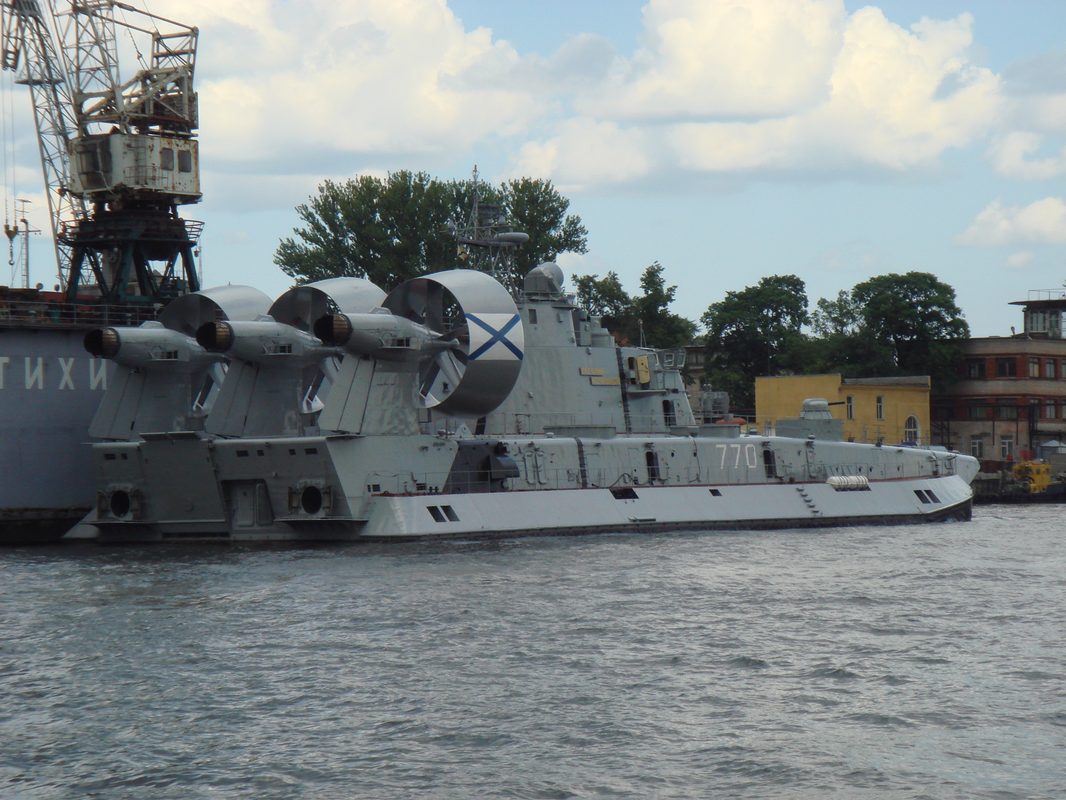
The Landing Craft Air Cushion (LCAC) is a high-speed hovercraft used by the U.S. Navy and Marine Corps to transport troops, vehicles, and cargo from ship to shore at speeds exceeding 40 knots. Unlike conventional landing craft that are limited to gently sloping beaches, the LCAC rides on a cushion of air and can come ashore on over 70% of the world's coastlines, including mud flats, marshes, and rocky shores that would strand a traditional boat.
Each LCAC can carry a 60-ton payload, enough for one M1 Abrams tank or several lighter vehicles plus troops. Four gas turbine engines power the lift fans and propellers, creating a vehicle that can transit from a well-deck-equipped ship directly to the beach at highway speeds. The U.S. operates over 80 LCACs, and they've been deployed in every major amphibious operation since the 1991 Gulf War. The LCAC eliminated the most dangerous phase of amphibious warfare (the slow, vulnerable approach to the beach) by replacing it with a high-speed dash across the surf zone that gives defenders far less time to engage. It's being gradually replaced by the even faster Ship-to-Shore Connector (SSC).
Sherp ATV: The Floating Tire Monster From Ukraine
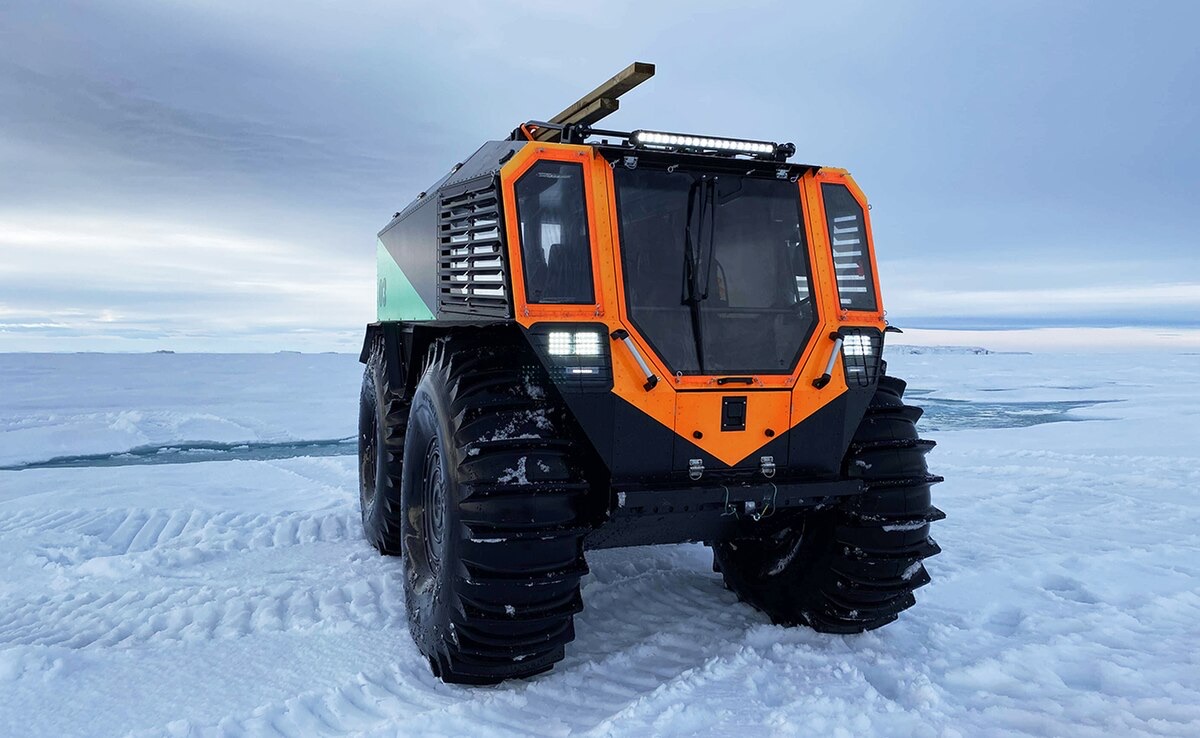
The Sherp is a Ukrainian-designed all-terrain vehicle that rides on four massive low-pressure tires, each 1.6 meters in diameter. It weighs just 1,300 kg, floats without modification (the tires themselves provide buoyancy), and can climb vertical obstacles up to 70 cm high by using its tire-mounted paddles. With a ground pressure lower than a human footprint, the Sherp can traverse snow, ice, swamp, mud, water, and rocky terrain that would be impassable for conventional off-road vehicles.
The Sherp achieved viral fame through YouTube videos showing it climbing out of lakes, crossing frozen rivers, and driving through terrain that looks impossible. While it started as a civilian product, military applications became obvious: Special Forces insertion, Arctic patrol, border security in roadless regions, and disaster response in flooded areas. Its pneumatic circulation system can transfer air pressure between tires, if one tire loses pressure, the others compensate. The Sherp proves that sometimes the most effective all-terrain vehicle isn't the heaviest, most armored, or most powerful, it's the one that thinks about the terrain differently.
Ripsaw EV2: The Luxury Unmanned Tank
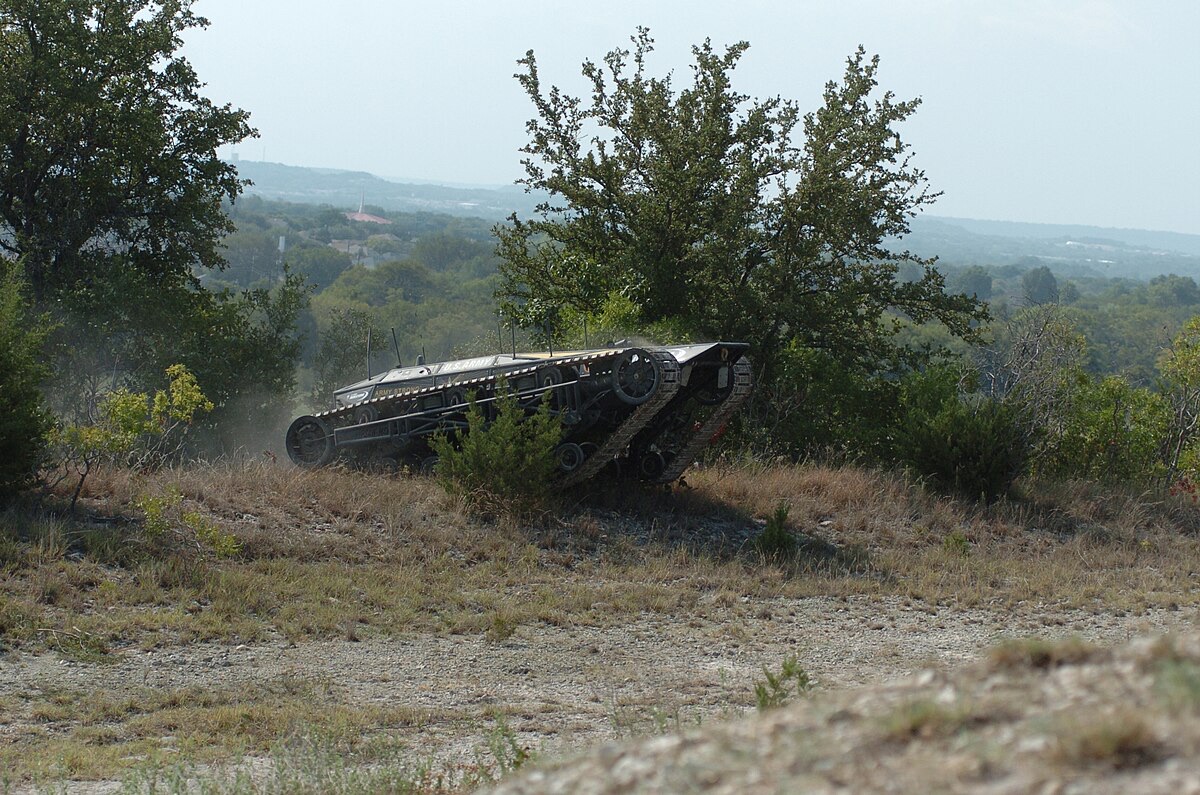
Before the military-focused M5, Howe & Howe Technologies built the Ripsaw EV2, a high-speed unmanned tracked vehicle that combined extreme performance with a surprisingly polished design. The EV2 was a 6.5-ton diesel-powered platform capable of exceeding 95 km/h on flat terrain, making it one of the fastest tracked vehicles ever built. Its compact profile, advanced suspension, and powerful engine made it capable of jumps, high-speed turns, and terrain transitions that looked more like a motorsport vehicle than a military robot.
The Ripsaw EV2 gained public attention when it appeared on TV shows and attracted military interest for its speed and controllability. The U.S. Army used early Ripsaw variants as technology demonstrators for autonomous vehicle concepts, testing remote operation, sensor integration, and unmanned convoy operations. While the EV2 was too lightly protected for direct combat, it proved that unmanned tracked vehicles could achieve performance levels that matched or exceeded manned platforms, a critical proof point for the Army's subsequent Robotic Combat Vehicle programs. The Ripsaw lineage went from garage project to military prototype to potential future of armored warfare.