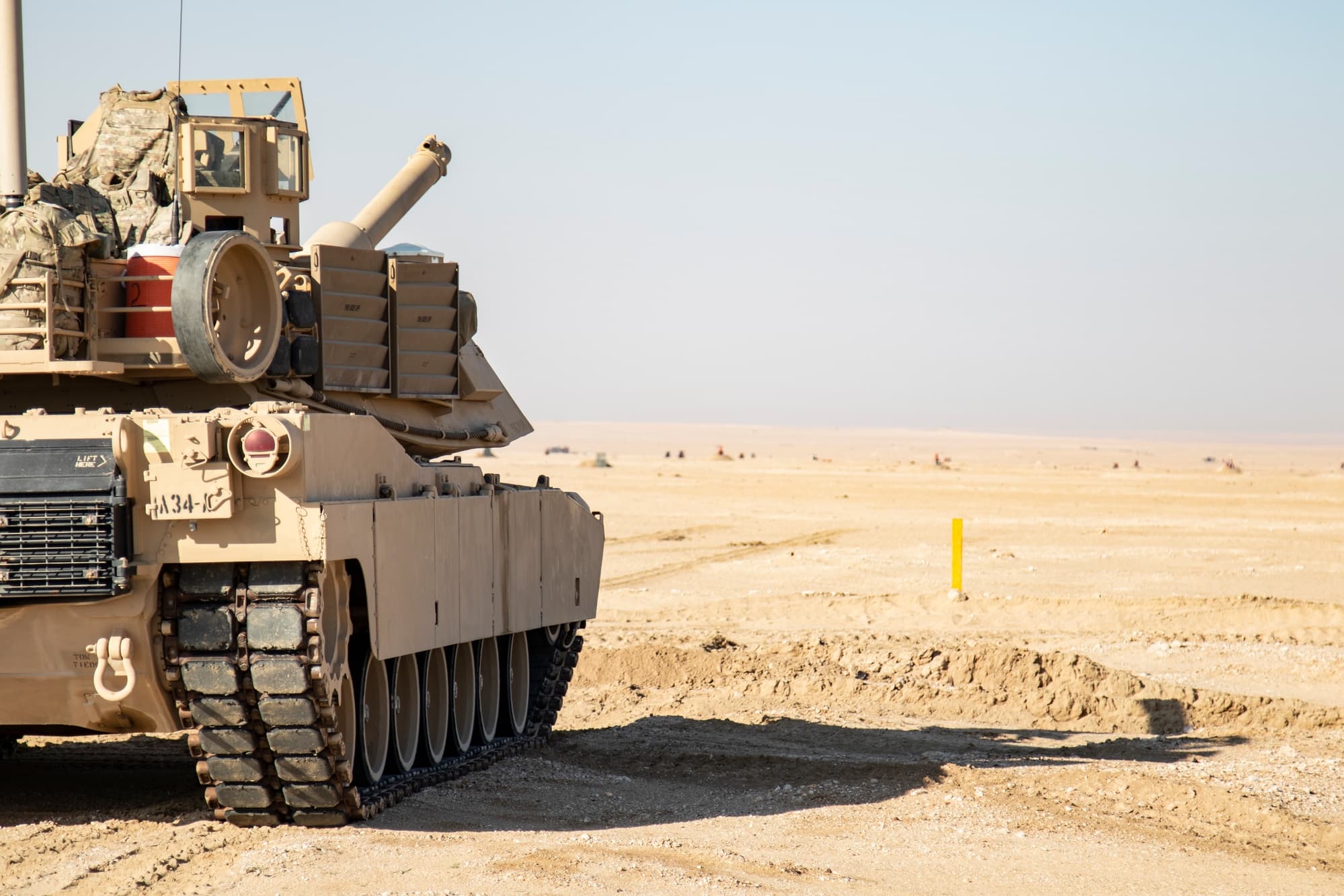
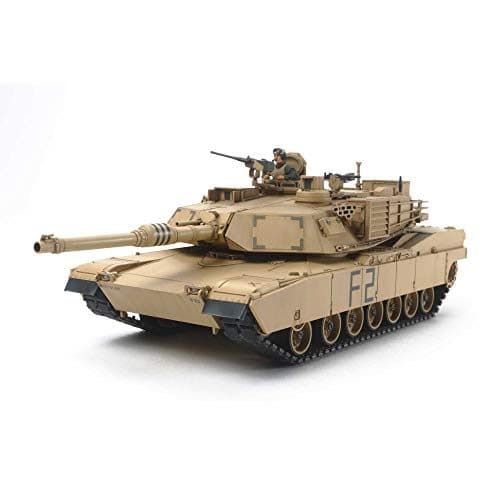
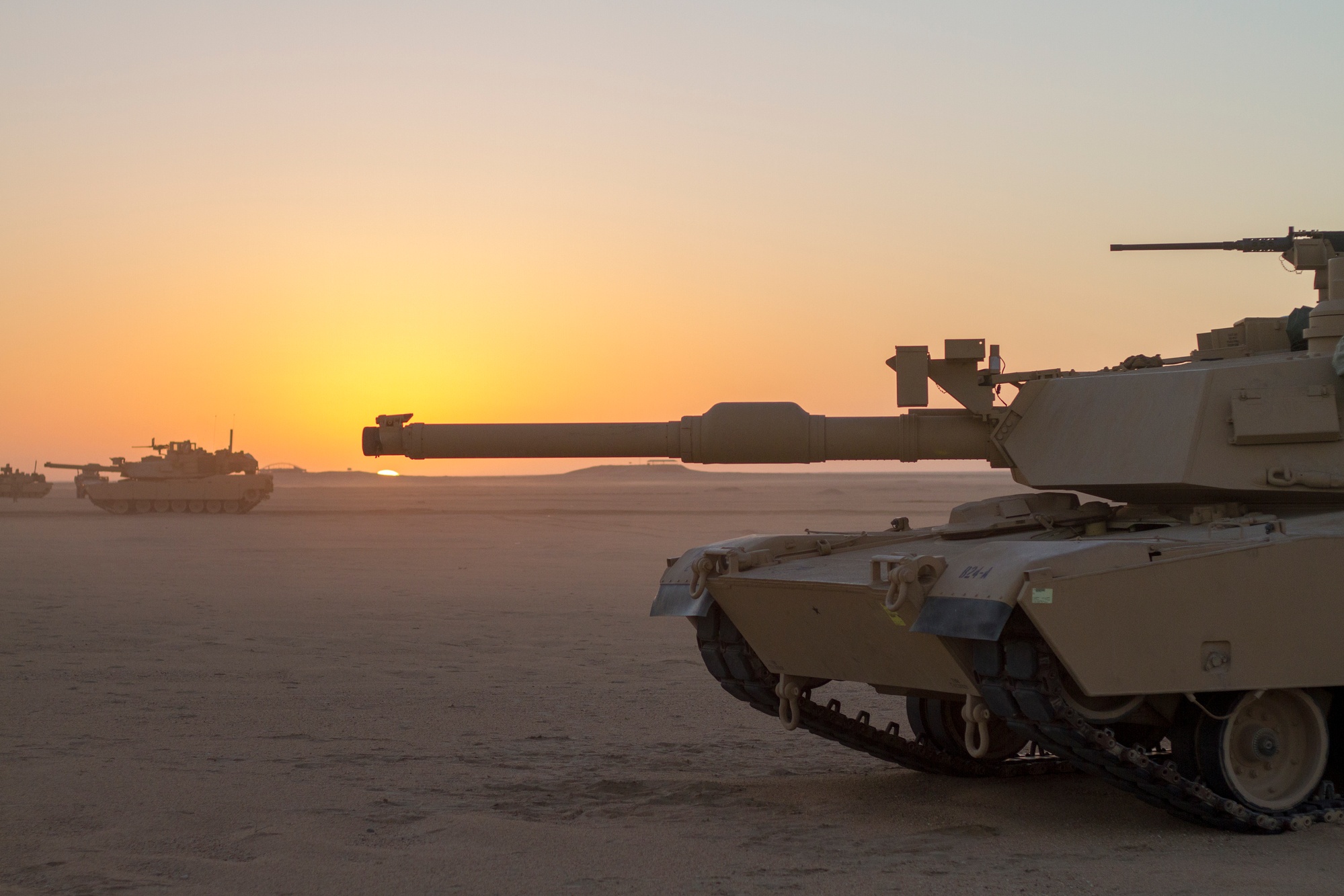
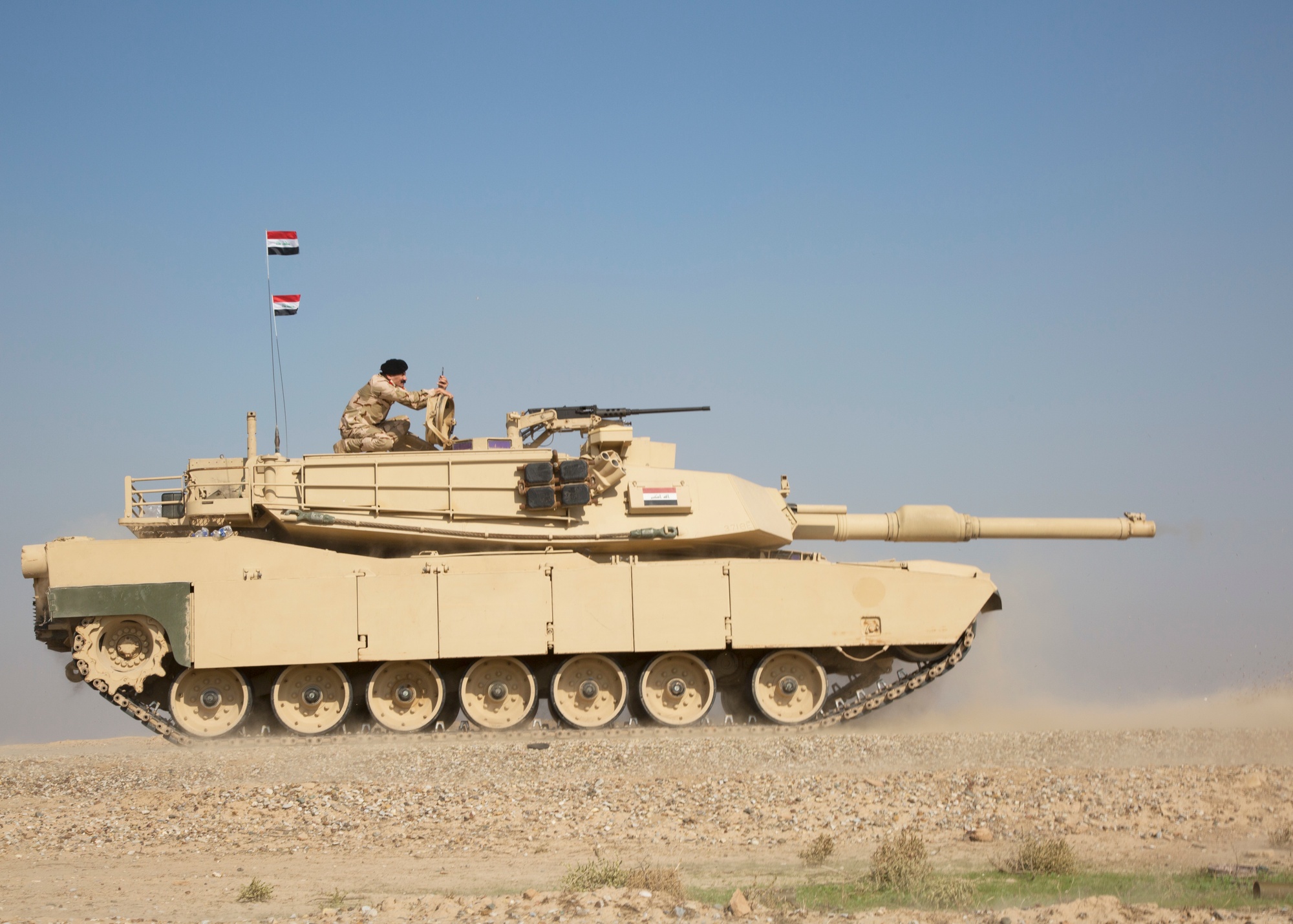
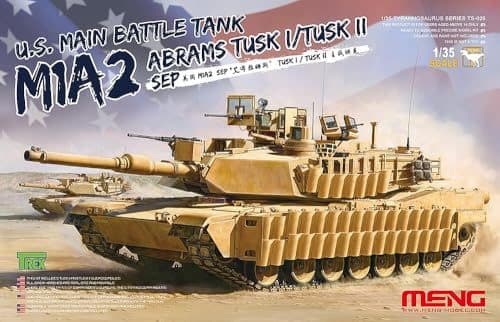
The M1A1's main armament was the M256 120mm smoothbore cannon, a licensed version of the Rheinmetall L/44 used on the German Leopard 2. According to General Dynamics Land Systems specifications, this gun fired M829 armor-piercing fin-stabilized discarding sabot (APFSDS) rounds, tungsten penetrators that could defeat any armor in Iraq's inventory at distances exceeding 3,000 meters. The gun was stabilized, meaning the crew could fire accurately while the tank moved at full speed across rough terrain. That mattered more than most people realize. Iraqi tankers had to stop to have any hope of hitting a target. Abrams crews did not.
The armor was equally decisive. The M1A1 Heavy Armor variant deployed to Desert Storm featured Chobham composite armor supplemented with depleted uranium mesh in the turret front. The exact protection levels remain classified, but the battlefield results spoke for themselves. According to the Army's official Desert Storm after-action report, Iraqi T-72s scored direct hits on M1A1s during the war, and their rounds did not penetrate. In one documented incident, an M1A1 took a hit from a T-72's 125mm gun at close range. The round gouged the armor but failed to get through. The Abrams crew traversed the turret and destroyed the T-72 with a single shot.
The Honeywell AGT1500 gas turbine engine produced 1,500 horsepower, giving the 67-ton tank a top speed of approximately 42 miles per hour on roads and impressive cross-country mobility. The turbine's acceleration was immediately noticeable to tankers who had spent their careers on diesel-powered M60 Pattons. When crews needed to move, the Abrams responded without hesitation. The tradeoff was fuel consumption: roughly 0.6 miles per gallon at combat speed, which meant logistics convoys had to keep up with the advance. In the open desert, that was a planning challenge rather than a showstopper.
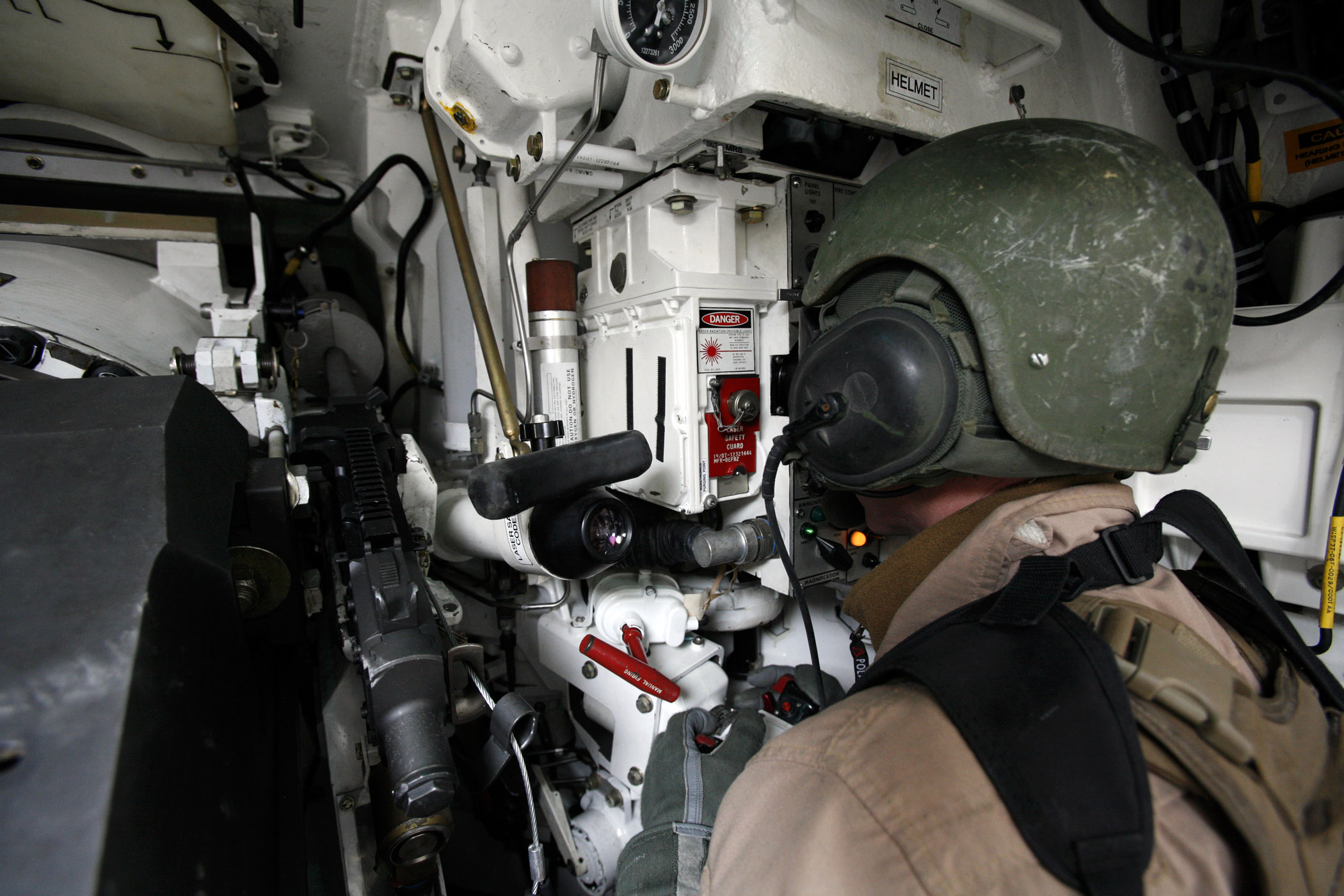
But the real advantage, the one that turned engagements from fights into walkovers, was the thermal imaging system. The AN/VAS-3 thermal sight on the gunner's station and the commander's independent thermal viewer allowed crews to detect and identify targets through darkness, sandstorms, fog, and the thick smoke pouring from Kuwait's oil wells. When Iraqi tankers looked out into the desert, they saw haze, dust, and nothing. When American tankers looked through their thermals, they saw the heat signatures of enemy vehicles rendered in sharp contrast against the cooler desert floor. Every Iraqi tank, every BMP, every truck glowed like a lantern.
The Iraqi Armor: What They Were Fighting With
The Iraqi Army in 1991 was not a ragtag militia. It was one of the largest armies in the world, battle-hardened from eight years of war with Iran. According to the Government Accountability Office's assessment of the Gulf War, Iraq fielded approximately 4,200 tanks at the start of the conflict, including a significant number of T-72M models in the Republican Guard divisions. Understanding the Iraqi equipment explains the gap in capability that decided the outcome.
The T-72M was an export variant of the Soviet T-72, downgraded from the versions the Soviets kept for themselves. Per the Army's Armor Center at Fort Knox, the export model lacked the composite armor inserts of the Soviet T-72A and T-72B, relying instead on conventional steel armor. Its 125mm 2A46 smoothbore gun was a capable weapon, but Iraqi ammunition quality was inconsistent, and the fire control system was a generation behind the Abrams. Effective engagement range for Iraqi T-72M crews was roughly 1,500 to 2,000 meters under good conditions, and conditions in the desert were rarely good.
The majority of Iraqi tanks were not even T-72s. Most frontline units fielded T-55s and Type 69s, 1950s-era designs that were completely outmatched. These older tanks had no thermal sights, limited rangefinding capability, and armor that the Abrams' 120mm sabot rounds could penetrate at virtually any combat range. Their crews, many of them conscripts in the regular army, had limited training and lower morale after weeks of coalition air strikes.
The Republican Guard divisions, including the Tawakalna and Medina Divisions, had the best equipment, the most experienced crews, and orders to fight. They did fight. It was not enough.