Skip to content
April 17:Bay of Pigs Invasion Begins65yr ago

10 Military Bridges Built Under Fire That Changed the Course of a Battle

James Holloway · · 15 min read
Save
Share:
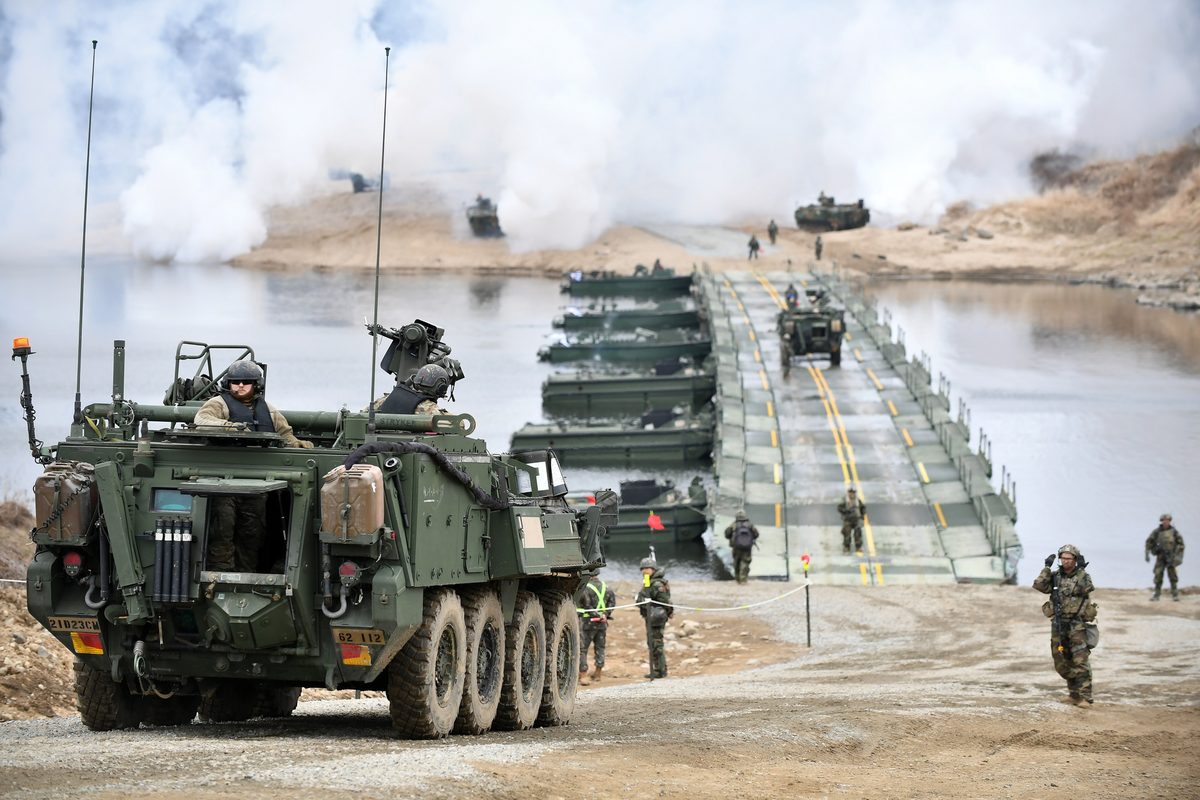
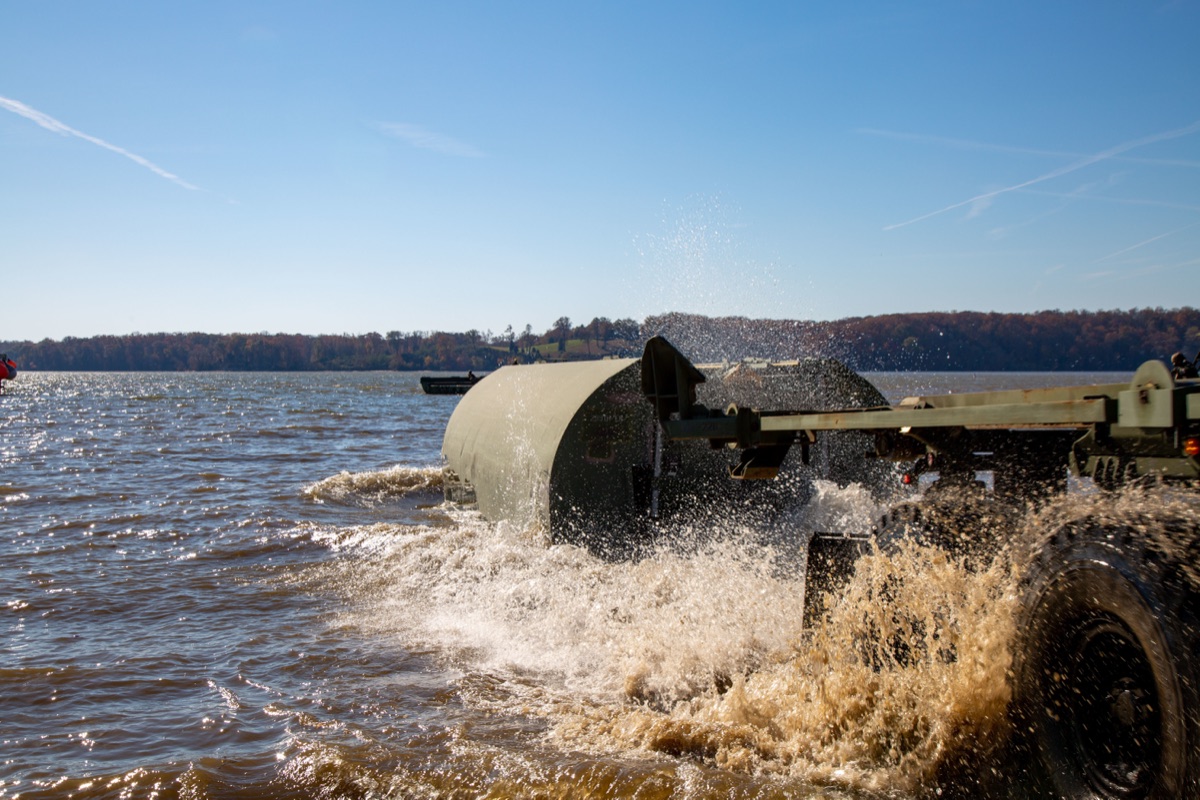
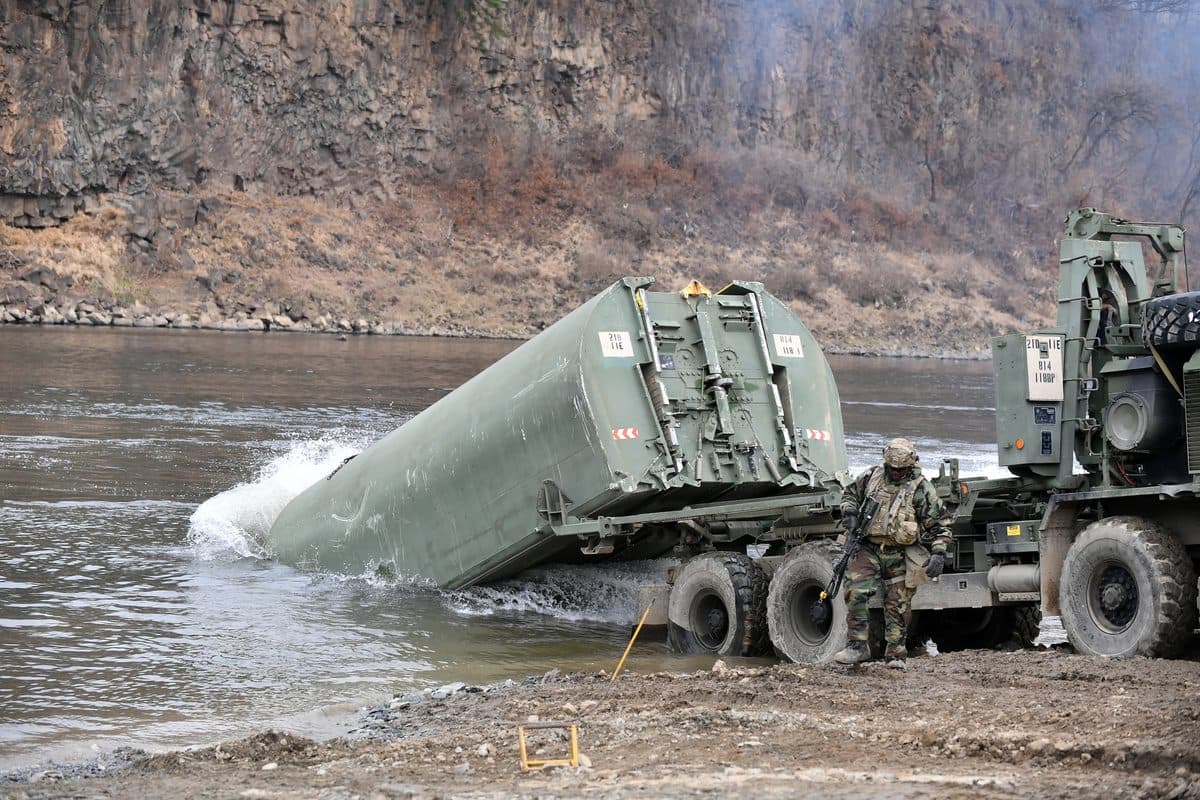
U.S. Army soldiers constructing an Improved Ribbon Bridge across a river during a joint training exercise in South Korea
James Holloway
James Holloway

Military Logistics & Sustainment Analyst

James Holloway writes about military readiness, logistics, and the practical limits of modern forces. His work focuses on how training, sustainment, and organizational decisions shape what militaries can actually do -- not just what they are designed to do on paper.

Wars are won by the side that can cross a river faster. Throughout military history, rivers have been the ultimate natural obstacles — too wide to jump, too deep to ford, and almost always defended by an enemy who understands that destroying the bridge on your side of the water means you have to build one under fire. The ability to throw a bridge across a gap while bullets and shells are coming in is one of the most demanding and dangerous feats in all of warfare. These ten examples span two thousand years of combat engineering, from Roman legions building timber bridges across the Rhine to American engineers erecting float bridges over the Euphrates under Iraqi mortar fire. Each one turned an impossible obstacle into a decisive breakthrough.

1. Caesar's Rhine Bridges (55 and 53 BC)

Julius Caesar built his first bridge across the Rhine in just ten days — a feat that stunned both his allies and his enemies. The Rhine was the boundary between the Roman world and the Germanic tribes to the east, and no Roman army had ever crossed it by bridge. Caesar's engineers drove wooden pilings into the riverbed at an angle, braced them against the current with downstream supports, and laid a timber roadway across the top that was wide enough for his legions to march across in formation. The bridge stretched approximately 400 meters across the river near modern-day Koblenz, Germany.

Caesar wasn't trying to conquer Germania. He was sending a message. The Germanic tribes had been raiding into Gaul, and Caesar wanted to demonstrate that Rome could project power across any obstacle. His legions crossed, spent 18 days demonstrating Roman military capability on the east bank, then withdrew and destroyed the bridge behind them. Two years later, he did it again, building a second Rhine bridge even faster than the first. The engineering achievement was as much a psychological weapon as a physical one — it told the Germanic tribes that the Rhine was not the barrier they believed it to be.
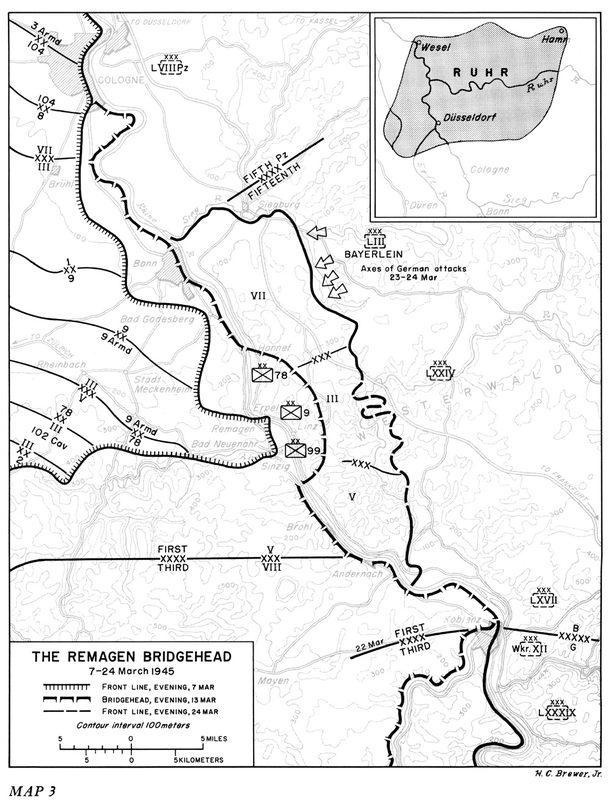
Military map showing the Remagen bridgehead established by the U.S. First Army in March 1945
A U.S. Army map of the Remagen bridgehead, March 1945. The ability to cross major rivers has decided the outcome of campaigns from ancient Rome to World War II. (U.S. Army)

2. The Capture of the Ludendorff Bridge at Remagen (March 7, 1945)

The Ludendorff Bridge at Remagen was supposed to be destroyed. As American forces closed on the Rhine in early March 1945, the retreating Germans demolished every bridge across the river — except one. When soldiers from the U.S. 9th Armored Division's Combat Command B reached the bluffs overlooking Remagen on March 7, they couldn't believe what they saw: the railroad bridge was still standing. The Germans had tried to blow it. Demolition charges had been set, and some detonated, buckling the bridge deck and sending debris into the river. But the structure held.

Sergeant Alexander Drabik led the first squad across, sprinting through German machine gun fire and the smoke of a second, failed demolition attempt. Within hours, American infantry and tanks were pouring across the damaged but passable bridge. German forces launched furious counterattacks — air strikes, V-2 rockets, artillery, frogmen with demolition charges, and even floating mines — to destroy the crossing, but American engineers repaired damage continuously while combat troops held the bridgehead. The Ludendorff Bridge finally collapsed on March 17, ten days after its capture, but by then the Americans had built multiple pontoon bridges and ferries alongside it. Over 25,000 troops crossed at Remagen, establishing the first Allied bridgehead east of the Rhine and shortening the war in Europe by weeks.

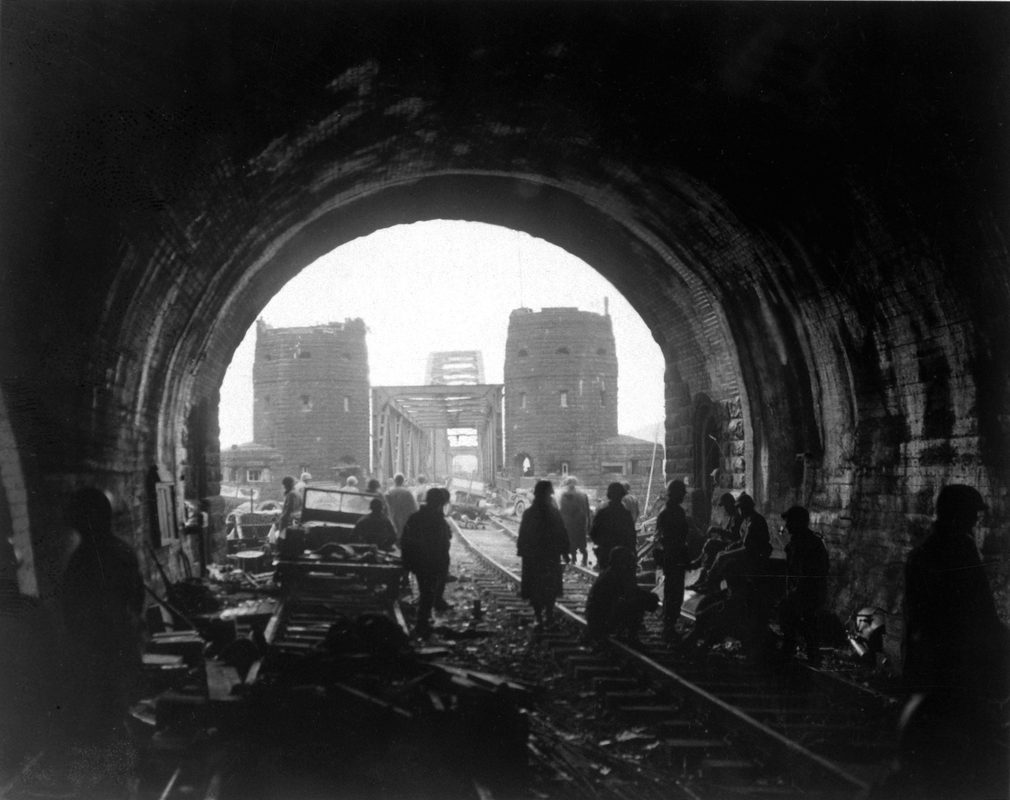
The Ludendorff Bridge at Remagen after its capture by U.S. forces in March 1945, showing damage from failed demolition attempts
The Ludendorff Bridge at Remagen after its capture by the U.S. 9th Armored Division, March 1945. German demolition charges damaged but failed to destroy the structure. (U.S. Army Signal Corps)

3. The Mulberry Harbors at Normandy (June 1944)

The Allies didn't just build bridges for D-Day — they built entire harbors and towed them across the English Channel. The Mulberry harbors were two massive prefabricated port complexes, each roughly the size of the port of Dover, designed to be assembled off the Normandy beaches to allow the unloading of supplies, vehicles, and reinforcements without capturing an actual port. The concept was Winston Churchill's — he wrote a memo in 1942 demanding "piers for use on beaches" that could handle the tides and weather of the English Channel.

Each Mulberry harbor consisted of massive concrete caissons called "Phoenix" units that were sunk to form breakwaters, floating steel roadways called "Whale" piers that rose and fell with the tide on steel legs, and blockships — old merchant vessels deliberately sunk in lines to provide additional wave protection. The components were manufactured at shipyards and construction sites across Britain, towed across the Channel beginning on D-Day+1, and assembled under the constant threat of German air attack and artillery fire. Mulberry A, off Omaha Beach, was largely destroyed by a severe storm on June 19-22, but Mulberry B, off Gold Beach at Arromanches, operated for ten months and handled over 2.5 million troops, 500,000 vehicles, and 4 million tons of supplies. Without it, the Allied buildup in Normandy would have been impossible.

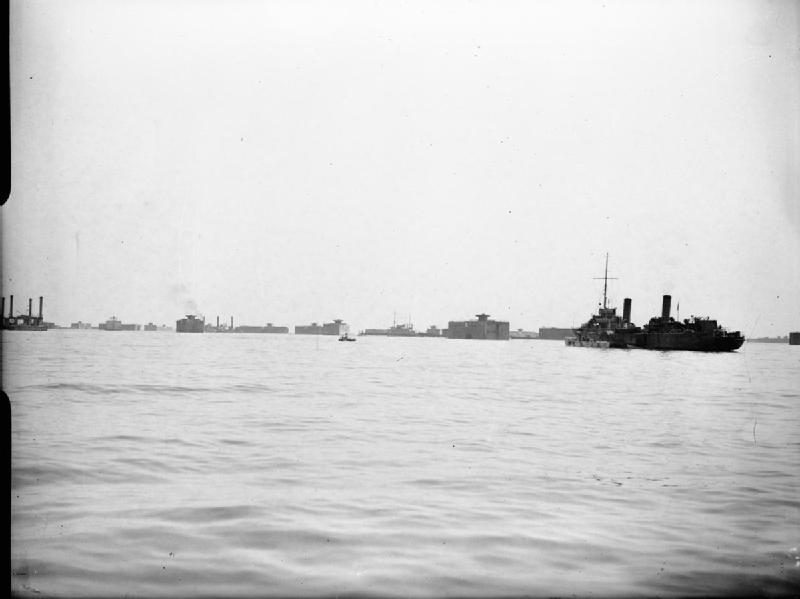
Mulberry harbour components during the Allied invasion of Normandy in June 1944
Components of the Mulberry harbour system during the Normandy invasion, June 1944. The Allies built entire prefabricated ports and towed them across the English Channel. (Imperial War Museum)

4. Arnhem Bridge — "A Bridge Too Far" (September 1944)

Operation Market Garden was the most ambitious airborne operation in history, and its success hinged on capturing a series of bridges over the rivers and canals of the Netherlands. The final and most critical bridge was the road bridge at Arnhem over the Lower Rhine. British 1st Airborne Division paratroopers, led by Lieutenant Colonel John Frost's 2nd Battalion, seized the northern end of the bridge on September 17, 1944, and held it for four days against two SS Panzer divisions that happened to be refitting in the area — an intelligence failure that doomed the operation.

Frost's roughly 740 men held the northern ramp of the bridge against tanks, self-propelled guns, and infantry assaults, denying the Germans use of the crossing while the ground force — XXX Corps — attempted to fight its way north along a single road. The relief force never arrived in time. After four days of increasingly desperate fighting, with ammunition exhausted and casualties mounting, the surviving defenders were overwhelmed. The bridge itself was never destroyed, but it couldn't be used because neither side controlled both ends simultaneously. The failure at Arnhem — what Lieutenant General Frederick Browning reportedly called "a bridge too far" — demonstrated that capturing a bridge is meaningless if you can't hold it long enough for your main force to cross.

5. The Chosin Reservoir Bridge Drop (December 1950)

When Chinese forces surrounded the U.S. 1st Marine Division at the Chosin Reservoir in North Korea in late November 1950, the Marines' only escape route south passed through Funchilin Pass — a narrow mountain road that crossed a 1,500-foot gorge over a concrete bridge. The Chinese destroyed the bridge, trapping over 10,000 Marines and several thousand Army soldiers on the wrong side of the gap. Without a bridge, heavy equipment, vehicles, and wounded could not be evacuated.

The solution was unprecedented. The Air Force air-dropped eight prefabricated M-2 treadway bridge sections — each weighing 2,500 pounds — from C-119 Flying Boxcar transport aircraft using large cargo parachutes. One section was lost when its parachute failed, and one landed in Chinese-held territory, but six sections reached the Marines intact. Combat engineers from the 1st Engineer Battalion assembled the bridge sections across the gorge in freezing temperatures while Chinese forces fired on them from the surrounding ridgelines. The improvised bridge held, and the entire division — with all its wounded, vehicles, and equipment — crossed to safety. The Chosin Reservoir bridge drop remains one of the most remarkable feats of combat engineering in American military history.

U.S. Army soldiers working to assemble pontoon bridge sections during a river crossing exercise
U.S. Army engineers assemble a pontoon bridge during a training exercise in South Korea. Modern bridge-building techniques descend directly from the combat crossings of World War II and Korea. (U.S. Army photo)

6. Soviet Dnepr River Crossings (September-November 1943)

The Soviet crossing of the Dnepr River in the autumn of 1943 was one of the largest river assault operations in history, involving millions of soldiers crossing a river that was up to a mile wide in places. Hitler had ordered the Dnepr held as the "Eastern Wall" — a natural defensive barrier that would stop the Soviet westward advance after the German defeats at Stalingrad and Kursk. The Soviets had other plans.

Beginning in late September, Soviet forces launched crossings at dozens of points along the river simultaneously, using whatever was available — small boats, improvised rafts made from doors and barrels, felled trees lashed together, and even swimming. Many crossing attempts were slaughtered by German defensive fire, but the sheer number of crossing points overwhelmed the defenders. Soviet engineers then built pontoon bridges under continuous fire to allow tanks and heavy equipment to cross. At the Bukrin and Lyutezh bridgeheads near Kiev, engineers worked around the clock for weeks, building, repairing, and rebuilding bridges that German artillery and aircraft destroyed repeatedly. The Dnepr crossings cost the Soviets enormous casualties — estimates range from 300,000 to over 400,000 killed — but they broke the Eastern Wall and liberated Kiev on November 6, 1943.

7. Israeli Crossing of the Suez Canal (October 15-16, 1973)

During the Yom Kippur War, Israeli Major General Ariel Sharon identified a gap between the Egyptian Second and Third Armies on the west bank of the Suez Canal and launched one of the most audacious river crossings of the modern era. On the night of October 15, Israeli paratroopers crossed the canal using rubber boats and a handful of prepositioned pontoons, establishing a small bridgehead on the African side of the canal. The next day, Israeli engineers brought up Uniflot self-propelled pontoon bridges — modular bridge sections that could be driven into the water and connected to form a floating roadway.

The crossing was chaotic and costly. Egyptian forces attacked the Israeli corridor to the canal constantly, and the narrow passage — dubbed "the Chinese Farm" after a nearby agricultural station — became one of the bloodiest battlefields of the war. But the engineers got the bridges across, and Israeli armor poured through the gap to the west bank. Within days, Israeli forces had encircled the Egyptian Third Army, cutting its supply lines and threatening Cairo. The crossing of the Suez Canal turned a war that had begun with a devastating Egyptian surprise attack into a decisive Israeli strategic victory, and the bridging operation was the fulcrum on which the entire campaign turned.

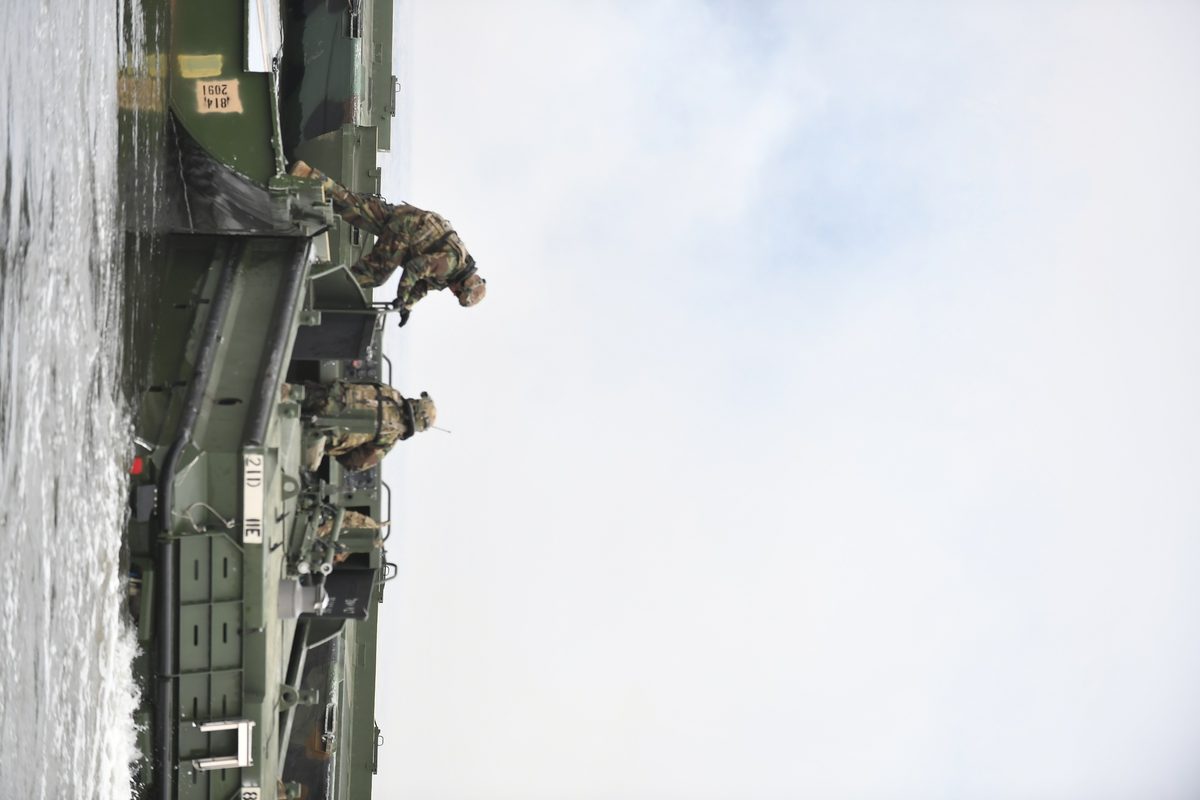
Soldiers crossing a modern Improved Ribbon Bridge during a combined arms training exercise
Modern military forces continue to train on rapid river crossing operations using Improved Ribbon Bridges that can be assembled in minutes. (U.S. Army photo)

8. Pontoon Bridges at Fredericksburg (December 1862)

Union engineers attempted to build six pontoon bridges across the Rappahannock River at Fredericksburg, Virginia, on December 11, 1862, under devastating fire from Confederate sharpshooters positioned in buildings along the riverfront. The engineers — men of the 15th and 50th New York Volunteer Engineers — worked in the open on the bridge boats while Mississippi riflemen fired at them from ranges as close as 100 yards. After suffering significant casualties and failing to complete the bridges, Union General Ambrose Burnside ordered his artillery to bombard the town, then sent infantry across in the pontoon boats themselves to clear the far bank.

The river crossing was eventually completed, but the battle that followed was a catastrophe. Confederate forces under Robert E. Lee held the high ground behind the town, and Union infantry charging uphill into entrenched positions suffered approximately 12,600 casualties — one of the worst defeats of the Civil War. The pontoon bridges worked as engineering; the battle plan they enabled was a disaster. Fredericksburg demonstrated both the extraordinary courage required to build bridges under fire and the harsh reality that getting across the river is only the beginning.

9. Euphrates River Crossings, Iraq (April 2003)

During the 2003 invasion of Iraq, U.S. Army engineers constructed multiple float bridges across the Euphrates River under enemy fire — the first opposed river crossings by American forces since World War II. The 3rd Infantry Division's advance on Baghdad required crossing both the Euphrates and Tigris rivers, and while some bridges were captured intact, others had been demolished by retreating Iraqi forces. At Objective Peach near the town of Al Musayyib, engineers from the 11th Engineer Battalion and Alpha Company, 299th Engineer Battalion built a ribbon bridge across the Euphrates on April 2-3, 2003, while taking mortar and small arms fire from Iraqi positions on both banks.

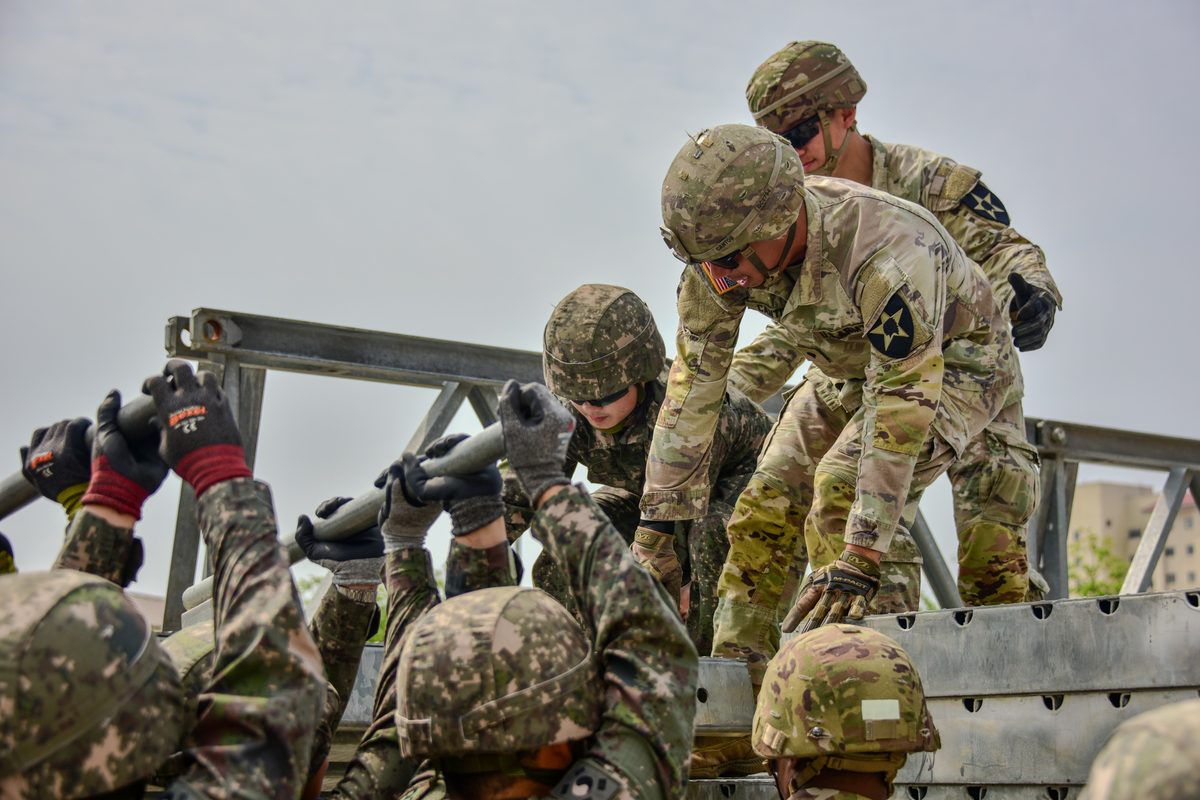
U.S. and South Korean Army engineers conducting joint bridge-building training over the Imjin River
U.S. Army and Republic of Korea soldiers conduct joint bridge-building training near the Imjin River. Allied forces regularly train for the rapid river crossings that would be essential in any conflict on the Korean Peninsula. (U.S. Army photo)

The bridge was designated the first float bridge constructed under enemy fire since World War II. It allowed M1 Abrams tanks, Bradley fighting vehicles, and supply trucks to cross the Euphrates and continue the advance toward Baghdad. The operation was a reminder that even in the era of precision-guided munitions and satellite navigation, the fundamental challenge of military engineering — getting heavy equipment across a river while someone is shooting at you — remains essentially unchanged from the problems Caesar's engineers solved two thousand years ago.

10. The Bailey Bridge: Portable Engineering That Won the War

The Bailey bridge was not a single event but a system that transformed combat engineering during World War II. Designed by British engineer Donald Bailey in 1940, the Bailey bridge used prefabricated, interchangeable steel panels that could be carried by hand, assembled without heavy equipment, and configured in dozens of different lengths and load ratings. A basic Bailey bridge could be erected by a platoon of engineers in a matter of hours — fast enough to keep pace with an armored advance.

Allied forces built over 3,000 Bailey bridges during World War II across every theater of operations. In Italy, where the retreating Germans demolished virtually every bridge and culvert along the route of advance, Bailey bridges were the only thing that kept the Allied campaign moving. In Northwest Europe after D-Day, engineering battalions built Bailey bridges across rivers, canals, and antitank ditches at a pace that allowed armored divisions to maintain their momentum during the breakout from Normandy and the advance into Germany. Field Marshal Bernard Montgomery reportedly called the Bailey bridge "the most important single piece of equipment that contributed to our victory."

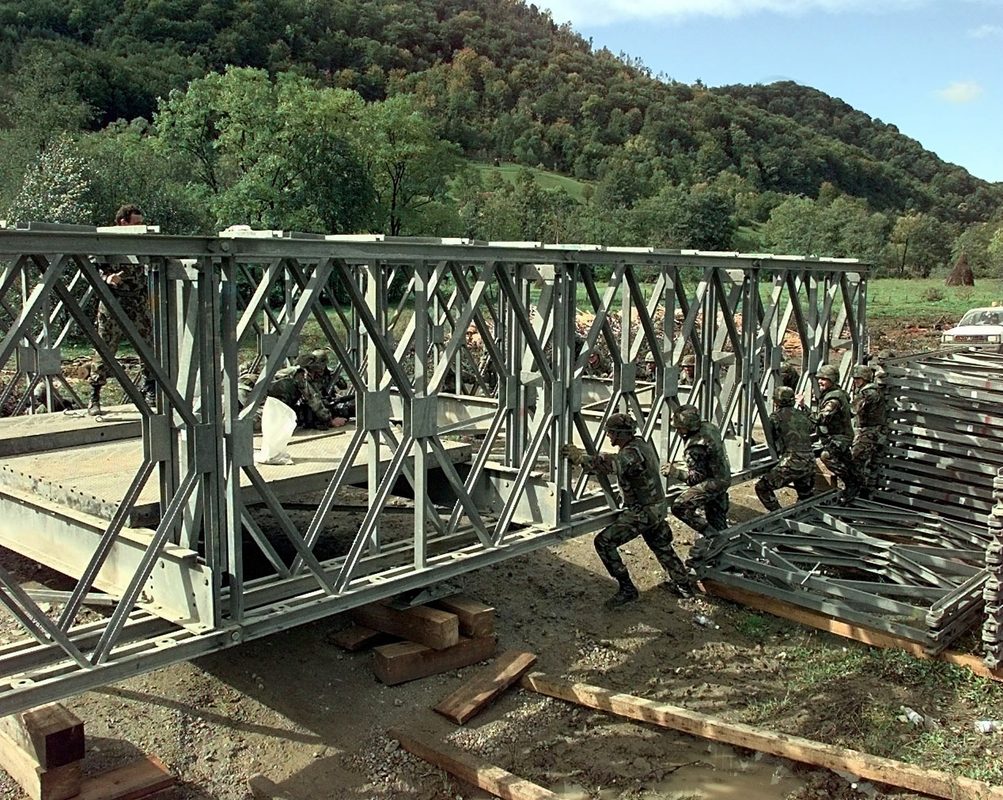
U.S. Army engineers pushing a military bridge into position during construction in Bosnia
Army engineers use brute strength to push a partially constructed bridge into position during operations in Bosnia — a scene that could have come from any era of military engineering. (U.S. Air Force photo)

The Bailey bridge's legacy endures. Its modular, prefabricated design philosophy directly influenced every military bridging system developed since, including the American Medium Girder Bridge, the Improved Ribbon Bridge used by U.S. Army engineers today, and the Armored Vehicle Launched Bridge carried by M60 and M1 chassis. The concept that Donald Bailey pioneered — a bridge that can be carried in pieces on trucks, assembled by soldiers using hand tools, and put into service in hours — remains the foundation of military engineering doctrine worldwide.

Completed pontoon bridge spanning a river in South Korea during a military exercise
A completed pontoon bridge spans a river during a training exercise in South Korea. From Caesar's Rhine bridges to modern ribbon bridges, the ability to cross water obstacles under fire remains one of the most critical capabilities in land warfare. (U.S. Army photo)

Share this article

Share:

Recommended

Ace of The Skies: Can You Identify These Military Aircraft Throughout The Years?
Test Yourself

Ace of The Skies: Can You Identify These Military Aircraft Throughout The Years?

Can you identify these aircraft?

Take the Quiz

On This Day in Military History

April 16

Battle of Seelow Heights Begins (1945)

Soviet forces under Marshal Georgy Zhukov launched a massive assault on the Seelow Heights, the last major defensive line before Berlin. Over one million Soviet troops attacked 100,000 entrenched German defenders in one of the bloodiest battles of the final weeks of WWII. The Soviets used 143 anti-aircraft searchlights to blind German defenders in a predawn attack.

1746Battle of Culloden

1945USS Laffey Survives 22 Kamikaze Attacks

See all 5 events on April 16

Get Military News & History in Your Inbox

Join thousands of readers receiving our weekly digest of military technology, history, and analysis.

Test Your Knowledge