Ryan Caldwell writes about military decision-making, failed programs, and the tradeoffs behind major defense choices. His work is focused on understanding why systems succeed or fail beyond headlines, promises, and initial expectations.
Almost everything the public "knows" about stealth aircraft is wrong. Stealth does not mean invisible. Radar-absorbent coatings are not what makes a stealth aircraft stealthy. The F-117 being shot down over Serbia does not prove that stealth technology has failed. And the claim that Russia or China has "cracked stealth" with advanced radar is, at best, a misunderstanding of what their systems can actually do.
Stealth technology is one of the most consequential military innovations of the past half-century, and it is also one of the most misunderstood, both by the public, by defense commentators, and sometimes by the military establishments that deploy it. These misconceptions matter because they distort how people evaluate threats, assess military capabilities, and understand the balance of power in modern air warfare.
Here are the seven biggest myths about stealth aircraft, and what the physics actually says.
Myth 1: "Stealth Means Invisible to Radar"
This is the foundational misconception from which most others flow. Stealth aircraft are not invisible. They are less visible. The difference matters enormously.
Every object that radar energy strikes reflects some of that energy back toward the radar receiver. The amount of energy reflected is described by the object's radar cross section (RCS), measured in square meters. A large commercial aircraft might have an RCS of 100 square meters. A conventional fighter jet might measure 5-10 square meters. The F-22 Raptor's RCS is estimated at approximately 0.0001 square meters, roughly the radar signature of a marble.
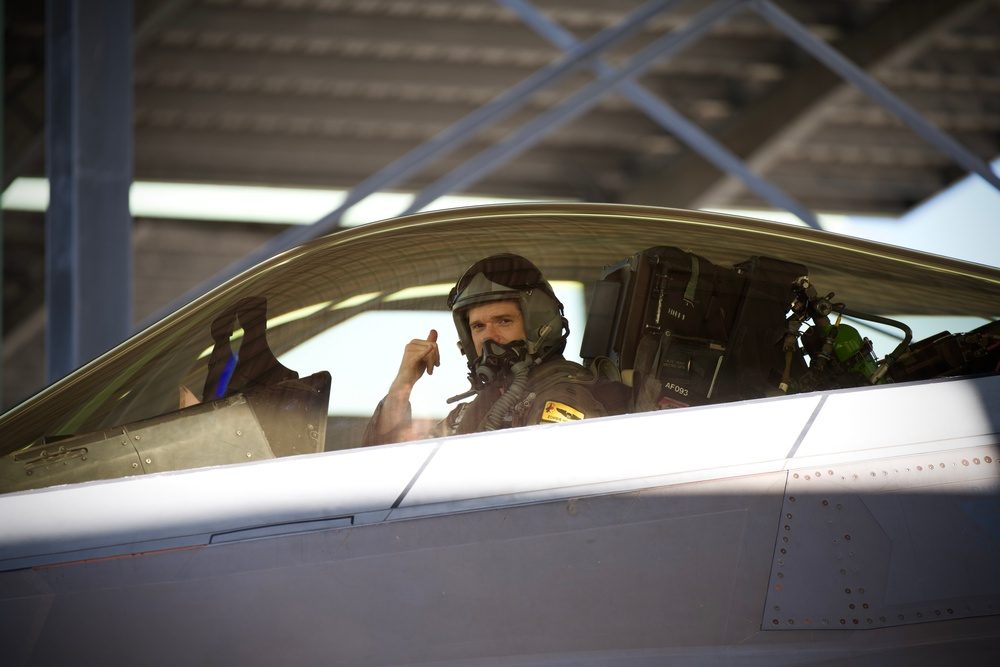
An F-22 Raptor takes off from Joint Base Pearl Harbor-Hickam, Hawaii. The aircraft's angular surfaces are designed to deflect radar energy away from the transmitter rather than back toward it. U.S. Air National Guard photo.
This tiny RCS means that a radar designed to detect a conventional fighter at 200 km might not detect an F-22 until it is within 20-30 km, well inside the range where the Raptor has already launched its own weapons. Stealth does not prevent detection. It delays detection until the stealth aircraft holds every tactical advantage.
At very close ranges, typically under 30-40 km depending on radar power, any radar can detect any stealth aircraft. The laws of physics do not allow for true invisibility. What stealth provides is time and distance: the stealth aircraft sees the enemy first, shoots first, and can choose whether to close the distance or disengage before the enemy ever achieves a weapons-quality track.
Myth 2: "Any Advanced Radar Can Defeat Stealth"
This myth usually appears in the form of claims about low-frequency (VHF-band) radar detecting stealth aircraft. There is a kernel of truth here, but the conclusion most people draw is wrong.
Stealth shaping is optimized against the radar frequencies used by fire-control systems and missile seekers, typically in the X-band (8-12 GHz) and S-band (2-4 GHz). These are the frequencies that guide weapons to targets. Low-frequency VHF radar (30-300 MHz) has wavelengths measured in meters rather than centimeters, and these longer wavelengths interact with aircraft structures differently. Features that are small relative to centimeter-wave radar, such as edges, inlets, and weapon bay seams, become resonant reflectors at meter wavelengths.
So yes, VHF radar can detect stealth aircraft at longer ranges than X-band radar. Russia's Nebo-M system and China's JY-27A are designed to exploit this physics. But detection is not the same as engagement. Detecting a stealth aircraft on a VHF radar screen tells you that something is out there, somewhere in a general direction. It does not give you the precise position, velocity, and heading data, called a fire-control quality track, needed to guide a missile to the target.
The resolution of a radar is inversely proportional to its frequency. A VHF radar that detects a stealth aircraft at 300 km might locate it within a volume of airspace several kilometers across. That is useful for strategic awareness but worthless for guiding a missile that needs to know the target's position within meters. To actually shoot at a stealth aircraft, you still need an X-band or S-band fire-control radar to achieve a weapons-quality track, and at those frequencies, stealth shaping works as designed.
Myth 3: "RAM Coatings Are What Make Aircraft Stealthy"
Radar-absorbent material (RAM) is the most visible aspect of stealth technology, literally, since you can see the distinctive dark coatings on aircraft like the F-117 and B-2. This visibility has led to the widespread belief that RAM is the primary stealth mechanism. It is not.
Approximately 90 percent of a stealth aircraft's RCS reduction comes from shaping, the geometric design of the aircraft's surfaces. The remaining 10 percent comes from RAM and other treatments. This ratio is not approximate. It is a fundamental consequence of electromagnetic physics.
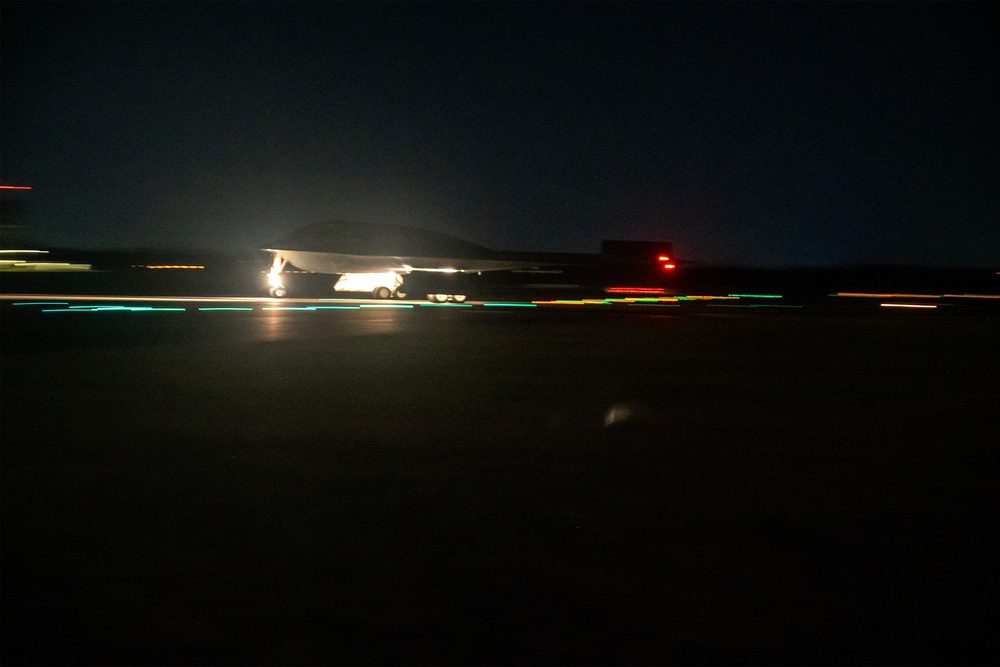
A B-2 Spirit lands at RAAF Base Amberley, Australia, during a Bomber Task Force mission in August 2024. The flying wing design eliminates vertical surfaces that would create strong radar returns. U.S. Air Force photo.
When radar energy hits a surface, it reflects according to the same principles as light reflecting off a mirror. A flat surface perpendicular to the radar beam reflects energy directly back. This is called a specular return, and it produces the strongest possible radar signature. Conventional aircraft are covered in surfaces that create specular returns: vertical tail fins, engine intakes, weapons pylons, external stores, and right-angle junctions between fuselage and wings.
Stealth shaping eliminates these specular returns by ensuring that no surface is perpendicular to anticipated radar directions. The F-22's canted tail fins, the B-2's flying wing design, and the F-35's carefully blended fuselage all serve the same purpose: redirect radar energy away from the transmitter rather than back toward it. If 99.99 percent of the incoming radar energy is redirected away from the receiver by shaping, RAM only needs to absorb or attenuate the remaining 0.01 percent.
This is why simply coating a conventional aircraft with RAM does not make it stealthy. India's application of RAM coatings to the Su-30MKI reduces its RCS measurably but does not transform it into a stealth aircraft. The aircraft's fundamental geometry, including its vertical tails, round engine nacelles, and external weapon pylons, still produces strong radar returns that no coating can eliminate. Shaping is the foundation. RAM is the finishing touch.
Myth 4: "The F-117 Shootdown Proves Stealth Doesn't Work"
On March 27, 1999, a Serbian SA-3 Neva surface-to-air missile battery shot down an F-117A Nighthawk during Operation Allied Force, the only stealth aircraft ever lost to enemy fire. This event is routinely cited as evidence that stealth technology is fundamentally flawed or overrated. The actual circumstances prove almost exactly the opposite.
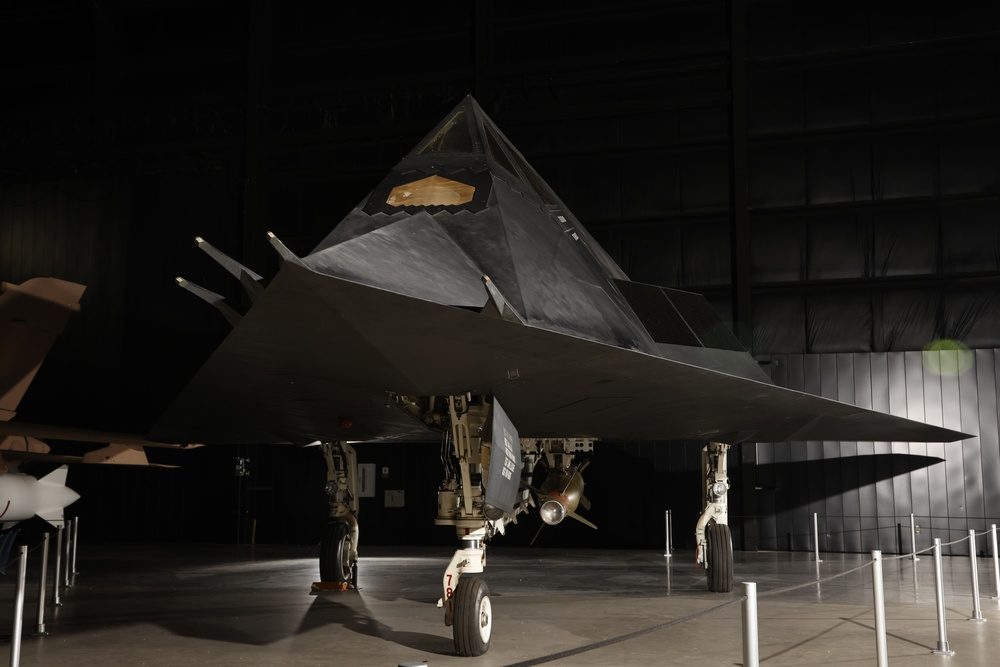
The F-117A Nighthawk was the world's first operational stealth aircraft. Its angular faceted design, revolutionary in the 1970s, has been superseded by the curved surfaces of modern stealth aircraft like the B-2 and F-22. U.S. Air Force photo.
Colonel Zoltan Dani, the Serbian battery commander who executed the shoot-down, has explained in multiple post-war interviews exactly how he did it. His success depended on a specific combination of factors:
The F-117 missions flew the same ingress route on multiple consecutive nights. Dani positioned his battery along this predictable flight path and knew exactly where to look.
His modified P-18 radar (a VHF-band system) detected the F-117 at relatively close range, consistent with the physics discussed above. The longer wavelengths partially negated the F-117's shaping optimizations.
The F-117 was flying with its bomb bay doors open during its weapons delivery run. The open bomb bay created a massive radar return, a cavity reflector that temporarily negated the aircraft's stealth characteristics.
Weather conditions may have contributed. Some accounts suggest that moisture on the RAM coatings degraded their absorptive properties.
Despite this single loss, F-117s flew over 1,300 sorties during the 1991 Gulf War and struck the most heavily defended targets in Iraq, including downtown Baghdad, command bunkers, and air defense nodes, without a single loss. The aircraft's stealth worked exactly as designed against the most sophisticated integrated air defense network outside the Soviet Union. One loss under exceptional circumstances over eight years of combat operations does not invalidate the technology. It validates the importance of operational security and tactical discipline when employing stealth assets.
Myth 5: "Stealth Aircraft Can't Dogfight"
This myth stems from the F-117, which was genuinely not designed for air-to-air combat. The F-117 had no radar, no air-to-air weapons, and the aerodynamic characteristics of a piano. Extending this limitation to all stealth aircraft is like concluding that no truck can go fast because dump trucks are slow.
The twin-boom P-38L in the Pacific Theater livery of the 475th Fighter Group. Features the "Putt Putt Maru" nose art, counter-rotating props, and Corgi's Aviation Archive packaging.
The F-22 Raptor is one of the most maneuverable fighter aircraft ever built. Its thrust-vectoring Pratt & Whitney F119 engines allow post-stall maneuvering, which is controlled flight at angles of attack where conventional aircraft would depart controlled flight and spin. At the Red Flag exercises that pit the F-22 against fourth-generation fighters, Raptor pilots have achieved kill ratios exceeding 100:1 in simulated air combat, a dominance that reflects not just stealth but also the aircraft's supercruise capability, advanced sensors, and extraordinary agility.
The F-35, while less maneuverable than the F-22, compensates with the most advanced sensor fusion system ever deployed on a fighter. Its AN/APG-81 AESA radar, Distributed Aperture System (six infrared cameras providing 360-degree coverage), and helmet-mounted display give the pilot a level of situational awareness that makes traditional dogfighting largely irrelevant. The F-35 pilot typically knows the position of every aircraft in a 100-mile radius and engages threats long before they reach visual range.
Myth 6: "IRST Defeats Stealth"
Infrared search and track (IRST) systems detect aircraft by their heat emissions rather than radar reflections. Since stealth shaping and RAM do nothing to reduce heat signatures, some analysts have suggested that IRST makes stealth obsolete. This analysis is incomplete.
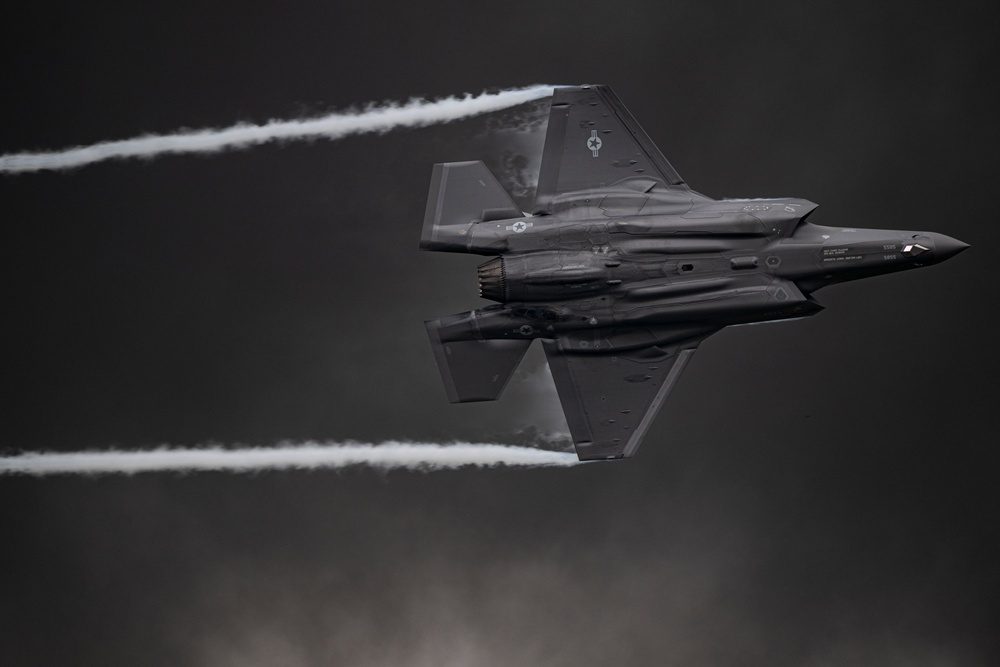
An F-35A Lightning II performs during a demonstration at Dover Air Force Base, Delaware. The F-35's stealth characteristics are complemented by the most advanced sensor fusion system ever deployed on a fighter aircraft. U.S. Air Force photo.
IRST systems can detect the heat signature of a jet engine at ranges of 50-100+ km under favorable conditions, where tail-on detection is easier than head-on because the exhaust nozzle is the hottest part of the aircraft. However, IRST has fundamental limitations that prevent it from replacing radar as a primary sensor.
First, IRST is a passive system that measures angle only. It detects the direction of a heat source but cannot directly measure range. Without range information, you cannot generate a fire-control solution. You know something hot is at bearing 045, but you do not know if it is 30 km away or 130 km away. Triangulation using multiple IRST sensors can estimate range, but this requires coordination between platforms and introduces latency.
Second, IRST performance degrades significantly in adverse weather. Clouds, rain, and humidity absorb and scatter infrared radiation, reducing detection ranges to a fraction of clear-air performance. Stealth aircraft operating in overcast conditions, which is most of Northern Europe for most of the year, may be nearly undetectable by IRST.
Third, modern stealth aircraft incorporate infrared signature reduction measures. The F-22's engine exhaust is mixed with bypass air to reduce its thermal signature. The B-2's engines are buried deep within the airframe with the exhaust outlets on top of the wing, shielding the hottest components from ground-based IRST sensors. These measures do not eliminate infrared detection, but they significantly reduce detection ranges.
Myth 7: "China and Russia Have Cracked Stealth"
Variations of this claim appear regularly in defense media, usually tied to announcements about new Russian or Chinese radar systems. The Nebo-M VHF radar, the Chinese JY-27A, and various "quantum radar" concepts are cited as systems that have rendered Western stealth aircraft detectable and therefore vulnerable.
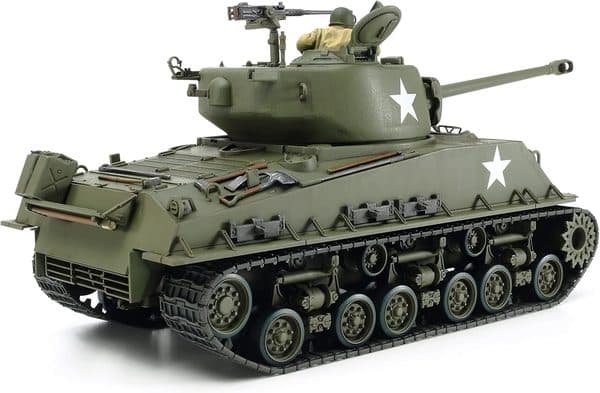
The upgraded T-34 with its larger turret and 85mm gun, the version that spearheaded every Soviet offensive from mid-1944 through Berlin. 133 reviews at 4.7 stars in compact 1/48 scale.
The physics of VHF detection has already been addressed. Yes, it can detect stealth aircraft, but detection without fire-control quality tracking is not the same as defeating stealth. The more fundamental problem with these claims is the gap between laboratory demonstrations and operational capability.
Detecting a stealth aircraft in controlled test conditions, with a known flight path, cooperative target, no electronic countermeasures, and ideal weather, is a very different proposition from detecting, tracking, and engaging a stealth aircraft in combat. The stealth aircraft is not simply flying in a straight line waiting to be shot. It is employing electronic warfare, flying unpredictable routes, operating at altitudes and speeds that minimize detection windows, and potentially accompanied by electronic attack aircraft that degrade enemy radar performance.
No country has publicly demonstrated the ability to reliably detect, track, and engage a stealth aircraft with radar cross sections comparable to the F-22 or B-2. The claim that stealth has been "cracked" remains theoretical. The operational evidence, including the performance of stealth aircraft in exercises against the most advanced available air defense systems, suggests that properly designed and properly employed stealth technology continues to provide a decisive tactical advantage.
What Stealth Actually Provides
Stealth is not a magic cloak. It is a set of engineering disciplines, including aerodynamic shaping, materials science, thermal management, and electronic warfare, that collectively reduce the range at which an aircraft can be detected, tracked, and engaged by enemy sensors. This reduction in detection range translates directly into tactical advantage: the stealth aircraft detects the enemy first, engages first, and retains the option to disengage before the enemy can respond.
The value of stealth is not absolute invulnerability. It is the compression of the enemy's decision timeline. A conventional aircraft approaching an S-400 battery gives the defenders minutes to detect, classify, track, and engage. A stealth aircraft compresses that timeline to seconds, potentially fewer seconds than the air defense system needs to complete the kill chain. That compression is the difference between the aircraft surviving and not surviving, and it is why every major military power is investing in stealth technology despite the claims that it has been defeated.
The myths persist because stealth technology touches something fundamental in how people think about warfare: the desire for decisive advantage versus the belief that no advantage lasts forever. Both instincts contain truth. Stealth provides a genuine, measurable, and currently irreplaceable tactical advantage. But it is not permanent, it is not absolute, and it must be continuously evolved to stay ahead of advancing sensor technology. Understanding what stealth actually does, rather than what mythology says it does, is essential for evaluating the military balance in an era where air superiority increasingly depends on who can see whom first.