Daniel Mercer writes about military history with a focus on the 20th century, including World War II, the Cold War, and Vietnam. His work looks at how decisions made decades ago still influence doctrine, planning, and assumptions today.
A twin-engine medium bomber launching from an aircraft carrier. It had never been done in combat before. It would never need to be done again.
On the morning of April 18, 1942, 134 days after Pearl Harbor, Lieutenant Colonel James H. Doolittle led sixteen B-25B Mitchell bombers off the pitching deck of the USS Hornet (CV-8) into the North Pacific. Their targets were Tokyo, Yokohama, Nagoya, Osaka, and Kobe. None of the sixteen aircraft would land at an allied airfield. None would be recovered. Three crew members would be killed, eight captured by the Japanese, and three of those eight executed.
The physical damage inflicted on Japan was minimal: a few dozen buildings destroyed, fifty Japanese casualties. But the Doolittle Raid accomplished something that no amount of conventional bombing could have achieved in April 1942: it shattered the myth of Japanese invincibility, humiliated the Imperial military leadership, and set in motion the chain of decisions that led directly to Japan's catastrophic defeat at Midway six weeks later.
It was the most consequential air raid in history, not for what it destroyed, but for what it provoked.
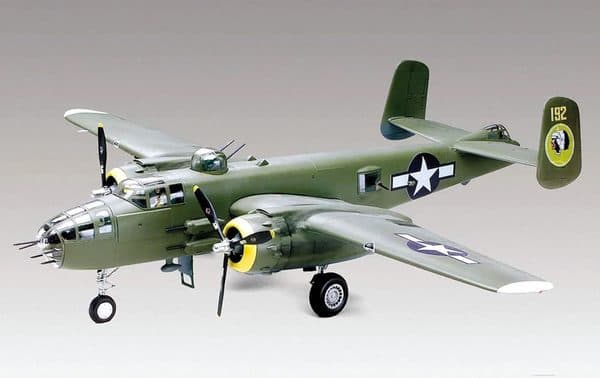
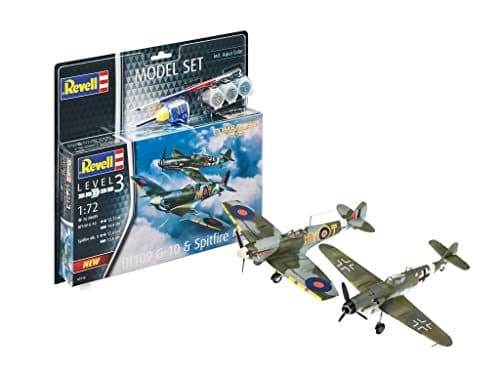
Over 1,100 verified Amazon reviews at 4.5 stars make this one of the most purchased military model kits on the platform. The B-25 Mitchell carried out the Doolittle Raid, the first strike on the Japanese home islands.
The concept of launching Army bombers from a Navy carrier originated with Captain Francis Low, a submarine officer on Admiral Ernest King's staff. In January 1942, Low noticed Army bombers practicing simulated attacks against the outline of a carrier deck painted on an airfield runway in Norfolk, Virginia. If Army bombers could take off from a space that short on land, he reasoned, perhaps they could do it from an actual carrier at sea.
King assigned the idea to his air operations officer, Captain Donald Duncan, who spent two weeks analyzing whether it was physically possible. Duncan's conclusion: a B-25 Mitchell, the lightest twin-engine bomber in the Army inventory, could theoretically take off from a carrier deck if it was stripped of unnecessary weight and launched into a strong headwind. It could not land on a carrier, since the B-25 was far too large and too heavy for an arrested landing, but it could get airborne.
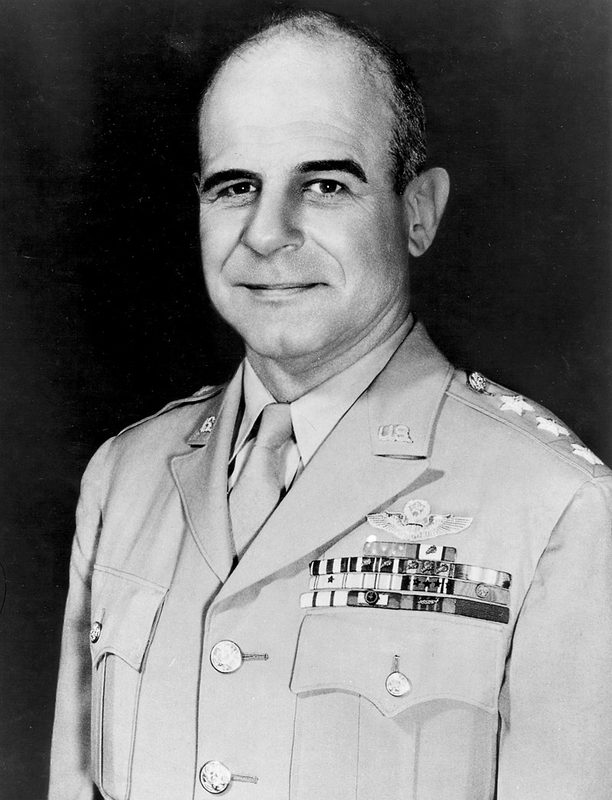
Lt. Col. James H. Doolittle volunteered to lead the raid personally. He was already one of America's most accomplished pilots: a racing champion, a PhD in aeronautics from MIT, and a pioneer of instrument flying.
The man chosen to lead the mission was James Harold Doolittle, and the Army Air Forces could not have picked a better one. At 45, Doolittle was already a legend in American aviation. He held a doctorate in aeronautical engineering from MIT. He had won the Schneider Trophy, the Bendix Trophy, and the Thompson Trophy. In 1929, he had been the first pilot to take off, fly, and land using only instruments, the foundational demonstration that made blind flying possible. He was not a desk officer playing general. He was a pilot who insisted on flying the lead aircraft himself.
Doolittle was given three months to make the impossible work.
Training at Eglin Field
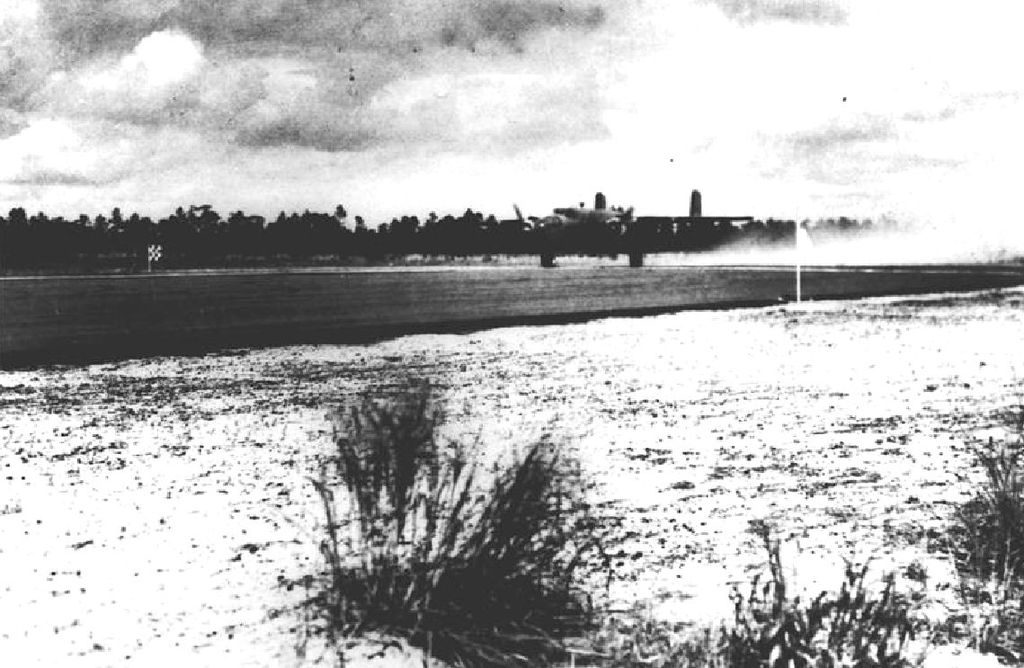
A B-25 during short-takeoff practice at Wagner Field, Florida, March 1942. Crews trained relentlessly to get airborne within 467 feet, the length available on the Hornet's flight deck.
Twenty-four B-25B Mitchells were selected and sent to the Mid-Continent Airlines modification center in Minneapolis. Each aircraft was stripped of its lower gun turret, its liaison radio, and its Norden bombsight, the classified precision device that the Army Air Forces considered essential for high-altitude bombing. In place of the Norden, Doolittle installed a simple 20-cent sight devised by Captain Charles Ross Greening. The planes would bomb from low altitude, where precision optics were unnecessary.
Additional fuel tanks were installed everywhere weight and space allowed: in the bomb bay, in the crawlway above the bomb bay, even in the space vacated by the lower turret. Each modified B-25 could carry approximately 1,141 gallons of fuel, enough, in theory, for 2,400 miles. The bombers would need every gallon.
Volunteer crews, all from the 17th Bombardment Group, were assembled at Eglin Field in Florida. They were told only that they had volunteered for a dangerous mission. The training focused obsessively on short-field takeoffs: getting a 28,000-pound bomber airborne in approximately 467 feet, the distance that would be available on the Hornet's flight deck. Navy Lieutenant Henry Miller, a carrier landing officer, taught the Army pilots the technique: full flaps, brakes locked, engines to full power, release brakes at the exact moment the deck officer gave the signal.
They also practiced low-altitude navigation over the Gulf of Mexico, learning to fly on the deck at 200 feet, below Japanese radar coverage if Japan even had effective radar in 1942, and to navigate by dead reckoning over open ocean for hundreds of miles without radio aids.
Of the 24 aircraft prepared, 16 were selected for the mission. On April 1, 1942, they were loaded aboard the Hornet at Naval Air Station Alameda in San Francisco Bay. The carrier's own air group was struck below to the hangar deck. The Hornet's crew watched the big Army bombers being craned aboard and parked in a line that stretched from the stern to the island, and they understood immediately that this was not an ordinary deployment.
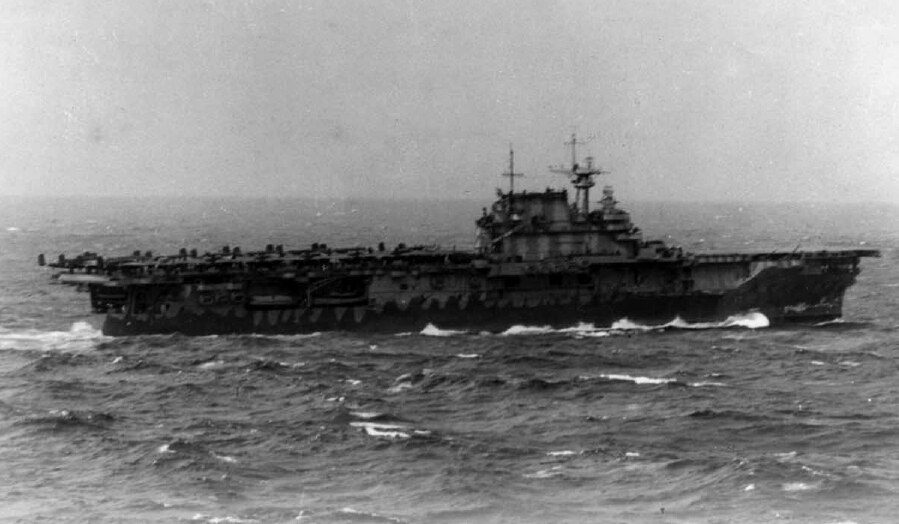
USS Hornet (CV-8) at sea during the approach to Japan. With her flight deck packed with B-25 bombers, she could not launch her own fighters and was entirely dependent on Enterprise for air defense.
The Hornet sailed under the Golden Gate Bridge on April 2 and headed northwest into the Pacific. Her destination was a launch point approximately 400 miles east of Japan, close enough for the B-25s to reach their targets and continue west to airfields in eastern China, where Chiang Kai-shek's Nationalist forces controlled the territory.
The task force was commanded by Vice Admiral William "Bull" Halsey, flying his flag aboard the carrier Enterprise (CV-6). The Enterprise would provide fighter cover for the force during the approach, since the Hornet's own aircraft were trapped below the Army bombers cluttering her deck. The two carriers were escorted by four cruisers, eight destroyers, and two fleet oilers.
The plan was straightforward: approach Japan under radio silence, launch the bombers at dusk approximately 400 miles out, so they would reach their targets after dark and arrive at the Chinese airfields at first light. Night bombing would provide cover. The timing was critical because the B-25s had barely enough fuel to make the 2,200-mile route from the launch point to the recovery fields.
Then everything went wrong.
The Early Detection
At 03:10 on April 18, the Enterprise's radar detected two surface contacts ahead. They were Japanese picket boats, small patrol vessels stationed in a long line roughly 700 miles east of Japan to provide early warning of exactly this kind of approach. Task Force 16 altered course to avoid them, but at 07:38, the patrol boat Nittō Maru (No. 23) spotted the American formation and began transmitting a contact report.
The cruiser Nashville sank the Nittō Maru with gunfire, but the damage was done. The Japanese knew an American carrier force was approaching. Halsey faced an immediate decision: continue the approach for another ten hours and risk attack by land-based Japanese bombers, or launch immediately, 170 miles further from Japan than planned, and accept that the bombers would have to fly an extra 170 miles with fuel tanks that were already marginal.
Halsey signaled the Hornet: "Launch planes. To Colonel Doolittle and gallant command: Good luck and God bless you."
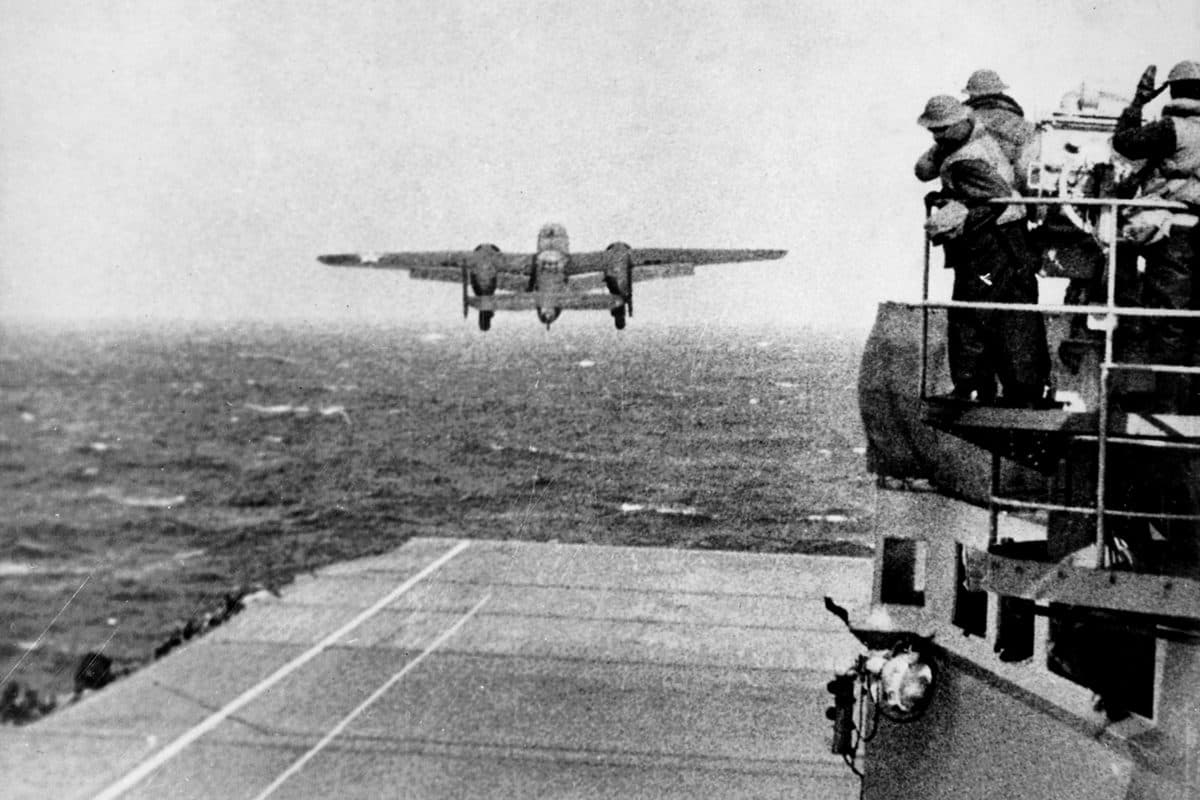
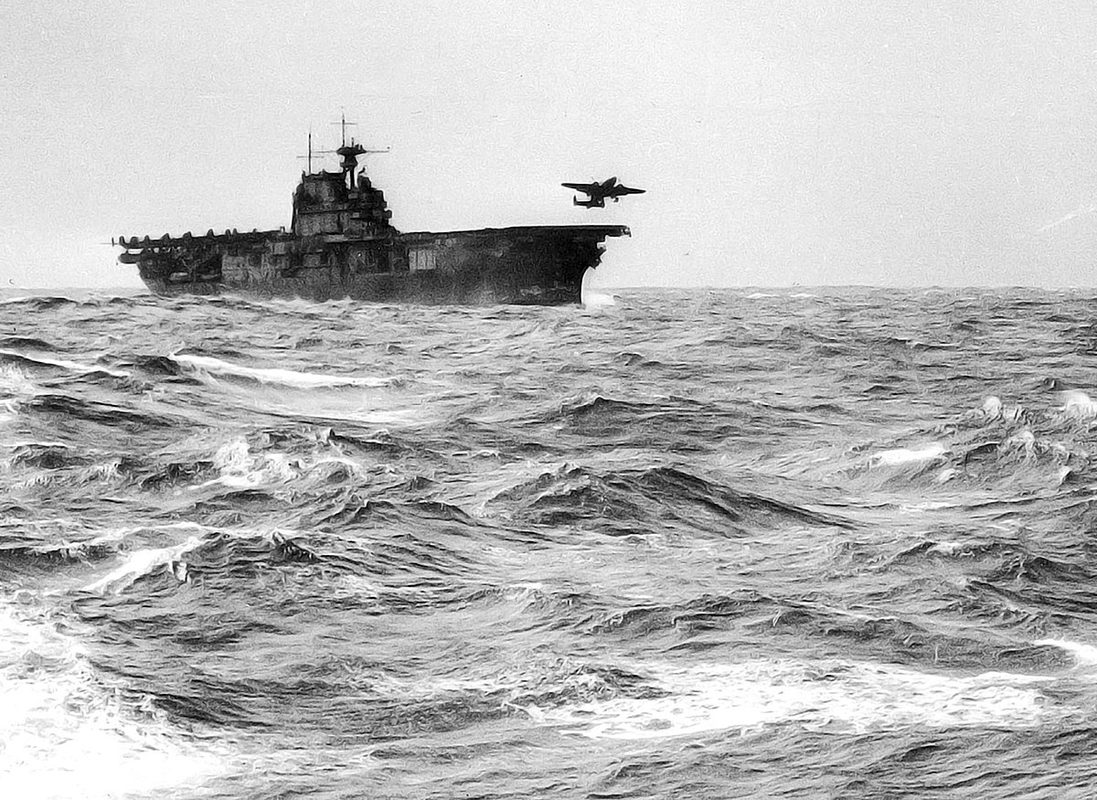
The launch began at 08:20 in heavy seas. The Hornet was pitching so violently that the deck crew had to time each launch to the rise of the bow. Doolittle's aircraft, the first in line, had only 467 feet of deck ahead of it. The remaining aircraft had even less, as each was positioned further aft. Every pilot got airborne. It took an hour to launch all sixteen.
Sixteen Bombers Over Tokyo
A B-25B lifts off from the Hornet's rain-slicked deck. Each bomber had barely 500 feet of runway, less space than most civilian airstrips. Every pilot got airborne.
The sixteen B-25s flew toward Japan at low altitude in loose formations of two and three aircraft. They crossed the Japanese coast at approximately noon local time. They arrived over their targets in broad daylight, not at dusk as planned, because the early launch had advanced their timetable by ten hours.
The daylight approach should have been catastrophic. It was not. Japanese air defenses, complacent after six months of unbroken victory, were slow to react. The bombers came in at rooftop height, 1,500 feet over Tokyo with some pilots pushing lower, and hit their targets with incendiary and demolition bombs. Doolittle's aircraft struck a factory complex in northern Tokyo. Other bombers hit oil storage facilities, a steel works, and military installations in Yokohama, Nagoya, Osaka, and Kobe.
The physical destruction was modest. The raid killed approximately 50 Japanese civilians and wounded 400. A few factories were damaged. Some oil was lost. In pure military terms, the bombing accomplished almost nothing.
But the psychological impact was volcanic. Japanese citizens had been assured by their government that the home islands were invulnerable to attack. That assurance had just been proved false by American bombers appearing over the Imperial capital in the middle of the day. The emperor himself had been in potential danger, as Doolittle's bombers flew within miles of the Imperial Palace, which had been declared off-limits as a target.
No Place to Land
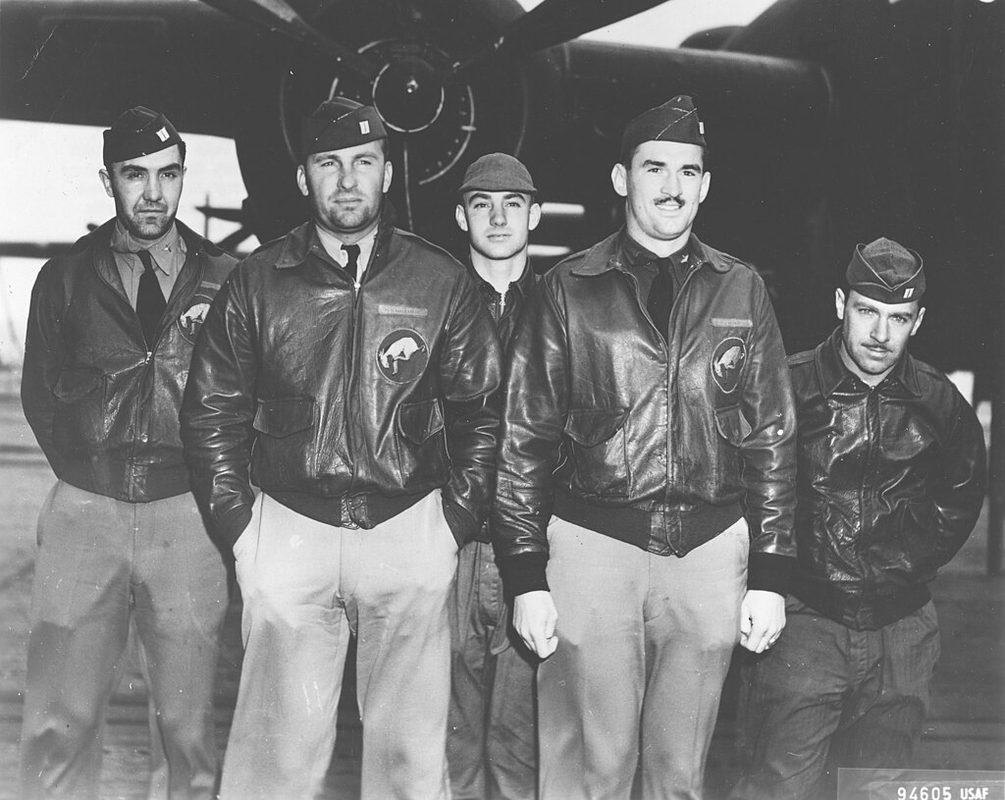
A Doolittle Raid crew before the mission. Eighty men flew the raid. All sixteen aircraft were lost, whether ditched in China, crash-landed, or diverted to the Soviet Union.
After bombing their targets, the sixteen aircraft turned southwest and headed for China. The extra 170 miles imposed by the early launch now became a death sentence for the aircraft, if not necessarily the crews. Every bomber was running on fumes as it crossed the Chinese coast in darkness and deteriorating weather.
The planned recovery was supposed to involve homing beacons at the Chinese airfields, but miscommunication and Japanese interference meant the beacons were never activated. The crews flew blind into rain and clouds over unfamiliar mountainous terrain with their fuel gauges on empty.
Fifteen of the sixteen aircraft crash-landed or were abandoned by their crews, who bailed out by parachute into the darkness over eastern China. One aircraft, piloted by Captain Edward York, diverted to the Soviet Union when it became clear he did not have enough fuel to reach China. The Soviets interned York and his crew for over a year before they escaped through Iran.
Of the eighty men who flew the raid, 69 survived the mission and reached friendly territory, most with the help of Chinese civilians and Nationalist soldiers who sheltered them at enormous personal risk. The Japanese military, enraged by the civilian assistance to the American airmen, launched a punitive campaign across Zhejiang and Jiangxi provinces that killed an estimated 250,000 Chinese civilians. It was one of the worst reprisals of the war, a monstrous price paid by people whose only crime was helping downed American pilots.
Three men, Corporal Leland Faktor and Sergeants William Dieter and Donald Fitzmaurice, were killed during the bailout or crash landings. Eight were captured by the Japanese. Of those eight, three (Lieutenant Dean Hallmark, Lieutenant William Farrow, and Sergeant Harold Spatz) were executed by firing squad in Shanghai on October 15, 1942, after a show trial for "war crimes." Lieutenant Robert Meder died of malnutrition in a Japanese prison camp. The remaining four survived captivity and were liberated at war's end.
The Consequences at Midway
The Doolittle Raid's most significant consequence was one its planners never anticipated: it caused Japan to destroy itself at the Battle of Midway.
Leckie's memoir covers his service with the 1st Marine Division from Guadalcanal through Peleliu. More literary and sardonic than Sledge's account, offering a complementary view of the Pacific war.
The appearance of American bombers over Tokyo traumatized the Japanese military leadership. Admiral Isoroku Yamamoto, the architect of Pearl Harbor, took the raid as a personal humiliation. He had assured the emperor that the home islands would be protected. That assurance had now been publicly disproved. The political pressure to prevent a recurrence was enormous.
Yamamoto had already been planning an operation to lure the American carrier fleet into a decisive battle at Midway Atoll, roughly 1,300 miles northwest of Hawaii. The Doolittle Raid accelerated that timeline and silenced the objections of Japanese admirals who thought the operation was premature. The Imperial Navy rushed the Midway operation forward, driven not by strategic logic but by the political imperative to extend Japan's defensive perimeter far enough east that American carriers could never again approach within striking distance of Japan.
The result was the Battle of Midway on June 4-7, 1942, the most decisive naval engagement of the Pacific War. Japan lost four fleet carriers, one heavy cruiser, 248 aircraft, and approximately 3,000 men. The Imperial Navy never recovered. The offensive capability that had conquered half the Pacific in six months was broken in a single day.
The connection between the Doolittle Raid and Midway is one of the most remarkable chains of cause and effect in military history. Sixteen bombers launched from a carrier deck on a raid that inflicted negligible damage, and that negligible damage provoked Japan into the battle that decided the war.
What Made It Work
The Doolittle Raid succeeded because it exploited a gap that no one, including the Japanese, believed existed. The fundamental assumption of Pacific warfare in 1942 was that medium bombers could not operate from aircraft carriers. The B-25 was a land-based aircraft. It weighed fourteen tons empty. Its wingspan was 67 feet. It had a landing speed that would destroy it if it tried to catch an arresting wire. No rational planner would put it on a carrier deck.
Doolittle's genius was recognizing that the aircraft did not need to land on the carrier. It only needed to take off. The one-way nature of the mission, the fact that every aircraft would be sacrificed, was not a weakness of the plan. It was the plan. By accepting the loss of the aircraft from the beginning, Doolittle eliminated the engineering problem that made carrier-based medium bombing impossible and turned it into a problem that was merely very difficult.
The engineering that made the takeoff possible was remarkable but not revolutionary. Reduced weight, extra fuel, practiced technique, and a strong headwind: these were incremental solutions to a problem that most people had not thought to decompose into its component parts. Doolittle decomposed it, solved each part, and flew the mission himself because he understood that some operations require the commander to go first.
James Doolittle received the Medal of Honor and was promoted directly from lieutenant colonel to brigadier general, skipping the rank of colonel entirely. He went on to command the Eighth Air Force in Europe and retired as a lieutenant general. He died in 1993 at the age of 96, one of the most decorated and accomplished aviators in American history.
The raid he led lasted less than a day. Its consequences lasted the rest of the war.