Marcus Webb writes about military ground vehicles, armored platforms, and the logistics of land warfare. His work covers everything from MRAPs and infantry carriers to the training pipelines that keep ground forces operational in contested environments.
The BMP-T Terminator has more weapons systems than some warships. Twin 30mm autocannons, four anti-tank guided missiles, two automatic grenade launchers, and a coaxial machine gun, all mounted on a single armored chassis. But the Terminator is not even the most heavily armed ground vehicle in the world. That distinction depends on how you define firepower: the raw number of weapons, the destructive power of the main armament, the combination of offensive and defensive systems, or the ability to engage multiple target types simultaneously. This list considers all of those factors.
These are the ten ground vehicles currently in active military service that carry the most firepower per hull. Ranked by total weapons capability, not just the size of the main gun, but the full spectrum of what each vehicle can kill and how many ways it can kill it.
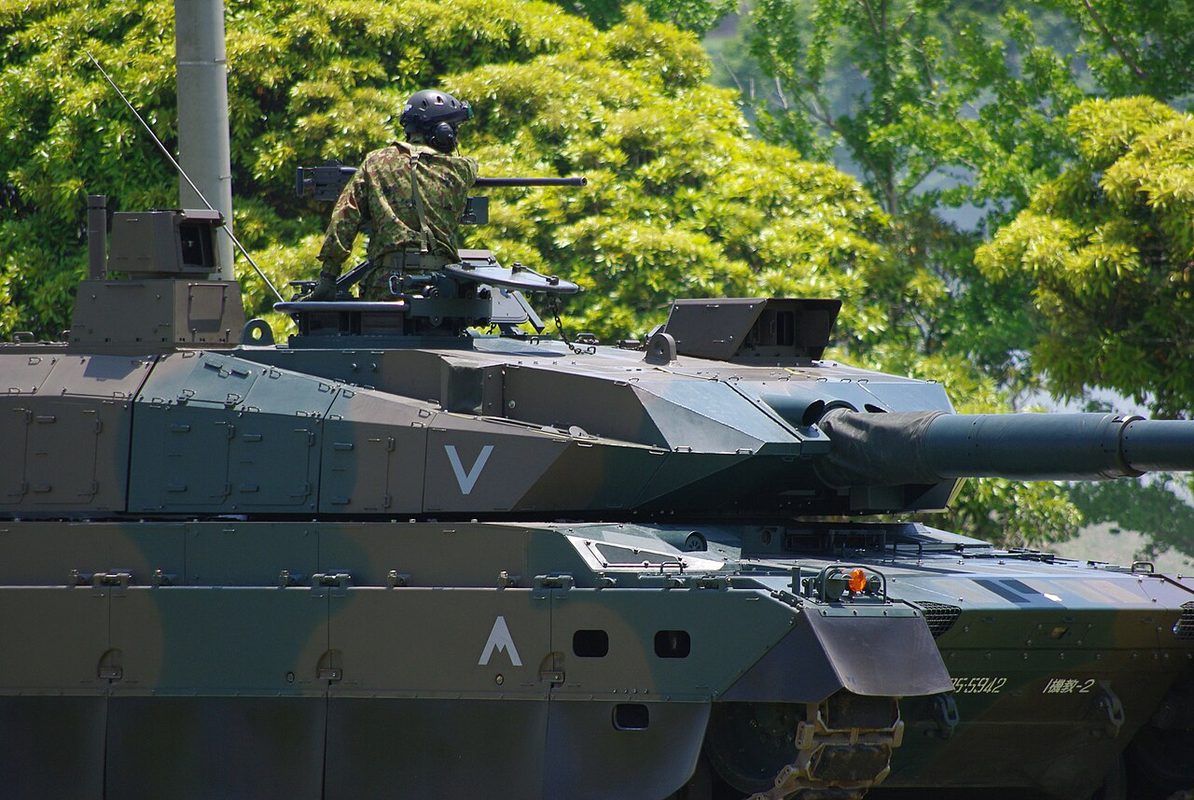
10. Type 10: Japan
The Type 10 is the lightest main battle tank in its class at 44 tons, designed for Japan's mountainous terrain and narrow roads. Photo via Wikimedia Commons.
Country: Japan | Weight: 44 tons | Armament: 120mm L/44 smoothbore, .50 cal M2HB, 7.62mm Type 74 coaxial
Japan's Type 10 earns its place on this list not through sheer weapon count but through the sophistication of its fire control. The Japan Steel Works 120mm gun uses an autoloader that can cycle rounds faster than any NATO tank's manual loading system, and the C4I network integration allows the Type 10 to share targeting data in real time with other vehicles in its unit. At 44 tons, it is significantly lighter than Western MBTs (a deliberate design choice for Japan's infrastructure), but it carries modular composite armor that can be configured based on the threat environment. The hit-first philosophy makes this tank more dangerous than its modest weapons list suggests.
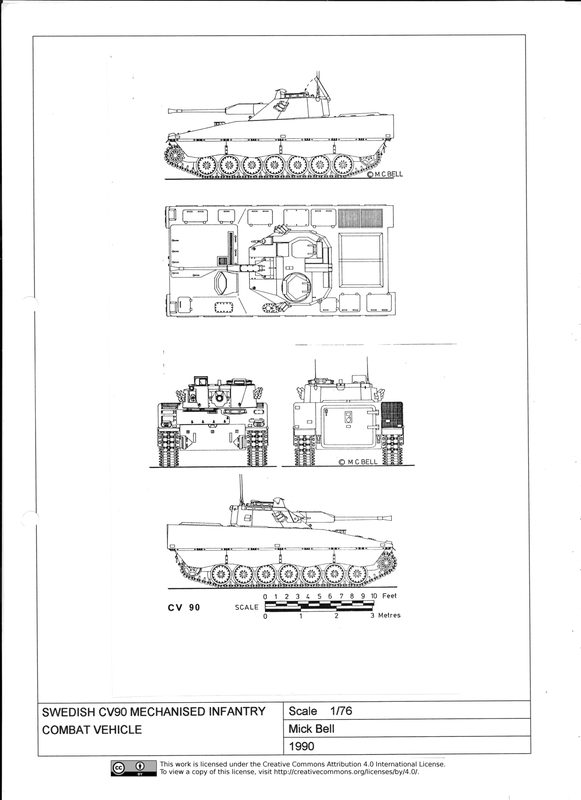
The CV90 mounts the most powerful autocannon fitted to any infantry fighting vehicle in service: the 40mm Bofors L/70. Photo via Wikimedia Commons.
Country: Sweden (BAE Systems Hägglunds) | Weight: 35 tons | Armament: 40mm Bofors L/70 autocannon, 7.62mm coaxial MG
The CV90 carries the most powerful autocannon fitted to any IFV in the world. The 40mm Bofors L/70 fires programmable airburst ammunition that detonates at a preset distance, turning each round into a precision fragmentation weapon effective against infantry, light vehicles, and low-flying helicopters. The gun's rate of fire and the programmable fusing give the CV90 a capability envelope that other IFVs with 25mm or 30mm guns simply cannot match. Some variants integrate Spike-LR anti-tank guided missiles, and the Norwegian variant carries a 30mm Bushmaster II. Over 1,300 CV90s are in service with seven nations.
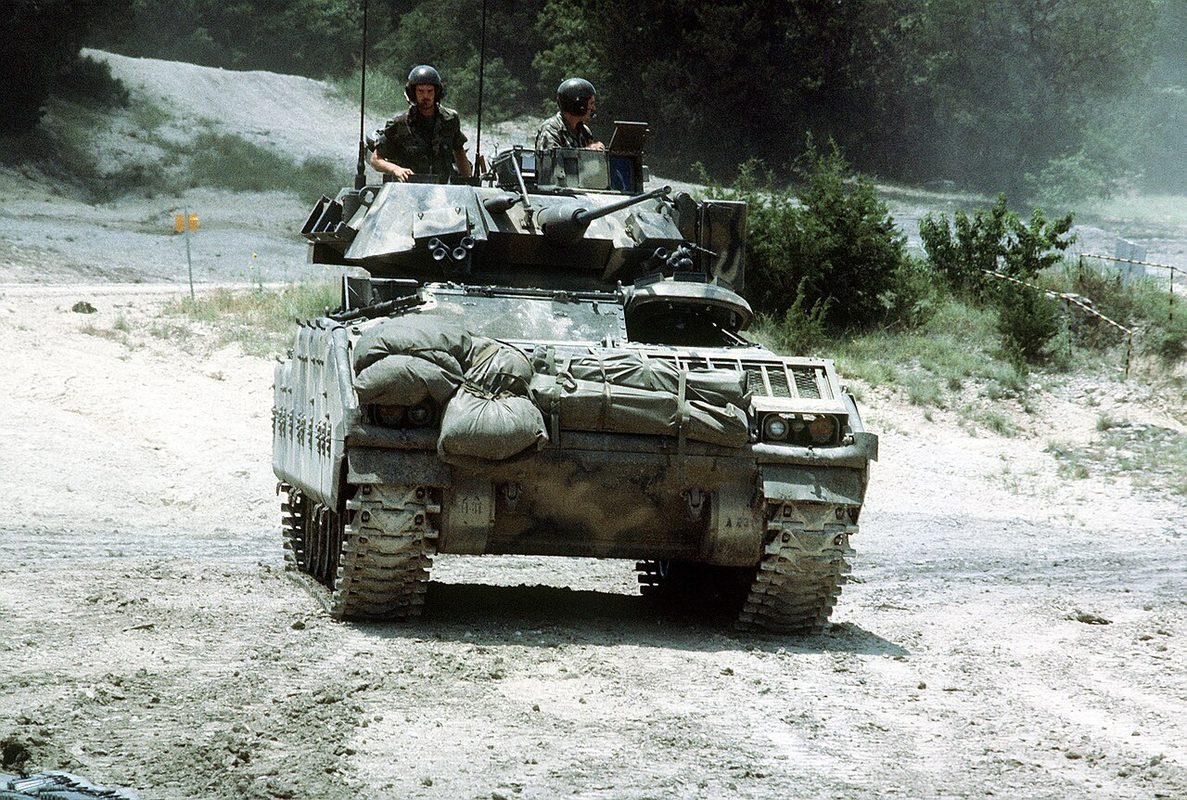
8. M2A3 Bradley: United States
The M2 Bradley has been the U.S. Army's primary infantry fighting vehicle since 1981, combining a 25mm chain gun with TOW anti-tank missiles. Photo via Wikimedia Commons.
Country: United States | Weight: 33 tons (A3 variant) | Armament: 25mm M242 Bushmaster chain gun, twin TOW ATGM launcher, 7.62mm M240C coaxial MG
The Bradley's combination of a rapid-firing 25mm chain gun and the TOW anti-tank guided missile system gives it the ability to engage everything from infantry positions to main battle tanks. The TOW 2B missile uses a top-attack flight profile that strikes the thin roof armor of enemy tanks, the most vulnerable part of any armored vehicle. The M242 Bushmaster fires both armor-piercing and high-explosive rounds at a selectable rate of 100 or 200 rounds per minute. Ukraine's experience with donated M2A2 ODS Bradleys has demonstrated the vehicle's remarkable durability in high-intensity combat, with multiple documented instances of Bradleys surviving direct hits from Russian anti-tank weapons and continuing to fight.
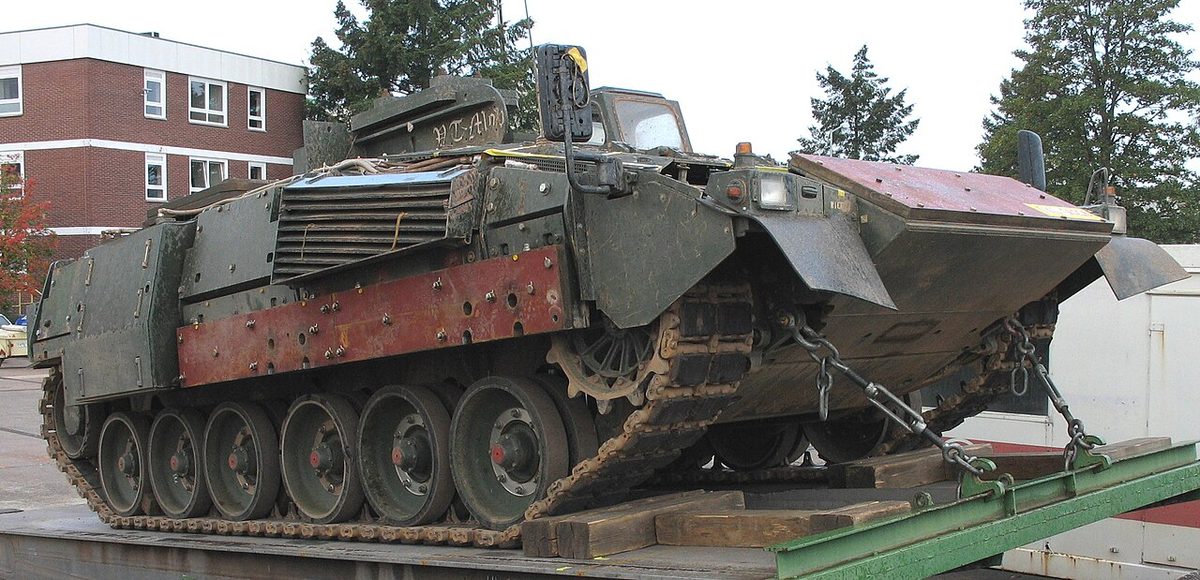
7. Puma IFV: Germany
The Puma is one of the most heavily protected IFVs ever built, weighing up to 43 tons in its highest protection level. Photo via Wikimedia Commons.
Germany's Puma represents the most advanced IFV in European service. Its 30mm MK 30-2/ABM autocannon fires AHEAD (Advanced Hit Efficiency And Destruction) programmable airburst ammunition that detonates in a precise fragmentation pattern around the target, devastatingly effective against infantry, light armor, and aerial targets including drones and helicopters. The Spike-LR missile gives it a fire-and-forget anti-tank capability at ranges up to 4 kilometers. At its highest protection level (Level C), the Puma weighs 43 tons (heavier than some main battle tanks), with armor rated to withstand 30mm cannon fire and mine blasts. The unmanned turret reduces crew exposure.
Meng's World War Toons line takes real WW2 vehicles and reimagines them in a stylized, cartoonish proportion. This Sherman kit snaps together without glue and requires no painting, making it a zero-barrier entry point into armor modeling.
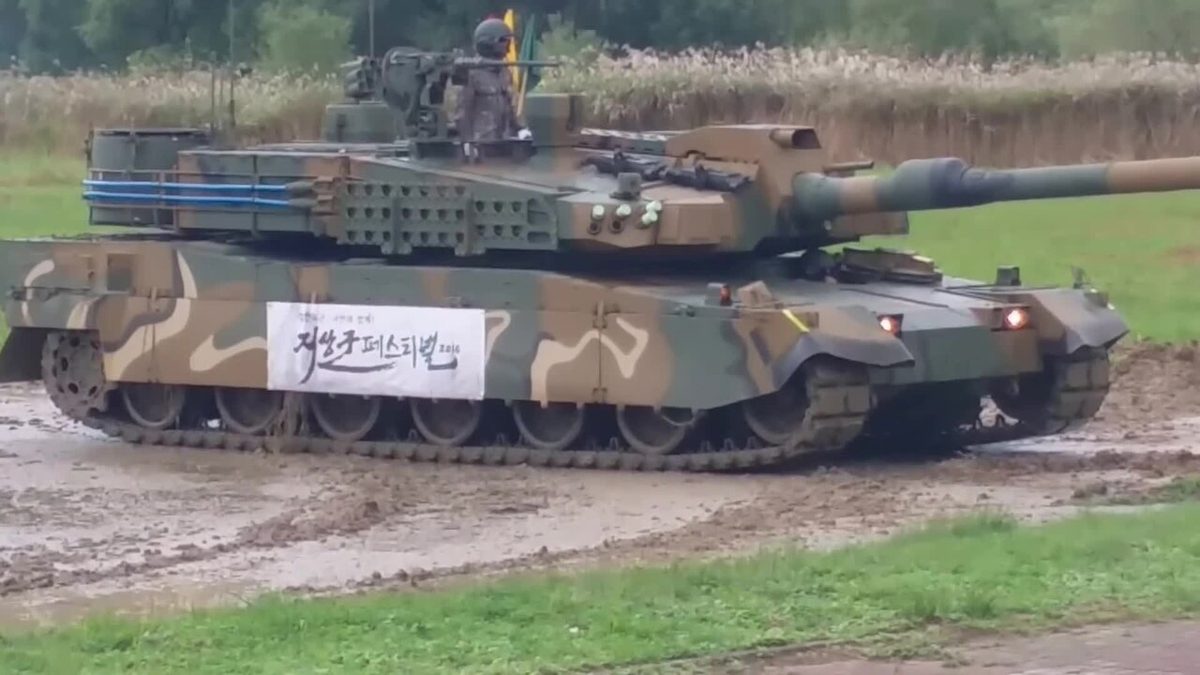
The K2 Black Panther features an autoloaded 120mm gun, advanced composite armor, and an active protection system. Photo via Wikimedia Commons.
Country: South Korea | Weight: 55 tons | Armament: 120mm Rheinmetall L/55 smoothbore (autoloaded), 12.7mm K6 RWS, 7.62mm coaxial MG
The K2 Black Panther is one of the most technologically sophisticated tanks ever built. Its Rheinmetall 120mm L/55 gun, the same length barrel as the Leopard 2A7, is fed by an automatic loader that can cycle 15 rounds per minute, faster than any manually loaded NATO tank. The fire control system includes a hunter-killer capability that allows the commander and gunner to engage separate targets simultaneously. The tank's in-arm suspension unit can actively adjust the hull's pitch and roll, allowing it to fire accurately while moving over rough terrain and even "kneel" to reduce its profile. An active protection system detects and defeats incoming anti-tank missiles, and the armor package combines composite and explosive reactive elements.
5. BMP-T Terminator: Russia
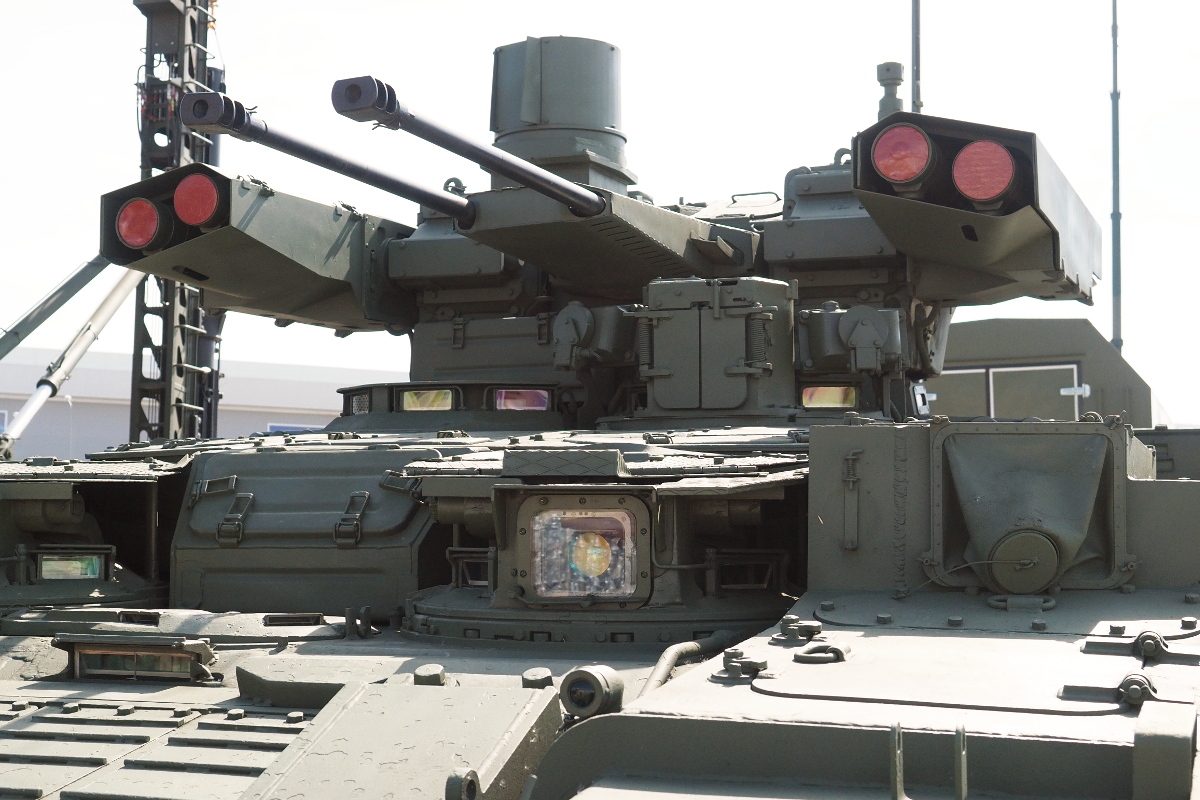
The BMP-T Terminator was designed from the ground up as a tank support vehicle, a concept unique to Russian armored doctrine. Photo from Army 2022 exhibition.
The BMP-T Terminator exists because Russian armored forces learned a brutal lesson in Grozny. During the First Chechen War in 1994-95, Russian tanks advancing into the city were ambushed from multiple angles (upper floors, basements, side streets) by infantry teams armed with RPGs. The tanks could not elevate their main guns high enough to engage upper-story positions, and their coaxial machine guns were insufficient to suppress multiple simultaneous threats. Entire tank columns were destroyed.
The Terminator was Russia's answer: a vehicle designed from the ground up to protect tanks by suppressing everything around them. The twin 30mm autocannons can elevate to +45 degrees, high enough to rake upper floors of buildings. The four Ataka missiles can destroy enemy armor at ranges up to 6 kilometers. The two automatic grenade launchers saturate infantry positions with fragmentation. Built on the T-72 chassis, the Terminator has the same mobility and protection as the tanks it escorts, and its five-person crew includes dedicated operators for the grenade launchers. No other army has built anything like it, because no other army has the specific doctrinal gap that produced it.
4. Leopard 2A7: Germany
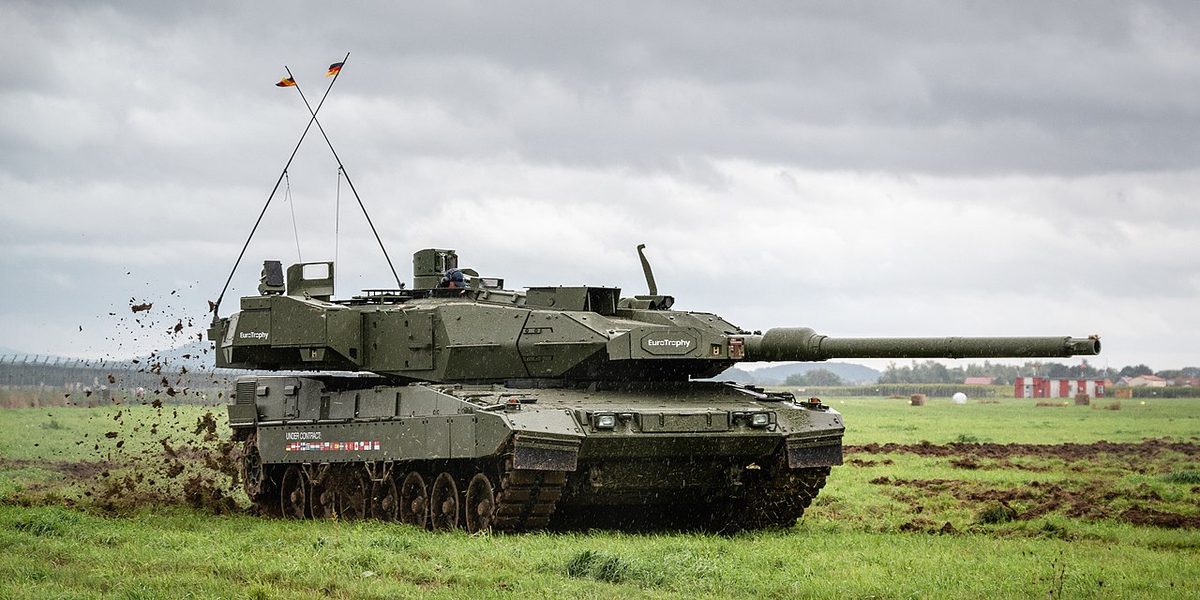
The Leopard 2A7 is considered the most accurate main battle tank in NATO service, with a fire control system that can engage targets at distances exceeding 4 kilometers. Photo via Wikimedia Commons.
A rattle-can primer that gives paint something to grip. Gray is the most versatile color for military subjects, and the 180ml can will prime 8-10 models in 1/72 or 3-4 in 1/48 scale.
The Leopard 2A7's weapons list looks shorter than several vehicles lower on this list, but the quality of its main armament and fire control system more than compensates. The Rheinmetall 120mm L/55 is the longest-barreled tank gun in NATO service, generating higher muzzle velocities and better armor penetration at long range than the L/44 carried by most other Western tanks. The ATTICA thermal imaging and EMES 15 fire control system give the Leopard 2A7 a first-round hit probability at 4,000 meters that is among the highest of any tank in the world. The vehicle weighs 67 tons, the heaviest operational MBT, and that mass translates directly into armor protection. Urban warfare upgrades on the A7V variant add a remotely operated weapon station, mine protection kit, and improved situational awareness cameras.
3. T-14 Armata: Russia
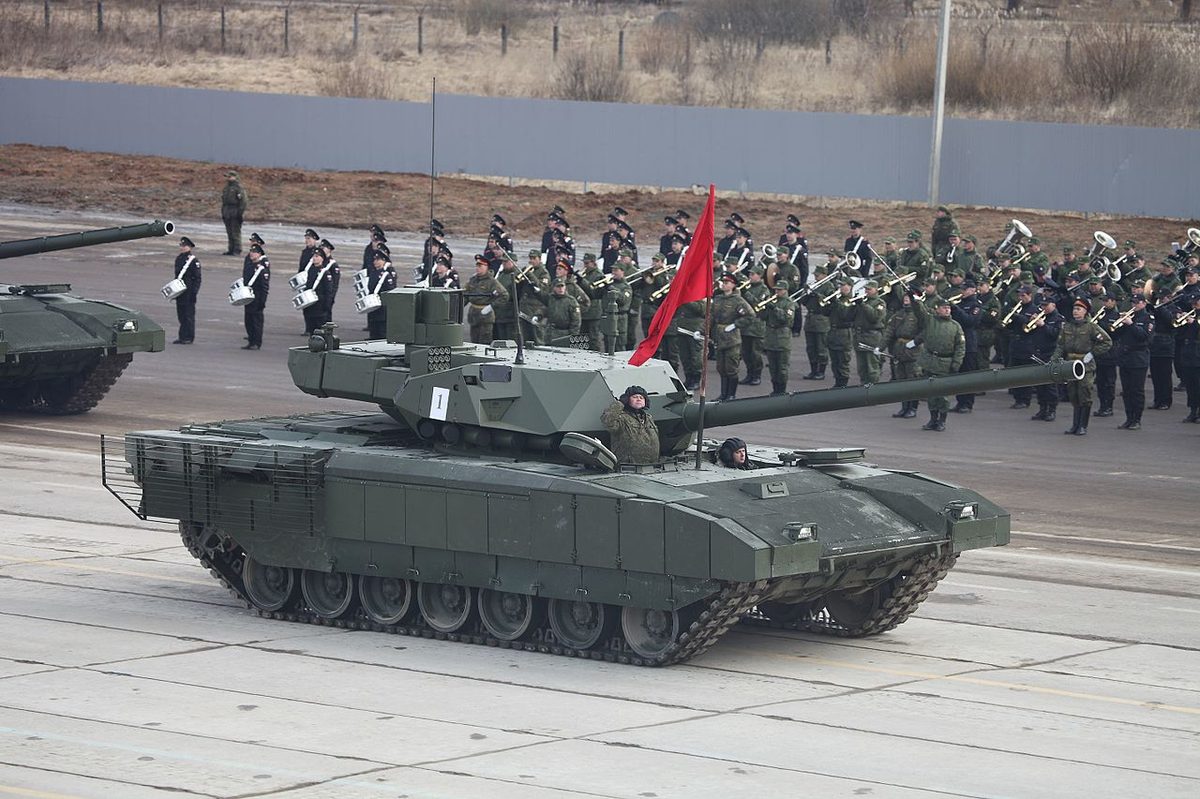
The T-14 Armata features the world's first unmanned turret on a production main battle tank, with the entire crew seated in an armored capsule in the hull. Photo via Wikimedia Commons.
Country: Russia | Weight: 55 tons | Armament: 125mm 2A82-1M smoothbore (autoloaded, unmanned turret), 12.7mm Kord RWS, 7.62mm PKTM coaxial MG, Afghanit active protection system
The T-14 Armata's headline feature is its fully unmanned turret, the first on any production main battle tank. The entire three-person crew sits in an armored capsule in the hull, separated from the ammunition and the turret mechanism. If the turret takes a hit, the crew survives. The 2A82-1M 125mm gun is reportedly more accurate and generates higher muzzle velocity than the 2A46M carried by the T-90, and the autoloader can handle longer-rod penetrators that improve armor defeat capability. The Afghanit active protection system uses radar to detect incoming projectiles and launches interceptor charges to destroy them before impact. Russia has built small numbers (perhaps 20 to 40) and the tank has not seen confirmed combat in Ukraine, raising persistent questions about whether it will ever achieve meaningful production numbers. As a technology demonstrator, however, the Armata represents the most ambitious tank design of the 21st century.
2. Merkava Mk 4: Israel
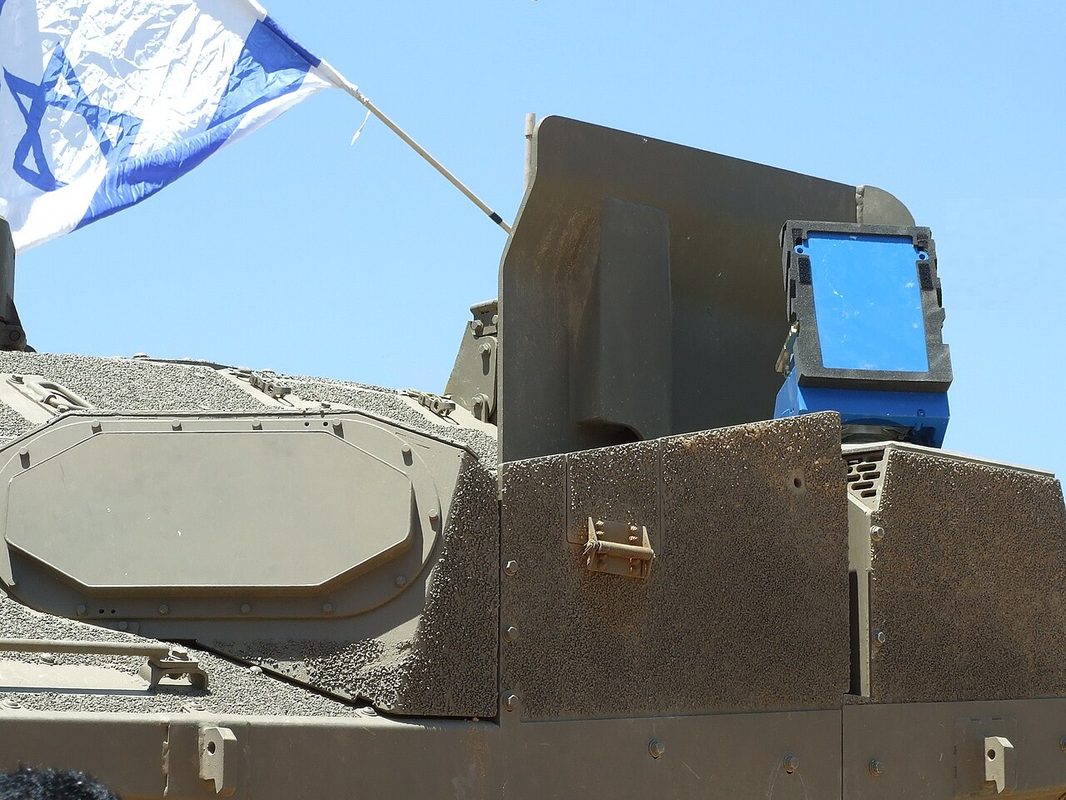
The Merkava Mk 4 with the Trophy active protection system is the most combat-proven combination of tank and APS in the world. Photo via Wikimedia Commons.
The Merkava Mk 4 carries a weapon that no other main battle tank in the world has: a 60mm mortar mounted inside the turret, fired through a dedicated port. The crew can launch mortar rounds at targets behind walls, in defilade, or in dead ground that the main gun cannot reach, an enormous advantage in urban combat and the kind of close-quarters fighting that the Israel Defense Forces train for relentlessly. The mortar fires both high-explosive and illumination rounds, giving the tank an organic indirect fire capability without needing to call for artillery support.
But the Merkava's most important weapon system is the Trophy (Windbreaker) active protection system. Trophy uses radar to detect incoming anti-tank missiles and RPG rounds, then fires a directed blast of metal fragments to intercept them before they reach the hull. It is the world's first combat-proven APS, having defeated thousands of anti-tank projectiles in Gaza operations. The combination of Trophy, the 120mm main gun, the 60mm mortar, and three machine guns makes the Merkava Mk 4 the most comprehensively armed tank in operational service. The rear-mounted engine also provides frontal protection and creates a rear compartment that can evacuate casualties, a design priority unique to Israeli doctrine, where crew survival is paramount.
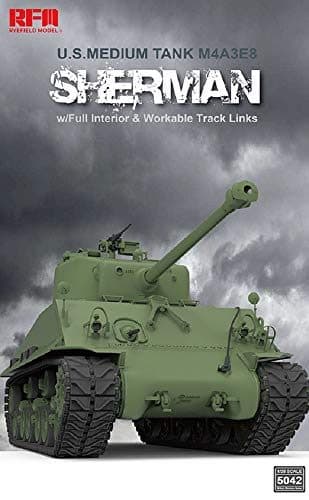
RFM's Sherman includes a complete interior with turret basket, 76mm gun breech, ammunition stowage, and driver/co-driver positions. The only full-interior Sherman in 1/35 that captures the "wet" ammunition stowage system that reduced the Sherman's notorious fire risk.
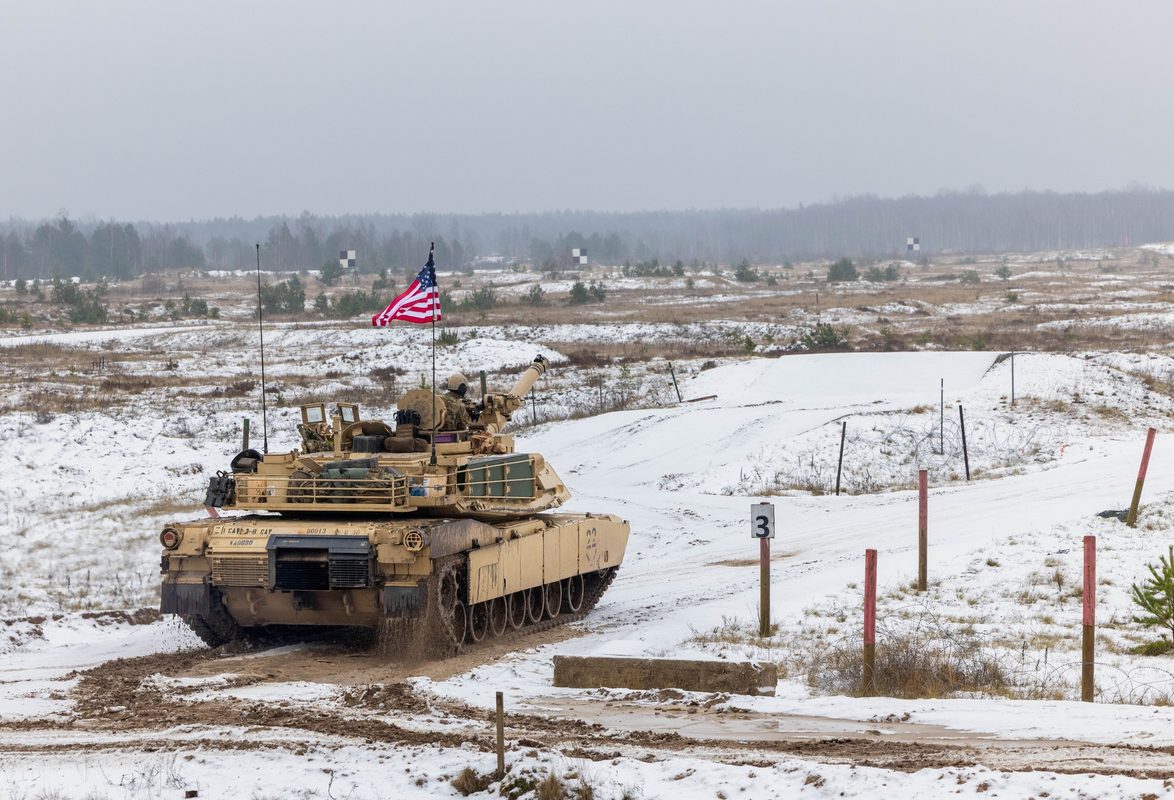
Soldiers from the 194th Armored Brigade conduct M1 Abrams gunnery training. The SEPv3 variant integrates the Trophy APS, a third-generation FLIR, and datalink ammunition. DVIDS photo.
Country: United States | Weight: 73.6 tons | Armament: 120mm M256A1 smoothbore, .50 cal M2HB commander's weapon, 2x 7.62mm M240 MG (1 coaxial, 1 loader's), Trophy APS, AMP multi-purpose round
The M1A2 SEPv3 Abrams takes the top spot not because it has the most weapons (the Merkava arguably wins that count) but because the integration of the Trophy active protection system with the most mature fire control, networking, and ammunition ecosystem of any tank gives it the most complete combat capability per hull.
The SEPv3's defining upgrade is the M829A4 Advanced Multi-Purpose (AMP) round, a single programmable tank round that replaces four previous ammunition types. The crew selects the mode before firing: point-detonating for bunkers and buildings, airburst for infantry and light vehicles, delay for double-walled structures, or canister for close-range area targets. One round, four kill mechanisms. No other tank has this capability. Combined with the existing M829A4 APFSDS sabot round for armor penetration, the Abrams can defeat any target type with two rounds in its ammunition mix.
The Trophy APS integration, first fitted to Abrams tanks from 2021, gives the SEPv3 the same active missile defense that has been combat-proven on the Merkava. The third-generation Forward-Looking Infrared (FLIR) provides enhanced target detection at night and in degraded visibility. The FBCB2/JCR network links the Abrams into the broader Army battlefield management system, sharing tracks and targeting data across the brigade. At 73.6 tons, the SEPv3 is the heaviest operational tank in the world, and every pound of that weight is armor, weapons, sensors, or the systems that make them work together.
What This List Reveals
The most heavily armed ground vehicles in the world are not simply the ones with the biggest guns. The trend across this list is clear: active protection systems, programmable ammunition, hunter-killer fire control, and networked targeting are becoming as important as the caliber of the main armament. A tank that can defeat an incoming missile, switch between four ammunition modes without reloading, and share a targeting solution with every other vehicle in its formation is more dangerous than one that simply fires a larger round.
The BMP-T Terminator remains the most conceptually radical vehicle on this list. No other army has built a vehicle whose sole purpose is to protect other vehicles. Whether that concept proliferates or remains a uniquely Russian answer to a uniquely Russian problem will depend on what the next generation of urban warfare demands from armored forces.
Frequently Asked Questions
What is the most heavily armed infantry fighting vehicle?
The BMP-T Terminator carries the most weapons of any infantry-class fighting vehicle: twin 30mm autocannons, four Ataka anti-tank guided missiles, two automatic grenade launchers, and a coaxial machine gun. However, if measured by single-weapon destructive power, the Swedish CV90 with its 40mm Bofors autocannon fires the most powerful rounds of any IFV cannon. The German Puma with its programmable airburst 30mm ammunition and Spike missiles offers the most technologically advanced weapons suite.
Does the Merkava Mk 4 really have a mortar inside the tank?
Yes. The Merkava Mk 4 has a 60mm mortar mounted internally in the turret, fired through a dedicated port. The crew can launch high-explosive and illumination mortar rounds at targets behind cover, in defilade, or at angles the main gun cannot reach. This is an organic indirect fire capability unique to the Merkava, no other main battle tank in the world has an internal mortar system. It was developed based on Israel's extensive experience with urban and close-quarters armored combat.
Has the T-14 Armata been used in combat?
As of early 2026, the T-14 Armata has not been confirmed in combat in Ukraine or any other conflict. Russia has built a small number of T-14s, estimated at 20 to 40 vehicles, but has not deployed them to the front lines. The reasons likely include the tank's high unit cost, concerns about losing the technology to Western intelligence if a vehicle is captured, and limited production capacity at Uralvagonzavod, which is focused on producing and refurbishing T-72 and T-90 tanks for the ongoing war.