David Kowalski writes about missile systems, air defense networks, and the technology behind precision strike warfare. His work examines how offensive and defensive missile capabilities shape the balance of power between nations.
Two missiles where ATACMS fits one. Twice the range. GPS-denied capable. The Precision Strike Missile is a weapon fired from a truck that can reach targets more than 500 kilometers away with pinpoint accuracy. The PrSM is not an upgrade to the Army's long-range strike capability. It is a replacement for everything that came before.
For three decades, the Army Tactical Missile System was the longest-range weapon in the ground forces' arsenal. ATACMS could strike targets up to 300 kilometers away, launched from either the M270 Multiple Launch Rocket System or the lighter M142 HIMARS. It was a capable weapon, but it had limitations that became increasingly apparent as potential adversaries pushed their own anti-access systems to ranges that ATACMS could not reach. The Army needed something that could shoot farther, hit harder, and fit more efficiently on the launchers already in the field.
The Precision Strike Missile, built by Lockheed Martin, answers every one of those requirements. And its increment roadmap suggests the weapon system the Army fields today is only the beginning.
What PrSM Is and Why ATACMS Had to Go
ATACMS entered service in 1991. It was a Cold War weapon designed to hit fixed targets behind enemy lines: supply depots, command posts, air defense batteries, and troop concentrations. At 13 feet long and roughly 3,700 pounds, each ATACMS missile occupied an entire HIMARS pod. One launcher, one missile. Fire, relocate, reload.
PrSM is fundamentally different. At 13 feet long but only 17 inches in diameter, it is sleeker and lighter than ATACMS. This smaller profile means two PrSM missiles fit in the same launch pod that previously held one ATACMS. A single HIMARS can now carry two rounds instead of one. An M270 MLRS, which carries two pods, goes from two ATACMS to four PrSMs. The Army effectively doubled its launcher capacity without building a single new vehicle.
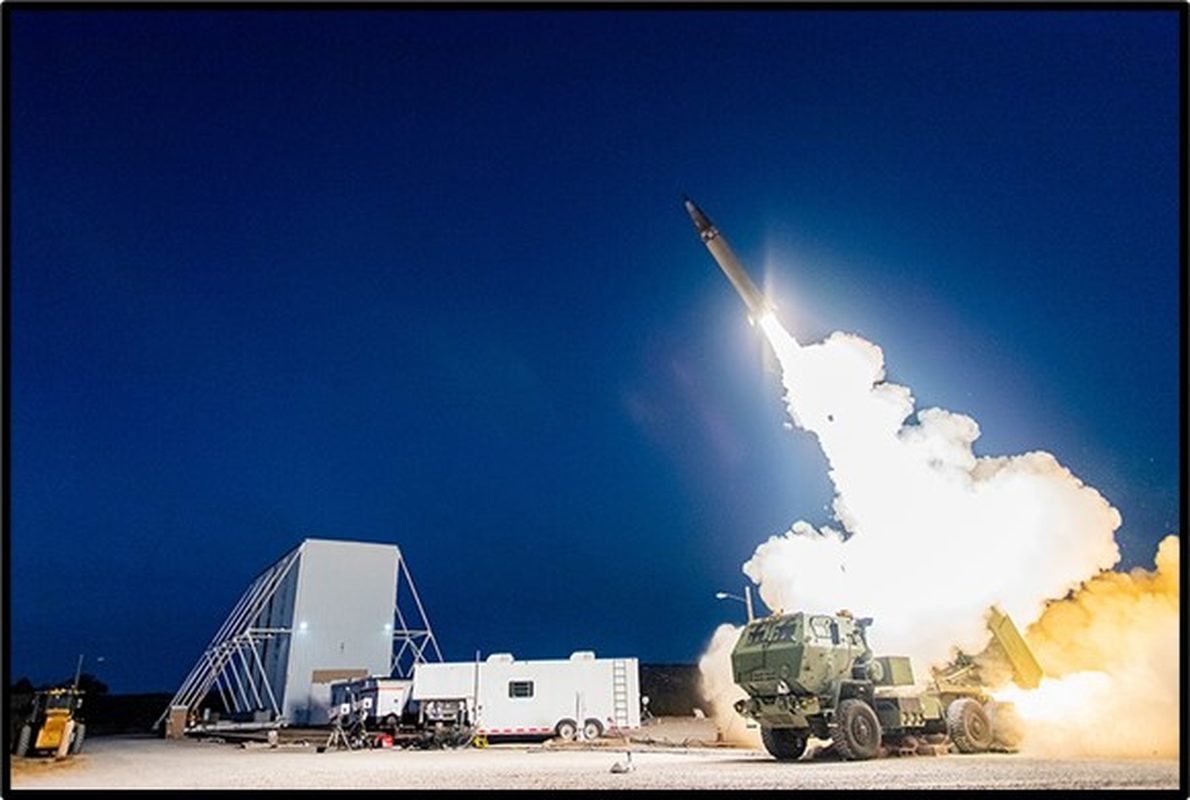
A Precision Strike Missile Increment 1 launches during a successful production qualification test at White Sands Missile Range, New Mexico, February 12, 2025. The test validated the production-representative missiles prior to fielding. (Photo: U.S. Army / Darrell Ames)
Range is the more dramatic improvement. ATACMS maxed out at roughly 300 kilometers, a limitation partially imposed by the now-defunct Intermediate-Range Nuclear Forces Treaty, which prohibited the United States from fielding ground-launched missiles with ranges between 500 and 5,500 kilometers. When the U.S. withdrew from the INF Treaty in August 2019, that restriction vanished. PrSM Increment 1, the version currently in service, exceeds 500 kilometers. Future increments are expected to reach beyond 1,000 kilometers.
The unit cost is also competitive. Each PrSM Increment 1 missile costs less than $3.5 million, roughly comparable to a late-production ATACMS. When you factor in the doubled launcher capacity, the cost-per-engagement drops significantly.
The Increment Roadmap: From Ground Attack to Ship Killer
PrSM's development is structured in increments, each adding capability that transforms the missile from a point-target weapon into a multi-domain strike system.
Increment 1 is the baseline. It uses inertial navigation with GPS guidance to strike fixed ground targets at ranges exceeding 500 kilometers. The 200-pound warhead is sufficient against command posts, air defense radars, logistics nodes, and other hardened or semi-hardened targets. Increment 1 achieved its first delivery to the Army on December 8, 2023, and reached initial operational capability shortly after.
Increment 2 adds a seeker. Specifically, it incorporates an anti-ship capability through an infrared imaging seeker and possibly an anti-radiation homing mode. This turns PrSM into a weapon that can hit moving targets at sea, a capability the Army has not possessed since it retired the MGM-140 ATACMS Block IA in the early 2000s. Increment 2 transforms every HIMARS battery into a potential anti-ship missile battery, giving ground forces the ability to threaten naval vessels from dispersed positions on land. In the Indo-Pacific, where U.S. Marines and Army units are expected to operate from small islands across vast ocean distances, a shore-launched anti-ship missile with 500-plus-kilometer range changes the operational calculus entirely.
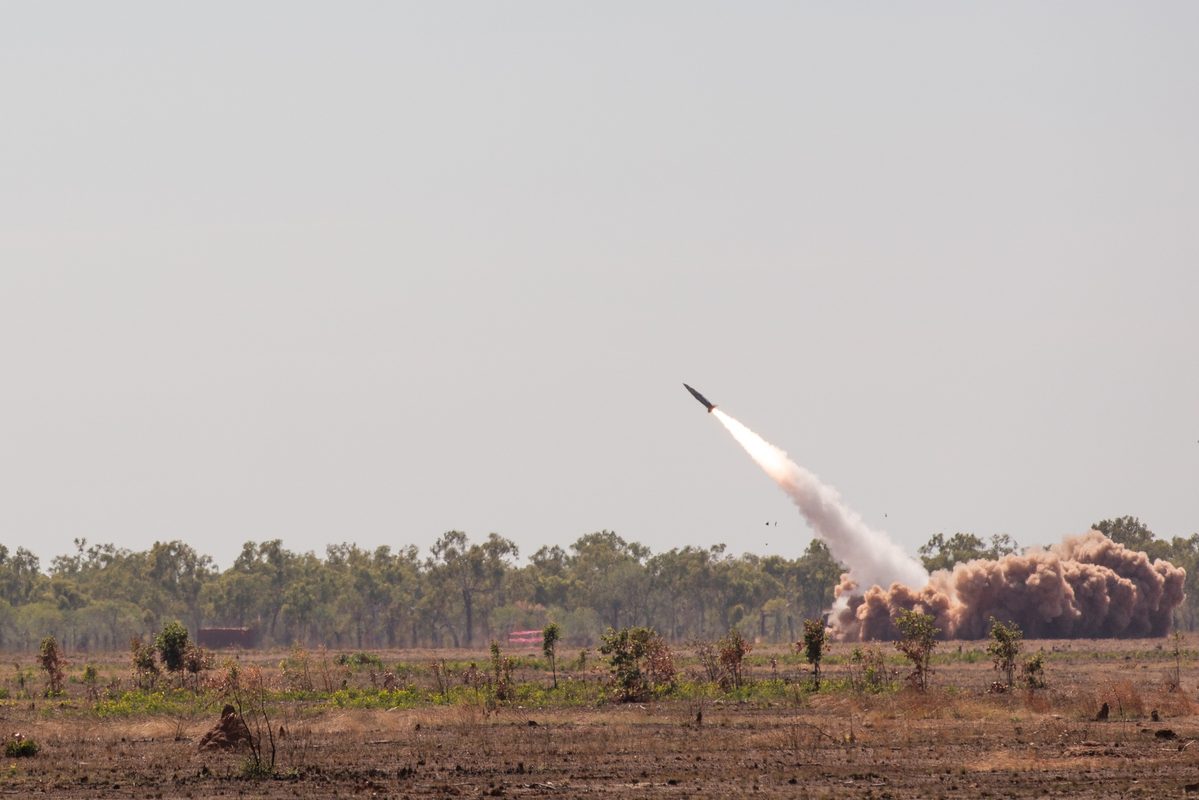
An ATACMS fires from a HIMARS during Exercise Talisman Sabre 2023 in Australia's Northern Territory. PrSM replaces ATACMS with double the range and double the capacity per launcher, while maintaining compatibility with the same HIMARS and M270 platforms. (Photo: U.S. Army / Sgt. 1st Class Andrew Dickson)
Increments 3 and 4 push range beyond 1,000 kilometers through advanced propulsion technologies. Australia is a co-development partner on these extended-range variants, having signed a memorandum of understanding in July 2021 with a $54 million contribution and committing to Increments 3 and 4 in January 2024. The Australian Defence Force plans to integrate PrSM onto its own HIMARS batteries, giving both nations a common long-range strike weapon that can be produced and maintained through shared industrial capacity.
Increment 5 remains in early development but is expected to incorporate further guidance improvements and potentially a different warhead configuration for specialized target sets.
How PrSM Transforms HIMARS From Tactical to Strategic
Before PrSM, HIMARS was a tactical weapon. A 300-kilometer range meant it could hit targets in the immediate operational area, behind the enemy's front lines but not deep into their strategic rear. PrSM changes that classification.
At 500-plus kilometers, a HIMARS battery positioned in eastern Poland can reach targets in western Russia. A battery in northern Australia can threaten naval forces across the Indonesian straits. A battery on a Pacific island can deny access to hundreds of kilometers of ocean. These are strategic effects achieved by a weapon system that fits on a single truck, can be airlifted by a C-130, and can shoot and relocate in minutes.
The Army's concept for employing PrSM centers on dispersed operations. Instead of massing artillery in concentrated batteries, HIMARS units can spread across wide areas, making them harder to target with counter-battery fire or air attack. Each launcher is a self-contained firing unit. It receives targeting data over a digital fire control network, fires one or two PrSM rounds, and displaces to a new position before the enemy can respond.
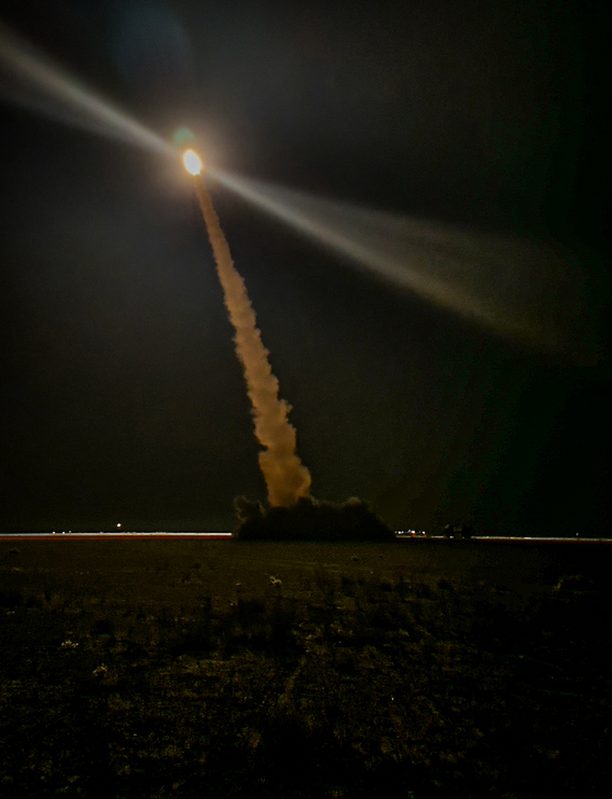
Soldiers from Bravo Battery, 2nd Battalion, 300th Field Artillery fire a GMLRS rocket from a HIMARS during a live-fire exercise in northeast Syria, October 2024. The same HIMARS platform that fires standard rocket artillery can now carry PrSM for strikes at five times the distance. (Photo: U.S. Army / Sgt. Jamie Robinson)
This operational concept, sometimes called "distributed fires," is central to the Army's Multi-Domain Operations doctrine. PrSM gives ground-based artillery the ability to contribute to the joint deep fight, striking targets that previously required air-launched cruise missiles like the JASSM or naval strikes. A brigade commander with organic HIMARS and PrSM no longer needs to request air support to hit a target 400 kilometers away. The fires are under Army control, responsive to Army timelines, and available even when air superiority is contested.
The Anti-Ship Variant and the Pacific Calculus
Increment 2's anti-ship seeker may ultimately be PrSM's most consequential capability. The U.S. Marine Corps and Army are both developing concepts for operations in the western Pacific that depend on the ability to threaten Chinese naval forces from dispersed island positions. The Marine Littoral Regiment, designed to operate on small islands with minimal logistics support, would benefit enormously from a missile that can sink ships from shore.
Currently, the Army and Marines use the Naval Strike Missile for this role, a capable weapon but one with a range of roughly 185 kilometers. PrSM Increment 2, with a range exceeding 500 kilometers and an imaging seeker capable of identifying and tracking a ship, would provide coverage across a dramatically larger ocean area. A single HIMARS battery on a Pacific island, armed with four PrSM anti-ship missiles, could deny access to thousands of square kilometers of ocean.
The integration of ground-launched anti-ship missiles into the joint force represents a fundamental shift in how the United States approaches maritime warfare. For decades, ship-killing was the province of the Navy and Air Force. PrSM gives the Army and Marines a seat at that table, and it does so with a weapon system that is far cheaper and more survivable than the air and naval platforms it complements.
PrSM does not make ATACMS obsolete in retrospect. ATACMS served its role well for thirty years. But the Precision Strike Missile was designed for a different world, one where range matters more than ever, where every launcher must carry maximum firepower, and where the ability to strike from the ground at ranges previously reserved for aircraft is no longer a luxury. It is a requirement.