Skip to content
April 17:Bay of Pigs Invasion Begins65yr ago

How the US Army Trains Tank Crews by Putting Them Through the Hardest 2 Weeks in the Military

James Holloway · · 11 min read
Save
Share:
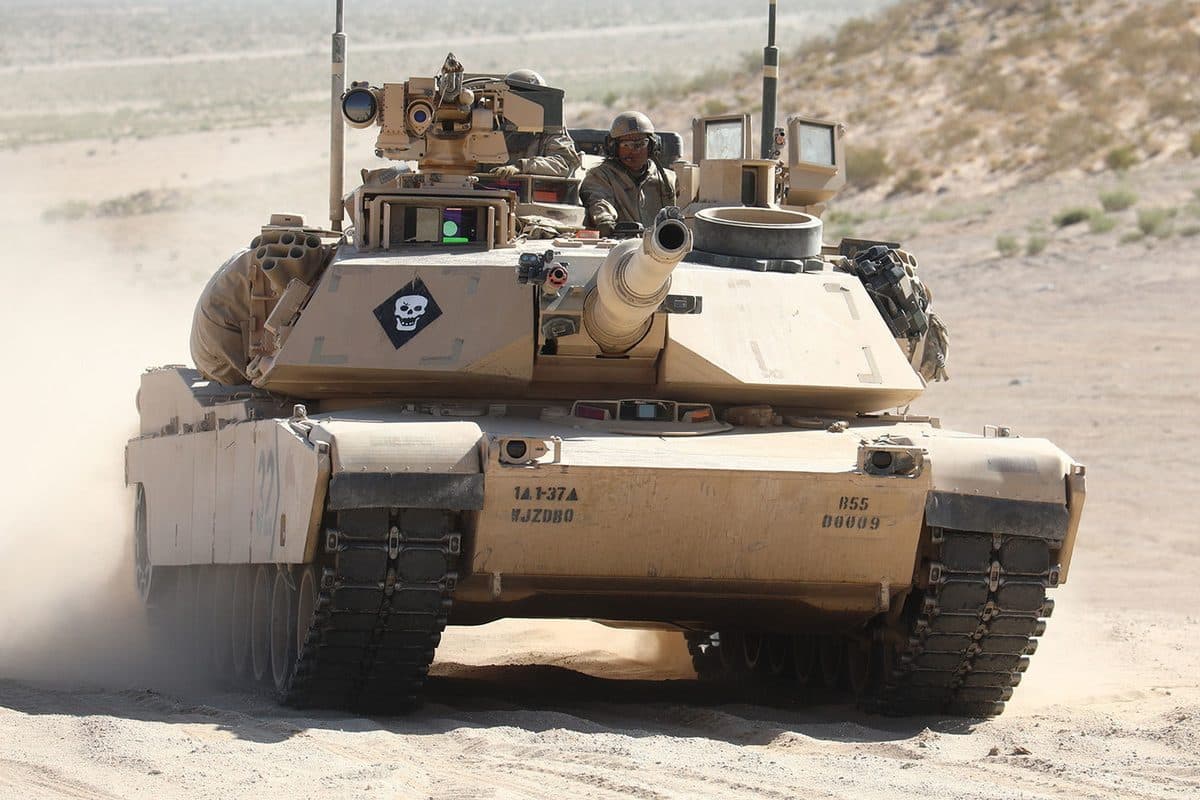
An M1A2 Abrams tank during a training exercise at the National Training Center, Fort Irwin, California
James Holloway
James Holloway

Military Logistics & Sustainment Analyst

James Holloway writes about military readiness, logistics, and the practical limits of modern forces. His work focuses on how training, sustainment, and organizational decisions shape what militaries can actually do -- not just what they are designed to do on paper.

At Fort Irwin, the enemy wins. That is the point. The National Training Center occupies over 1,000 square miles of California's Mojave Desert, and for more than four decades it has served one purpose: to give Army brigade combat teams the most realistic, punishing, and instructive combat training experience possible. The opposing force knows every ridge, every wadi, and every kill zone. They have fought on this terrain thousands of times. The visiting units have not. And when the visiting units lose, which they usually do, they learn things about combined arms warfare that no classroom, no simulation, and no smaller-scale exercise can teach.

The National Training Center is where the Army stress-tests its units before sending them to war. Since its activation in 1981, NTC has trained every major Army formation that has deployed to combat, from Desert Storm through Iraq, Afghanistan, and the current posture in Europe and the Pacific. Units that rotate through NTC consistently perform better in actual combat than those that do not. The reason is straightforward: NTC breaks units down, exposes their weaknesses in brutal after-action reviews, and forces them to adapt under conditions that are as close to real combat as peacetime training allows.

The Box: 1,000 Square Miles of Desert Battlefield

NTC's training area, universally called "the Box," covers more than 1,000 square miles of high desert terrain in San Bernardino County, roughly midway between Los Angeles and Las Vegas. The terrain is severe: rocky mountains, sand flats, deep wadis, and sparse vegetation under a sun that pushes temperatures above 120 degrees in summer. The Box is large enough to maneuver an entire brigade combat team with all of its organic elements, including tanks, infantry fighting vehicles, artillery, logistics trains, and aviation assets.

The Box includes purpose-built training villages that replicate urban environments, ranging from small hamlets to a large town called "Razish" that includes multi-story buildings, markets, mosques, and underground tunnel networks. The terrain supports everything from mounted desert warfare to counterinsurgency operations in complex urban terrain.

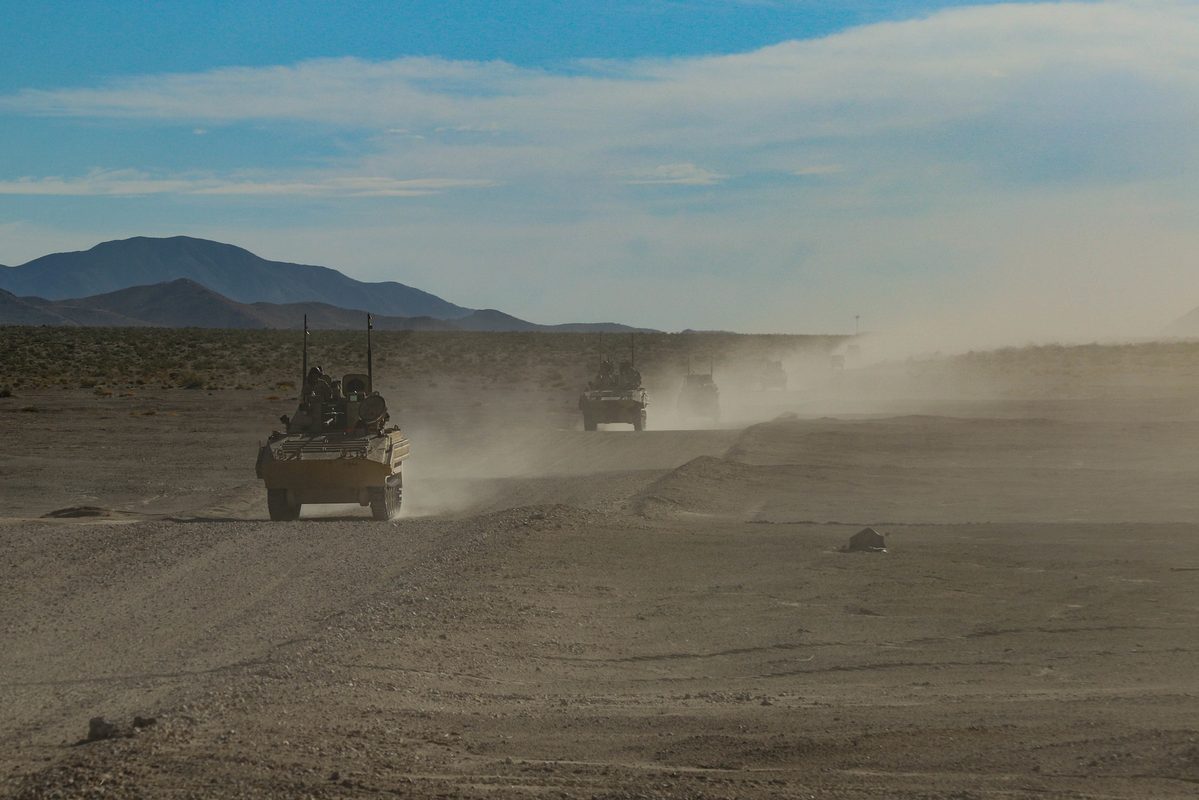
Main battle tanks and OPFOR surrogate vehicles push forward during a force-on-force exercise at the Whale Gap, National Training Center
Tanks and OPFOR surrogate vehicles push forward in an attempt to capture the Whale Gap during a National Training Center exercise. The Whale Gap is one of several named terrain features in "the Box" that has become a legendary kill zone where the 11th ACR routinely defeats visiting units. (Photo: U.S. Army / Spc. Angel Heraldez)

A typical NTC rotation lasts two to three weeks, though the unit begins preparation months in advance. The brigade deploys to Fort Irwin with its full complement of equipment and personnel, sometimes exceeding 5,000 soldiers. Once in the Box, the unit conducts a series of increasingly complex tactical problems: movement to contact, deliberate attack, defense, logistics resupply under fire, and stability operations. Each phase is designed to test different aspects of the brigade's warfighting capability.

The OPFOR: The Most Experienced Enemy in the World

The opposing force at NTC is the 11th Armored Cavalry Regiment, known as the "Blackhorse Regiment." The 11th ACR has been permanently stationed at Fort Irwin since 1994, and its sole mission is to serve as the OPFOR. Every trooper in the regiment trains, fights, and lives on this terrain full-time. They rotate against visiting brigades year-round, typically ten or more rotations per year. By the time a Blackhorse trooper has been at Fort Irwin for two years, they have fought more force-on-force engagements than most combat veterans.

The OPFOR does not fight like Americans. The 11th ACR uses enemy tactics, techniques, and procedures modeled on likely adversaries, including near-peer conventional forces. During the Cold War, OPFOR replicated Soviet doctrine. After 9/11, they adapted to emulate insurgent and hybrid threats. Today, with the Army refocused on large-scale combat operations, the Blackhorse Regiment again fights as a conventional mechanized force using tactics inspired by Russian, Chinese, and other potential adversary doctrine.

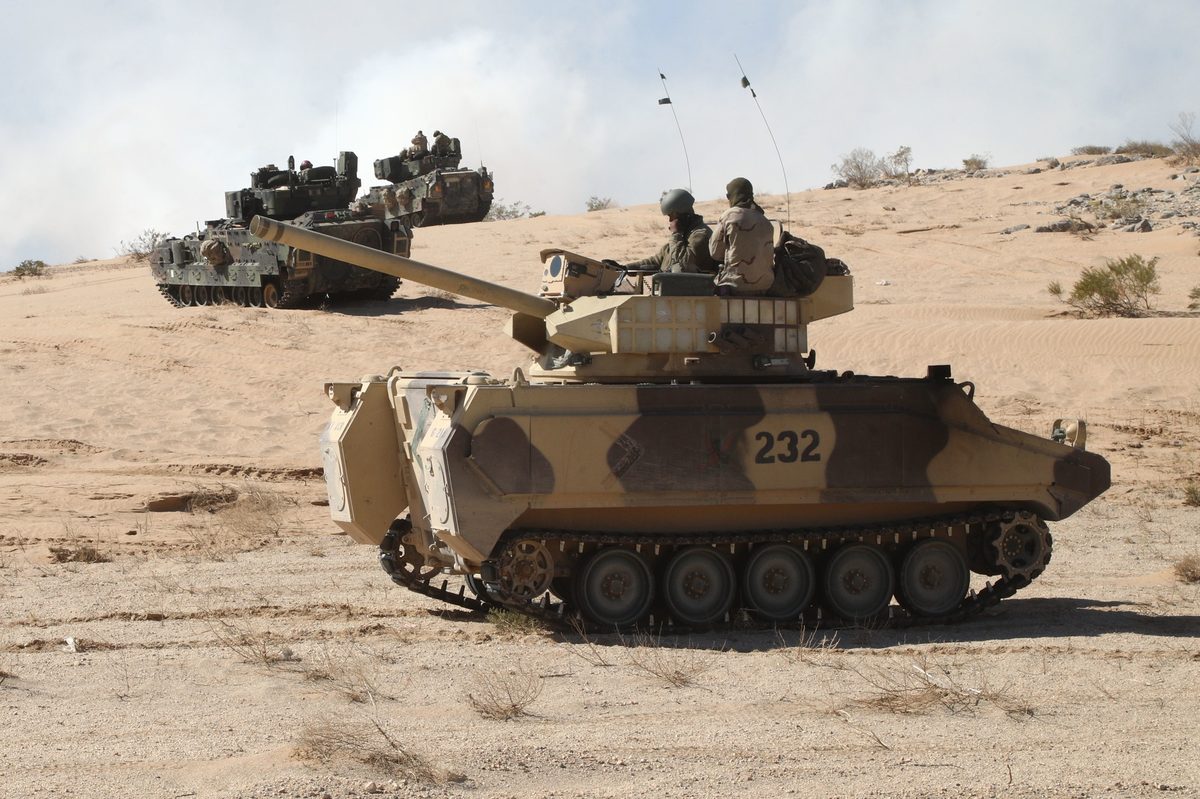
Soldiers of the 11th Armored Cavalry Regiment acting as the opposing force engage simulated enemy targets during a Decisive Action Rotation at Fort Irwin
Soldiers of the 11th Armored Cavalry Regiment, acting as the opposing force, engage simulated targets during Decisive Action Rotation 20-04 at Fort Irwin, February 2020. The Blackhorse Regiment's troopers fight on this terrain year-round and know every kill zone, every approach, and every choke point. (Photo: U.S. Army / Spc. Nathan Franco)

The OPFOR's greatest advantage is terrain knowledge. The Blackhorse troopers know where the kill zones are because they have fought in them hundreds of times. They know which valleys canalize movement, which ridgelines provide observation, and which approach routes visiting units invariably choose. A visiting brigade commander seeing the terrain for the first time is fighting a force that has memorized every feature of the battlefield. This asymmetry is deliberate. In real combat, defenders usually know the terrain better than attackers. NTC replicates that advantage ruthlessly.

In December 2021, the 11th ACR received M1A2 SEP V2 Abrams tanks for the first time in regiment history, upgrading from the surrogate vehicles and older platforms they had previously used. The addition of modern main battle tanks to the OPFOR fleet made the Blackhorse Regiment an even more formidable adversary.

MILES: Laser Tag for Tanks

Force-on-force training at NTC uses the Multiple Integrated Laser Engagement System, universally known as MILES. Every weapon system in the exercise, from individual rifles to tank main guns, is equipped with a laser transmitter. Every vehicle and soldier wears laser detectors. When a weapon fires, it emits a coded laser pulse. If the pulse hits a detector on an opposing vehicle or soldier, the system registers a hit, a kill, or a near-miss based on the weapon type and range.

For tanks, MILES simulates the lethality of 120mm main gun rounds and coaxial machine guns. A tank "killed" by MILES has its systems shut down, its beacon starts flashing, and the crew must cease operations. The system records every engagement, providing data that feeds directly into after-action reviews. There is no ambiguity about who shot whom, when, and from what position.

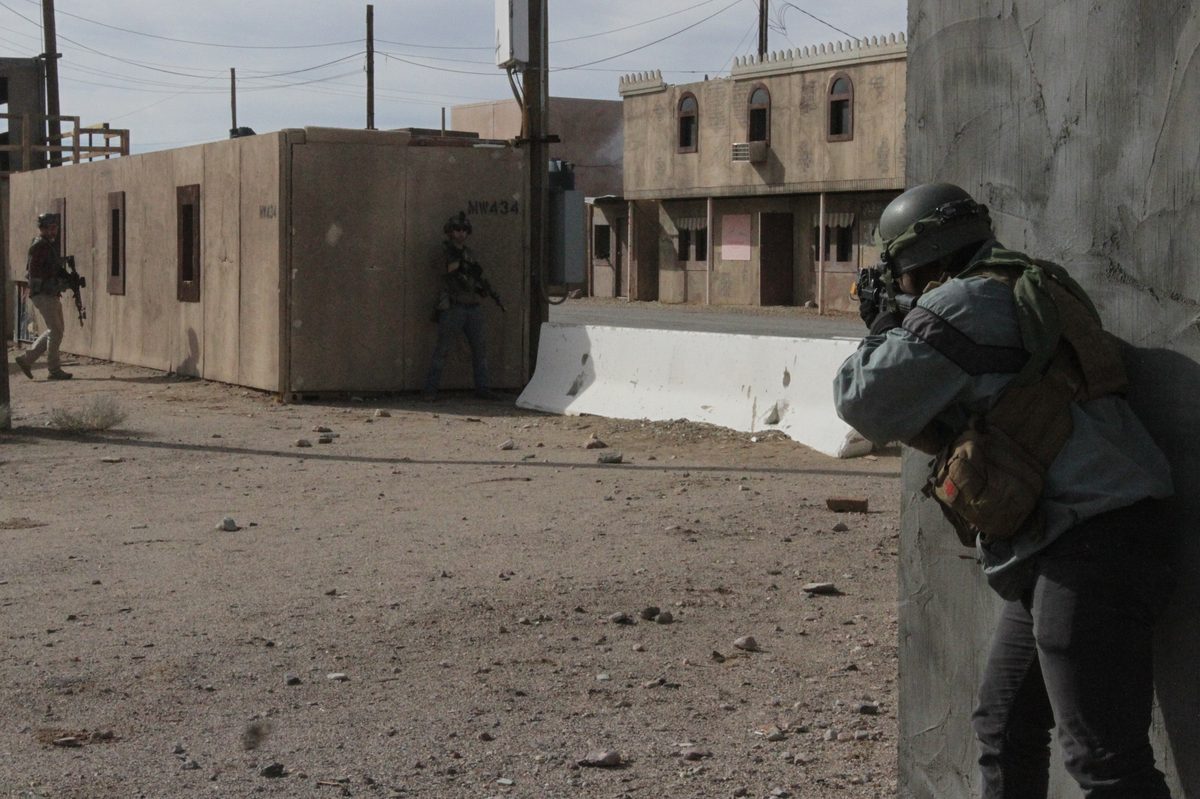
11th Armored Cavalry Regiment troopers maintain defensive positions in the training city of Ujen at the National Training Center
Troopers of the 11th Armored Cavalry Regiment maintain positions in Ujen, a purpose-built urban training complex at NTC, against elements of the 3rd Brigade Combat Team, 1st Cavalry Division, January 2019. OPFOR units train in both open desert and complex urban terrain. (Photo: U.S. Army / Spc. Angel Heraldez)
MILES has limitations. It cannot replicate the effects of artillery, air strikes, or mines with perfect fidelity, though controllers adjudicate those effects based on positioning and tactical employment. The system also cannot simulate the psychological impact of real explosions and incoming fire, though the use of blank ammunition, pyrotechnics, and simulated chemical attacks adds stress that approaches realistic levels.

Despite its imperfections, MILES provides the essential ingredient that no simulation can replicate: a thinking, reacting enemy that fights back. A tank crew cannot beat MILES by memorizing a script. They beat it by executing their tactics better than the OPFOR executes theirs. And at NTC, that is an extremely high bar.

Observer-Controller/Trainers: The Real Teachers

The most important people at NTC are not the OPFOR. They are the Observer-Controller/Trainers, known as OC/Ts. These are experienced officers and noncommissioned officers embedded with the visiting unit at every level from brigade headquarters down to platoon. They observe everything. They record everything. And after every engagement, they conduct after-action reviews that are among the most honest and uncomfortable conversations in the military.

OC/Ts do not intervene in the fight. They watch the visiting unit plan, execute, and adapt, or fail to adapt. They note when a company commander failed to synchronize his maneuver with supporting fires. They record when a tank platoon drove into a kill zone because the platoon leader did not conduct a proper terrain analysis. They track when logistics convoys were ambushed because the support battalion did not coordinate convoy security.

A tactical vehicle assigned to the National Training Center observer controller trainer team sits at an observation point at Fort Irwin
An observer-controller/trainer vehicle positioned at an observation point overlooking the training area at the National Training Center. OC/Ts are embedded with visiting units at every echelon, recording every decision and every mistake for the after-action review. (Photo: U.S. Army)

The after-action review, or AAR, is where the real learning happens. AARs at NTC are not polite briefings where everyone agrees the exercise went well. They are forensic examinations of what happened, why it happened, and what the unit needs to do differently. OC/Ts present MILES data, map overlays, and timeline reconstructions that leave no room for self-deception. A battalion commander who believes his unit performed well may discover, through objective data, that his tanks were destroyed in the first ten minutes because his scouts failed to identify the OPFOR's main defensive position.

This culture of honest assessment is NTC's most valuable product. Units leave Fort Irwin knowing exactly where they failed and why. Commanders who rotated through NTC before deploying to Iraq and Afghanistan consistently reported that the NTC experience was more demanding than their actual combat deployments, not because the OPFOR was more dangerous than real enemies, but because the structured feedback forced them to confront their weaknesses in ways that combat alone does not.

Why Losing at NTC Makes Units Better at War

The deliberate difficulty of NTC rotations serves a specific purpose. The Army's training philosophy holds that training should be harder than combat. If a unit can execute combined arms operations against the Blackhorse Regiment on unfamiliar terrain, in extreme heat, with OC/Ts recording every mistake, then that same unit will perform better against a real enemy under real combat conditions.

Historical evidence supports this. Studies conducted after Desert Storm found that units that had rotated through NTC before deploying to the Gulf War performed measurably better in their initial engagements than units that had not. The advantage was not in individual soldier skills but in unit-level coordination: the ability of tank platoons to maneuver in concert with infantry, the synchronization of direct and indirect fires, and the integration of logistics into tactical planning.

NTC has evolved continuously since its activation. During the wars in Iraq and Afghanistan, the training center shifted its focus to counterinsurgency operations, building elaborate urban training sites and incorporating role players who simulated civilian populations, tribal leaders, and insurgent networks. When the Army pivoted back to large-scale combat operations preparation in the late 2010s, NTC shifted again, reintroducing conventional force-on-force exercises with the OPFOR operating as a near-peer mechanized threat.

Today, NTC rotations incorporate electronic warfare, cyber effects, drone threats, and contested logistics, reflecting the modern battlefield where armored forces must operate under conditions that earlier generations of tankers never faced. The Box remains the same unforgiving desert. The OPFOR remains the same relentless adversary. But the problems units must solve have grown dramatically more complex.

The Army has other combat training centers. The Joint Readiness Training Center at Fort Johnson, Louisiana, focuses on light infantry and airborne forces. The Joint Multinational Readiness Center in Hohenfels, Germany, trains units for operations in the European theater. But for armored and mechanized forces, NTC remains the gold standard. It is where tank crews learn the difference between knowing how to fight and actually fighting well. And the lesson always starts the same way: by losing to the Blackhorse Regiment in the Mojave Desert.

Share this article

Share:

Recommended

Ace of The Skies: Can You Identify These Military Aircraft Throughout The Years?
Test Yourself

Ace of The Skies: Can You Identify These Military Aircraft Throughout The Years?

Can you identify these aircraft?

Take the Quiz

Get Military News & History in Your Inbox

Join thousands of readers receiving our weekly digest of military technology, history, and analysis.

Test Your Knowledge