Skip to content
April 17:Bay of Pigs Invasion Begins65yr ago

Abrams X: Inside the Army's Next-Generation Tank That Fights With Half the Crew

Marcus Webb · · 11 min read
Save
Share:
An M1A2 SEPv3 Abrams main battle tank fires a 120mm round during live-fire training at Fort Cavazos, Texas
Marcus Webb
Marcus Webb

Military Vehicles & Ground Systems Contributor

Marcus Webb writes about military ground vehicles, armored platforms, and the logistics of land warfare. His work covers everything from MRAPs and infantry carriers to the training pipelines that keep ground forces operational in contested environments.

The Army's next tank needs only three crew members, because the turret fights itself. The AbramsX technology demonstrator, unveiled by General Dynamics Land Systems in October 2022, eliminates the human loader, replaces the gas turbine with a hybrid electric powerplant, and sheds more than thirteen tons compared to the current M1A2 SEPv3. It is the most radical rethinking of American main battle tank design since the original M1 Abrams entered service in 1980, and every feature it demonstrates is being evaluated for the M1E3, the production tank the Army plans to field later this decade.

The Abrams has been the backbone of American armored forces for over four decades. It has been continuously upgraded through successive System Enhancement Package versions, each adding better fire control, improved armor, and modern electronics. But each upgrade also added weight. The original M1 weighed 60 tons. The current M1A2 SEPv3 tips the scales at nearly 74 tons, so heavy that it cannot cross many bridges, strains transport aircraft, and consumes fuel at a rate that creates enormous logistical demands.

AbramsX is not a production vehicle. It is a technology demonstrator, a proof of concept that allows the Army and GDLS to evaluate new technologies in a realistic platform before committing them to the M1E3 production design. But the technologies it showcases represent the future of American armored warfare.

The Unmanned Turret: Why Three Crew Members Are Enough

The most significant change in AbramsX is the unmanned turret with an autoloader. In every Abrams variant since 1980, the turret has housed three of the four crew members: the commander, the gunner, and the loader. The loader's job is to physically select, lift, and ram 120mm main gun rounds into the breech, a task that requires strength, speed, and endurance. A trained loader can maintain a sustained rate of fire, but the position demands a human body in the turret, which constrains turret design and adds to the vehicle's overall crew requirement.

AbramsX replaces the loader with an autoloader mechanism housed in the turret bustle. The autoloader stores ready rounds in a magazine and feeds them into the breech mechanically, eliminating the need for a crew member in the turret entirely. All three remaining crew members, the commander, gunner, and driver, sit in the hull at the front of the vehicle, similar to the arrangement in the Russian T-14 Armata.

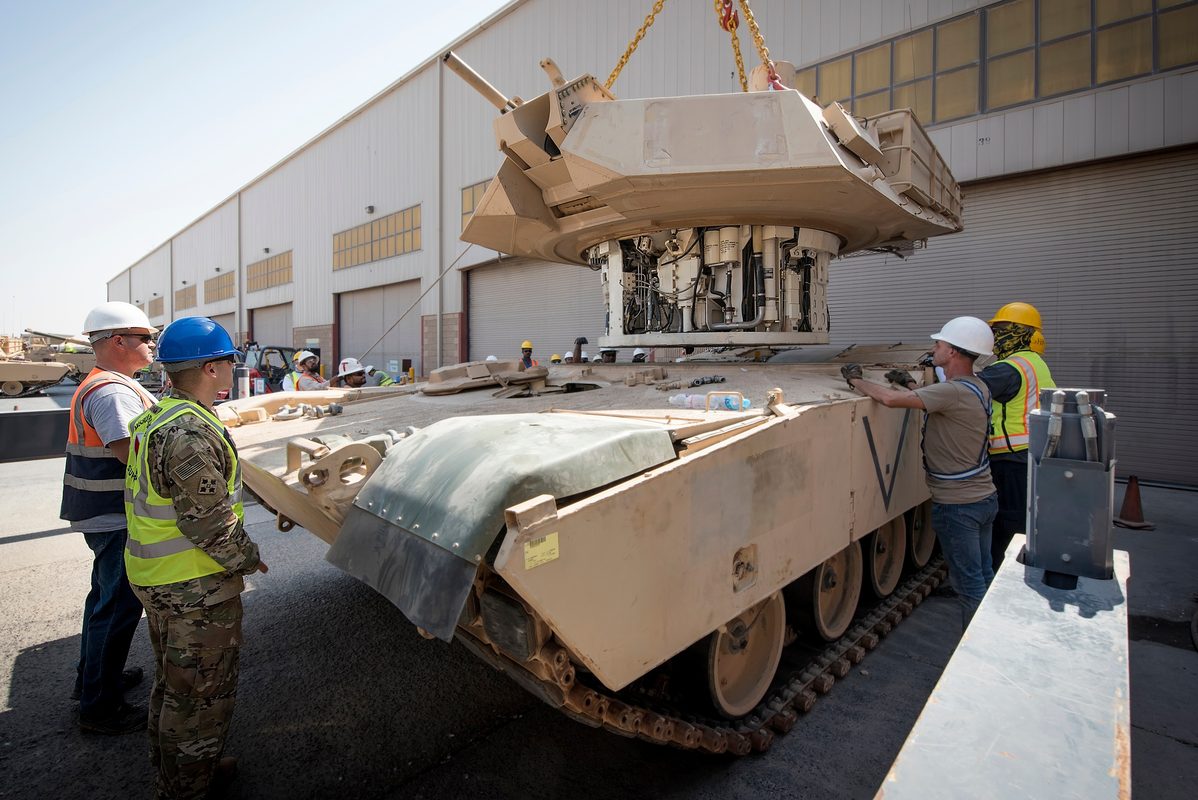
A maintenance crew at Army Prepositioned Stocks-5 in Kuwait performs turret reattachment on an M1A2 Abrams tank
A maintenance crew at Camp Arifjan, Kuwait, reattaches the turret on an M1A2 Abrams tank. The current turret houses three crew members and manually loaded ammunition. AbramsX eliminates crew from the turret entirely through an unmanned design with autoloader. (Photo: U.S. Army / Kevin Fleming)

Moving the crew to the hull provides several advantages beyond reducing crew size. The hull can be more heavily protected because it is a smaller volume. With no crew in the turret, the turret itself can be made lighter and lower profile, reducing the vehicle's silhouette and making it a harder target to detect and hit. And if the turret takes a hit, no crew members are directly at risk.

The autoloader also changes the sustainment calculus. Fewer crew members per tank means fewer soldiers required to man an armored brigade's tank fleet. For an Army facing recruiting challenges, reducing the crew requirement by 25 percent per vehicle is operationally significant. It also reduces the number of personnel at risk in each engagement.

Critics argue that the human loader provides flexibility that autoloaders cannot match, including the ability to select different round types quickly, clear jams, and perform maintenance on the gun during combat. The Army will need to demonstrate that AbramsX's autoloader is reliable enough to justify the tradeoff.

Hybrid Electric Drive: Silent Running and Half the Fuel

The current M1 Abrams uses the Honeywell AGT1500 gas turbine engine, a 1,500-horsepower powerplant that gives the tank exceptional acceleration and top speed but consumes fuel at a staggering rate. An M1A2 SEPv3 burns roughly 8 gallons per mile in cross-country movement and up to 12 gallons per hour at idle. An armored brigade in sustained operations can consume hundreds of thousands of gallons of fuel per day, requiring a constant stream of fuel trucks that are themselves vulnerable to attack.

AbramsX replaces the gas turbine with a hybrid electric power system. The hybrid integrates a diesel engine with an electric drive, using batteries to supplement the diesel and providing a pure-electric mode for short-distance movement and stationary operations. In silent watch mode, the tank can sit with its systems powered, sensors active, and weapons ready, producing virtually no heat signature and no engine noise. The diesel remains off until the crew needs to move or the batteries require recharging.

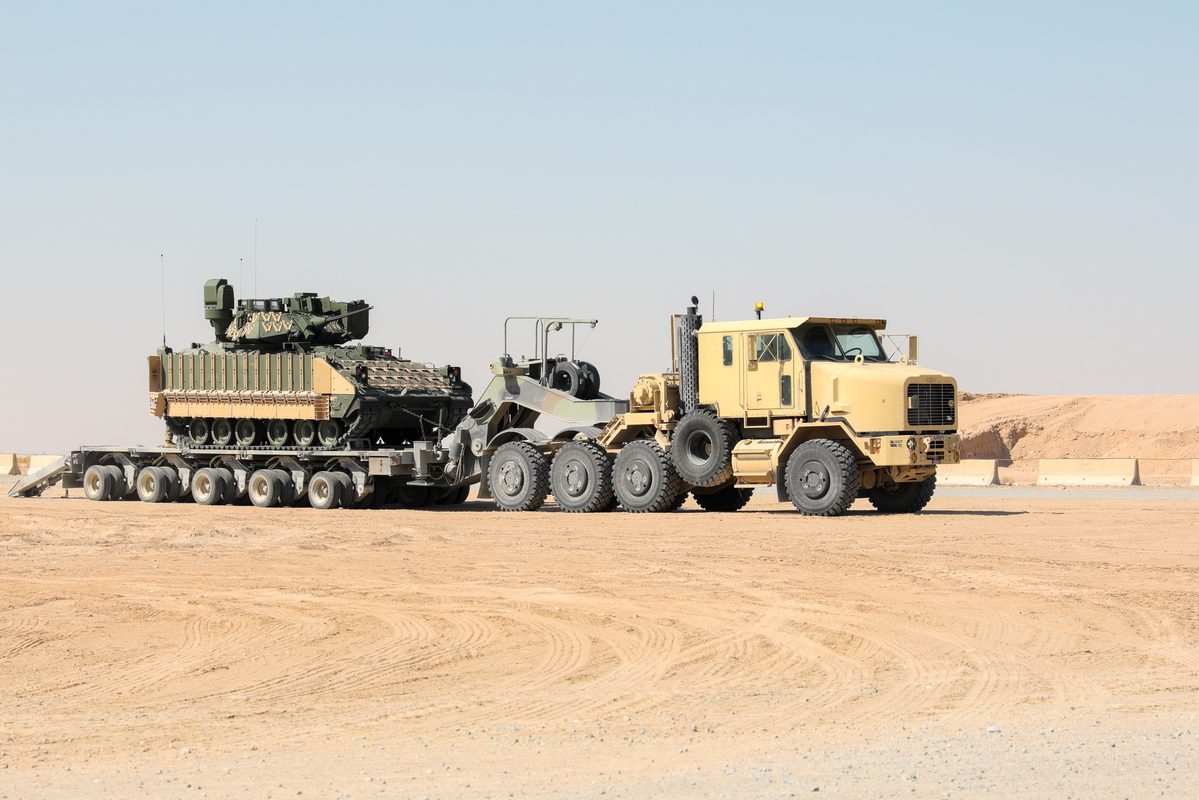
An M1A2 SEPv3 Abrams main battle tank from the 278th Armored Cavalry Regiment arrives in the U.S. Central Command area of responsibility
An M1A2 SEPv3 Abrams tank from the 278th Armored Cavalry Regiment arrives in the CENTCOM theater, October 2024. The current SEPv3 weighs nearly 74 tons and relies on a fuel-hungry gas turbine. AbramsX demonstrates a hybrid electric alternative that cuts fuel consumption by 50 percent. (Photo: U.S. Army / Sgt. Richard Cole)

GDLS claims the hybrid electric drive delivers the same tactical range as the current M1A2 Abrams with 50 percent less fuel consumption. That reduction has cascading effects across the entire logistics chain. Fewer fuel trucks mean fewer convoys. Fewer convoys mean less exposure to ambush and less demand on combat service support units. For an Army that emphasizes dispersed operations and contested logistics, cutting fuel requirements in half is transformative.

The silent watch capability is equally important. Modern sensors can detect the thermal and acoustic signature of a running gas turbine at significant distances. A tank that can operate its sensors and weapons on battery power alone is far harder to locate. In defensive positions, a hybrid-electric tank can wait silently for an approaching enemy, engaging only when it has a tactical advantage.

Lighter, Faster, More Deployable

AbramsX weighs approximately 60 tons, a reduction of more than 13 tons from the M1A2 SEPv3's 73.6 tons. That weight savings comes from the smaller unmanned turret, the lighter hybrid powerplant, and the use of advanced armor composites.

Weight matters for strategic mobility. At 74 tons, the M1A2 SEPv3 is at the upper limit of what a C-17 Globemaster III can carry one at a time. It exceeds the capacity of most European bridges. It cannot be transported by rail on many routes without special clearances. Reducing the weight to 60 tons improves every aspect of deployability: air transport capacity increases, more bridges can support the vehicle, and rail movement becomes less restricted.

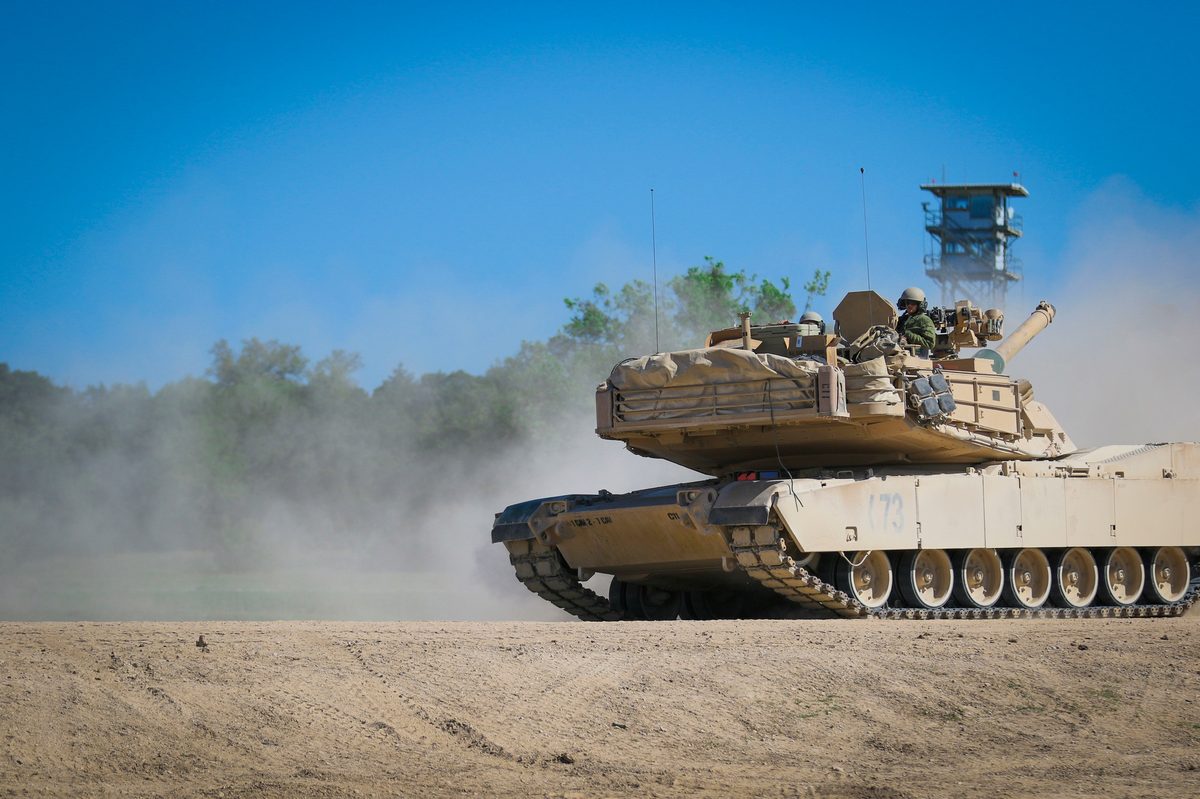
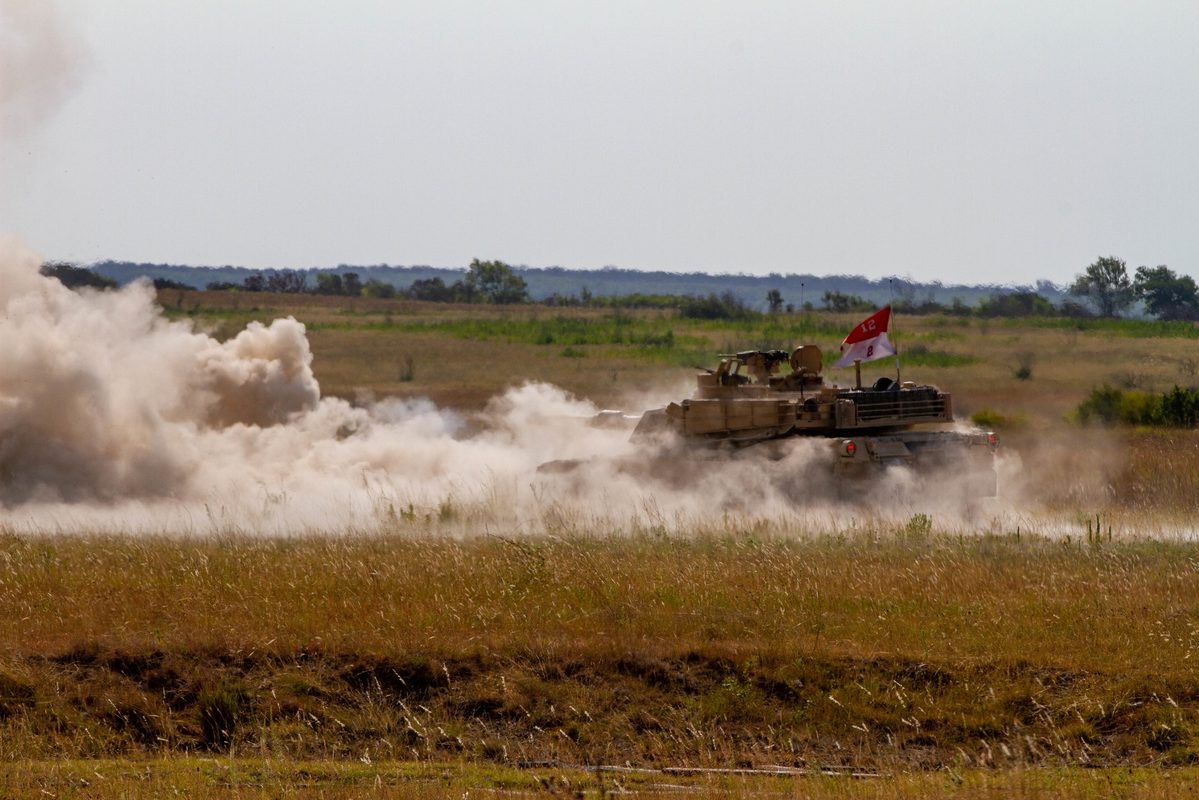
An M1A2 SEPv3 Abrams tank sits stationary during a warfighter exercise at Fort Hood, Texas
An M1A2 SEPv3 Abrams during a warfighter exercise at Fort Hood (now Fort Cavazos), Texas. Each successive upgrade has added weight: the original M1 weighed 60 tons, the SEPv3 nearly 74 tons. AbramsX aims to reverse that trend while increasing capability. (Photo: U.S. Army / Sgt. Melissa Lessard)

Tactical mobility also improves. A lighter tank can accelerate faster, cross softer ground more easily, and put less strain on its running gear. The hybrid electric drive provides instant torque from its electric motors, which can improve acceleration over the current gas turbine configuration.

The XM360 lightweight 120mm gun, which was previously developed for the now-canceled Future Combat Systems program, is integrated into AbramsX. The XM360 uses advanced recoil management to reduce the forces transmitted to the turret, enabling a lighter turret structure without sacrificing firepower. It fires the same NATO-standard 120mm ammunition as the current M256 gun, maintaining ammunition commonality across the fleet.

AI Sensors, Active Protection, and Drone Launch

AbramsX incorporates AI-enabled sensor fusion that combines data from thermal imagers, day cameras, and millimeter-wave radar into a unified targeting picture. The system can automatically detect and classify targets, presenting the crew with prioritized threat information and recommended engagement solutions. The crew makes the final decision, but the AI reduces the cognitive workload and speeds up the targeting cycle.

Active protection system integration is built into the AbramsX design from the outset rather than being retrofitted. The current M1A2 SEPv3 can mount the Trophy APS, but the installation adds weight and requires modification to the turret structure. AbramsX's unmanned turret was designed with APS mounting points and sensor integration as part of the original architecture, allowing for tighter integration and lower weight penalty.

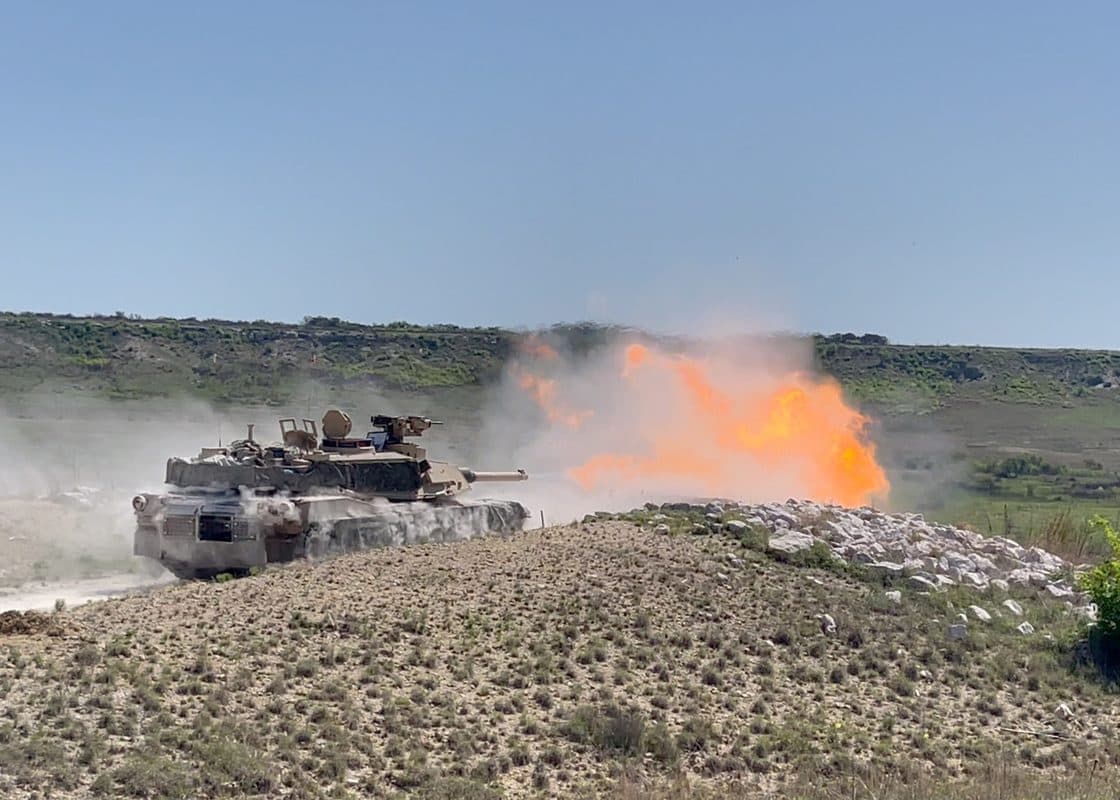
An M1 Abrams main battle tank fires its 120mm main gun during qualification testing at Fort Hood, Texas
An M1 Abrams fires during qualification at Fort Hood, Texas, July 2022. The AbramsX technology demonstrator mounts the XM360 lightweight 120mm gun, which fires the same ammunition as the current M256 but with advanced recoil management that enables a lighter turret design. (Photo: U.S. Army / Pfc. Jacob Nunnenkamp)

Perhaps the most forward-looking feature is the ability to launch drones from the tank itself. AbramsX includes provisions for deploying small unmanned aerial vehicles that can provide immediate reconnaissance ahead of the tank, identify threats beyond the crew's line of sight, and potentially designate targets for the tank's weapons. This gives each tank organic intelligence, surveillance, and reconnaissance capability without relying on external assets.

The drone capability reflects lessons from Ukraine, where cheap commercial drones have fundamentally changed how armored vehicles operate. A tank that can launch its own reconnaissance drone can identify anti-tank teams, mines, and ambush positions before driving into them. In an environment where first-person-view kamikaze drones are a constant threat, the ability to see around corners and over hills from the vehicle itself is a survival requirement.

From AbramsX to M1E3: What the Army Actually Plans to Build

In September 2023, the Army announced that it had canceled the planned M1A2 SEPv4 upgrade and would instead redirect resources into the M1E3, a new-build variant that incorporates lessons from the AbramsX demonstrator. The "E" designation indicates an experimental or engineering variant, signaling that the M1E3 represents a more significant design change than a typical System Enhancement Package.

Prototype testing for the M1E3 is scheduled for summer 2026. The production vehicle will not necessarily replicate every feature of the AbramsX demonstrator. The Army will select technologies that have proven mature enough for fielding and defer others for later integration. The hybrid electric drive, unmanned turret, and autoloader are considered the highest-priority features. AI-enabled sensors and drone launch capability may arrive in subsequent upgrades.

The M1E3 decision reflects a broader recognition that the Abrams cannot continue gaining weight indefinitely. Every upgrade since the original M1 has added mass: better armor, more electronics, additional protection systems. The SEPv3 reached a point where further growth was impractical without fundamental design changes. AbramsX demonstrated that those changes are technically feasible. The M1E3 will determine whether they are operationally practical.

The tank that emerges from the M1E3 program will still be recognizably an Abrams. It will fire the same ammunition, use compatible logistics infrastructure, and fit into the same operational formations. But underneath, it will be a fundamentally different machine: lighter, quieter, smarter, and crewed by three soldiers instead of four. The Abrams family tree is about to grow a very different branch.

Share this article

Share:

Recommended

Ace of The Skies: Can You Identify These Military Aircraft Throughout The Years?
Test Yourself

Ace of The Skies: Can You Identify These Military Aircraft Throughout The Years?

Can you identify these aircraft?

Take the Quiz

Get Military News & History in Your Inbox

Join thousands of readers receiving our weekly digest of military technology, history, and analysis.

Test Your Knowledge